
- News
- lifestyle
- parenting
- parenting-stories
- Parenting in the AI age: What 2026 parents should know
Parenting in the AI age: What 2026 parents should know

Parenting in the AI age: What 2026 parents should know
Parenting has always been an adaptive function of the changing era; however, artificial intelligence has introduced one of the largest transitions that family units have experienced in their history. As of the target year of 2026, artificial intelligence is no longer confined to devices at work but has silently made its entry into the schoolrooms, playrooms, and even sleeping rooms of kids. Artificial intelligence has introduced an entirely different era for parents in the form of AI-powered educational tools and AI-driven virtual assistants.

AI is already part of children’s daily lives
A lot of parents are not aware of how entrenched artificial intelligence is in their child's life. Educational software, recommendation software on sites such as YouTube, and personal assistants such as Siri or Alexa are all examples of AI. Children in the year 2026 are living in a world in which they interact with artificial intelligence systems as easily as they communicate with adults. But parents just need to be mindful of the degree to which this is occurring.

Learning has become smarter—but needs supervision
AI-driven learning systems enable personalized lessons according to a child’s pace and interests, making learning more engaging than ever before. At the same time, over-reliance on technology may result in lesser human interaction and critical thinking. Parents can make use of technology as a resource to augment teaching as well as parental inputs rather than relying on it as a replacement for both.

Privacy and data safety matter more than ever
Also, parents have to consider the issue of data privacy in the age of AI. Most smart devices require data to operate correctly. However, children may not have an understanding of what is being shared. It becomes essential for parents in the year 2026 to spend time exploring the data privacy options on devices. It would also be important to educate children about online privacy when they are young.
Emotional development still needs human connection
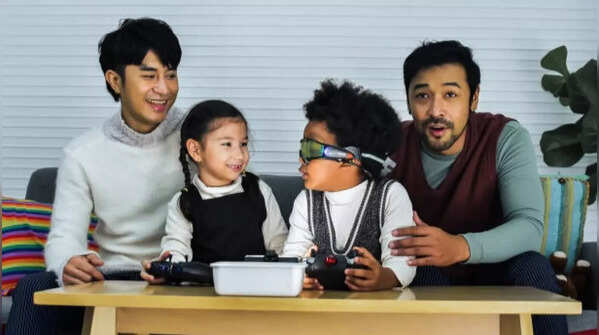
Although technology has the ability to provide immediate solutions, entertainment, or answers, technology has no ability to provide empathy, warmth, or understanding of human emotions. It is the responsibility of the children to be able to regulate their own emotions, be empathetic, or communicate with others as a result of human interactions, not technology. Parents will have to make sure that technology does not replace interaction, playing, or experiences.

Teach kids to think, not just ask AI
With the quick answers that AI offers, kids may be reliant on get.quick answers. As a parent in the year 2026, the emphasis is on teaching kids how to think critically. This will help kids explore beyond the answers that AI offers. By so doing, kids will see AI as a resource rather than as a source.

Creating a healthy boundary for the use of artificial intelligence
Just as with screen time, AI exposure must be defined within boundaries. The usage of smart toys and virtual assistants must be restricted to avoid codependency. Parents must restrict times for AI interaction while focusing on other important activities such as playing outside, reading, and interacting with society.

Kids ready for an AI-driven future
Instead of being afraid of AI technology, parents must learn how to encourage their children to thrive in this new environment with confidence. Learning basic digital skills and adaptability can prepare children for this future world. Raising a child in 2026 means teaching kids how to live with technology but stay connected with their roots based upon values and resilience. AI technology has the potential to improve development by adding more to what is most important, human relationships.
Featured In lifestyle

MORE FROM ETIMES
life & style