- News
- lifestyle
- health-fitness
- fitness
- Raising the age barre
Trending
This story is from February 12, 2016
Raising the age barre
Adults are taking up art forms and disciplines that -if they are to be pursued seriously -require a regimen begun as early as three.
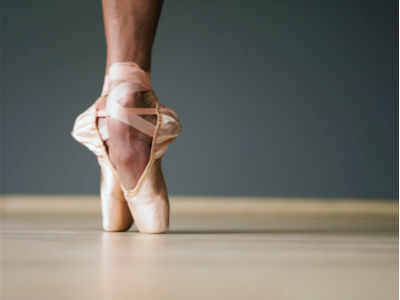
Purvi Neema recalls questioning her decision to take up ballet at the age of 24, three months into the training program,“I was always mesmerised with the body that ballet dancers had.

“I could push a decent amount of weight on the leg press machine earlier. But an exercise as simple as a ballet jete -a jump on one foot, requires the kind of strength that none of the machines in the gym had prepared me for," she explains. The art form has helped her to handle her weight and also develop a great posture. Her legs have also become stronger. "My knees are relieved of all their aches, and my back feels stronger with each passing day."
Neema's example is not a lone one. Adults are taking up art forms and disciplines that -if they are to be pursued seriously -require a regimen begun as early as three. Misty Copeland, the prima ballerina of the American Ballet Theater, New York, started at 13. Copeland aptly referred to herself as the "Unlikely Ballerina" -given her late start and the fact that she is AfricanAmerican and also curvaceous.
But things are changing, adapting, and new modified techniques make these specialised skills accessible more widely. Until a few years ago, there were not many options in India for adults to learn ballet - even recreationally. However with a growing demand the market is slowly changing.
"Training in ballet commences from an early age since a child's body is flexible and can be moulded to execute the form appropriately. And though its benefits for adults, who primarily take up the form as a hobby, are limited, they're definitely not lacking," points out Khushcheher Dallas, who teaches at The School of Classical Ballet and Western Dance. "We don't train adults in the several grades of ballet -the way we train kids. People who take up ballet at a later age in life will certainly improve their posture and alignment with the basic exercises, irrespective of their age."
ONE EXCERCISE DOESN'T FIT ALL
Ballet is just one of the many alternate forms of training that are becoming increasingly popular among an older generation. CrossFit has made the masses at large interested in Olympic lifting. Muay Thai, Tai Chi and Taekwondo are staples in gyms. Basic elements of gymnastics are also being incorporated in different fitness regimes. We connected with some experts to understand how adults, who lack the malleability of children, benefit from such complex movements. Amogh Pandit, strength and conditioning Director, Mumbai Cricket Association, confirms that though these advanced exercises can be executed by anyone, adults must undergo a preparatory phase, which can be a lengthy process. Addressing the primary requirement of taking up Olympic lifting, Pandit explains, "Olympic lifts are compound movements involving multiple muscles groups.
Mobility, which is dependent on the flexibility of each of these muscle groups, is essentially the ease with which the movement can be executed while retaining the correct posture. Our population severely lacks mobility." Pandit highlights that through the 16 years that he's worked with the Indian Cricket Team, he's found only one player to be mobile enough to take up Olympic lifting.
"When athletes like cricketers lack in mobility, how can we make such exercises available to the general population at large," he questions. Drawing parallels to the manner in which move ment patterns are developed in children, he adds that mobility workouts are followed by those of stability and then strength. "It is essentially the lack of flexibility, and not strength, that causes injuries in Olympic lifting," he says.
DON'T BREAK TO BEND
However, with Cross Fit having opened its doors to anyone from the age of 14 to 84, one wonders if the clients are if at all screened for mobility before being incorporated into the program. "Not quite," says Pooja Hublikar, a CrossFit enthusiast.
(By Sonia Lulla)
End of Article
FOLLOW US ON SOCIAL MEDIA
Visual Stories









Photostories
Featured In Lifestyle

Popular Categories
Trending in Entertainment
Latest MoviesBollywood MoviesHollywood MoviesTamil Movies 2024Telugu Movies 2024Malayalam Movies 2024Kannada Movies 2024Marathi Movies 2024Bengali Movies 2024Top Rated Movies 2024Best Hindi MoviesBest English MoviesBest Telugu MoviesBest Tamil MoviesBest Malayalam MoviesBest Kannada MoviesBest Bengali MoviesUpcoming Hindi MoviesBest Movies Of All TimeBest Hindi Movies of All Time
Trending in Etimes
Trending in TV
Trending in Lifestyle
Trending in Regional
Movie Reviews
The Wild Robot ReviewSmile 2 ReviewAayushmati Geeta Matric Pass ReviewJigra ReviewVicky Vidya Ka Woh Wala Video ReviewBougainvillea ReviewSir (Tamil) ReviewRocket Driver ReviewAaryamala ReviewBlack ReviewVettaiyan ReviewJhini Bini Chadariya ReviewColourrs Of Love ReviewAmar Prem Ki Prem Kahani Review
Upcoming Hindi Movies
Upcoming Regional Movies
Latest News
Denzel Washington reveals details about his character in "Gladiator II"; says, ‘I hadn’t done that before’Female constable raped in Kanpur, accused arrestedInspiration for creativity and art through eye of the tigerSalman Khans's sister Arpita Sharma and Aayush Sharma sell their Bandra house for Rs 22 crores: ReportHappy Dhanteras 2023: Images, Quotes, Wishes, Messages, Cards, Greetings, Pictures and GIFsWhen Janhvi Kapoor recalled about the ‘hectic itineraries’ made by her dad that gave her mother late Sridevi ‘anxiety’'Vanvaas': Nana Patekar and Utkarsh Sharma's 'emotional rollercoaster ride' gets a release date; Poster out!'Not your punching ball': France protest in solidarity with mass rape victim Gisèle PelicotDelhi robbery: Two arrested for robbing retired DRDO scientist of Rs 2 crore in RohiniJenn Pedranti calls out Tamra Judge on The Real Housewives of Orange CountyThree reforms India badly needs to fix its higher education messP Diddy faces 7 new lawsuits, and this time it’s more serious than everPriyanka Chopra is perhaps the only woman in the world who wore this on Karwa Chauth!AIMM chief Asaduddin Owaisi lashes out at ultimatum to Muslims to leave Chamoli by December 31Midnight queues, long waits, bad advice: It's not easy getting therapy in IndiaKartik Maas 2024 Start and End Date: Time, Puja Rituals and SignificanceWife's incredible choice in grief: To keep her husband's spirit alive2 dead, 22 rescued after migrant boat runs into trouble in rough weather near Greek islands
Other Group Sites -
ETimes is an Entertainment, TV & Lifestyle industrys promotional website and carries advertorials and native advertising.