
Why humans once ate dirt and some still do today
Why humans once ate dirt and some still do today
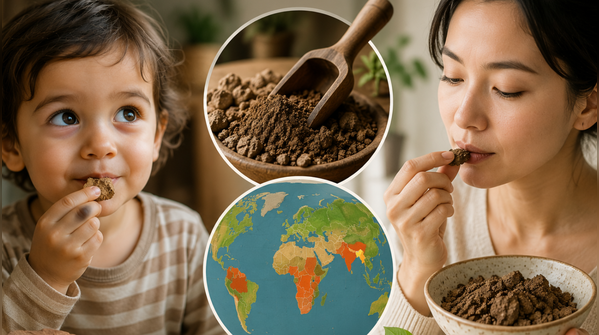
Few habits sound more startling than eating dirt, yet geophagy, the deliberate consumption of soil, clay, or earth, has followed humanity across continents and centuries. It appears in ancient records, in traditional healing practices, and in the quiet corners of modern life, where people may eat clay for relief, comfort, ritual, or compulsion. To an outside observer, it can look like a curiosity or a taboo. But for many communities, it has long carried meaning, survival value, or both. The story of dirt-eating is not just about strange appetite. It opens a window into hunger, pregnancy, culture, medicine, and the ways the human body sometimes reaches for what it seems to need, even when that need is hard to explain. Scroll down to know more...

An ancient habit with deep roots
Geophagy is far older than modern medicine, and likely older than written history itself. Anthropologists have found evidence of soil consumption in many parts of the world, from Africa and Asia to the Americas and Europe. In some cases, it appears among humans alongside animal behavior: elephants, parrots, and other species also consume earth, often to calm the stomach or bind toxins. That parallel has long intrigued researchers.
For people, dirt was not always seen as dirt in the modern sense. Certain clays were treated as food-like substances, remedies, or sacred materials. In parts of the ancient world, earth was mixed with grain, shaped into tablets, or eaten directly. Some historical accounts suggest it was used during famine, when people had little else to eat. In other settings, it became part of routine cultural practice, passed down through families and local knowledge.
The act was rarely random. The soil chosen was often specific: smooth, cool, mineral-rich, and free from debris. That detail matters. It suggests intention, not disorder. Human beings did not simply eat any earth. They selected particular kinds, as though following a code built from experience.

Hunger, minerals and the body’s signals
One of the most common explanations for geophagy is deficiency. The body may crave minerals, especially iron or calcium, and respond in ways that seem unusual. Scientists have not fully settled the question, but there is a long-standing link between dirt-eating and anemia, pregnancy, and nutritional stress. In some cases, people who eat clay may also have low iron levels, though whether the craving causes the deficiency or the deficiency causes the craving is not always clear.
Pregnancy is especially important in this story. Across cultures, many pregnant women report cravings for non-food substances, including clay, chalk, ice, or starch. These cravings can be part of pica, a condition involving the desire to eat items with little or no nutritional value. For some women, clay may soothe nausea, settle the stomach, or simply offer a sensory comfort when ordinary food feels unbearable. That does not make the practice harmless, but it does make it understandable.
The body is not always elegant in the way it asks for help. Sometimes it sends signals that are messy, inconvenient, and difficult to decode. Dirt-eating may be one of those signals, a response to deficiency, distress, or a search for relief in a body under strain.
The risk hidden inside the ritual
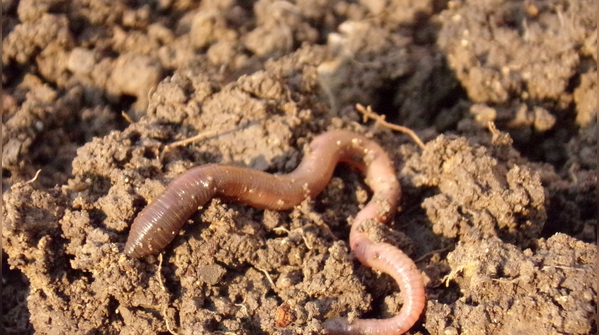
Even when geophagy begins as tradition or coping, it is not without danger. Soil can contain parasites, bacteria, pesticides, or heavy metals. It can interfere with the absorption of nutrients, making anemia worse instead of better. Some clays may harden in the digestive tract and cause constipation or blockage. So while the craving may feel natural, the consequences can be serious.
This is why the subject deserves more than ridicule. People who eat dirt are often dealing with underlying needs, and those needs should be taken seriously. Shame rarely helps. Better questions do. Is there a nutritional deficiency? Is there pregnancy-related nausea? Is this a cultural practice rooted in long-standing meaning? Is the body asking for something safer, something cleaner, something that can actually be met? The answer is not always simple, but it should begin with respect rather than disgust.
Why the practice still survives
Geophagy persists because human beings do not live by science alone. They live inside families, traditions, cravings, and bodies that do not always behave predictably. In some places, clay remains sold in shops and markets. In others, it survives quietly in private, hidden from doctors and relatives. The practice may be ancient, but it is not frozen in the past. It continues because the reasons behind it continue: poverty, pregnancy, habit, mineral deficiency, stress, ritual, and the search for comfort.
That is what makes the subject so revealing. Dirt-eating sounds outrageous until you look closely enough to see the logic inside it. Then it becomes less a scandal than a survival story, one that says something profound about the human body: it is always negotiating with the world, always trying to restore balance, even in ways that can seem baffling from the outside.
Featured In Food

MORE FROM ETIMES
life & style