Trending
This story is from January 26, 2020
Times Kitchen Tales 2: Let nature be your dietician
In the Northeast, winter is all about using seasonal greens and slow cooking techniques when it comes to meats.
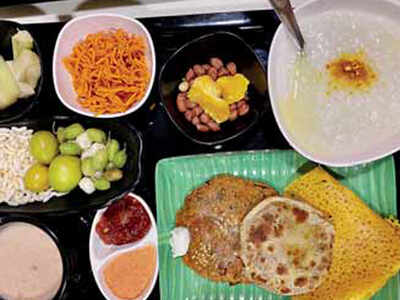

On the menu were thali peeth, the multigrain breakfast flatbread typical of the state (made with jowar and bajra millets this season, and topped with white butter). Amboli, the rice batter-based Maharashtrian dosa equivalent had yellow hues instead of the usual white, thanks to the turmeric added for boosting immunity. To go with these savoury treats was satori, a pancake-like dish, stuffed with jaggery, sesame seeds and grated coconut, and a kheer made with kharikh (dried dates). The breakfast included til laddu, peanuts, jaggery, sugarcane on the side, and warm water with honey instead of the usual chaha (tea). No, it’s not a typo. There was also a hot congee made with sticky rice topped with metkut, a dried chutney made with ground pulses and spices (considered to keep one healthy during the cold).
This reminded me of the ‘Parsi chawanprash called vasanu, that my mother-in-law, Pervin Bilimoria, had introduced me to. The family recipe has 32 ingredients. Her mother used to roast each (walnuts, almonds, pistachios, whole spices, pepper, gond, dessicated coconut and more) over different durations, before blending them together over a slow flame with “lots of sugar and ghee”.
Now you might say that Mumbai does not really have a winter, which is why I reached out to experts well versed with the food of the hills to see what people traditionally eat in places that get really cold in winter.
In the Northeast, it is all about using seasonal greens and slow cooking techniques when it comes to meats, says chef Vijay Malhotra. A lovely example of this, shared by restaurateur Doma Wong, is a noodle soup called phakthuk by the Tibetan/ Sikkimese Bhutias and as kowri by the Nepalis. It consists of conch shell shaped ‘pasta’ cooked in a meaty broth using meat bones and greens such as spinach and radish.
In Himachal, people look to horse gram, traditionally fed to race horses, to keep humans warm and fit during winter, says home chef, Sherry M. Kulath ki badi (horsegram dumplings) are steamed, fried and then added to rice to make a pulao or to make a slow cooked stew with radish, carrot, potato and other vegetables available.
Sourcing vegetables in winter is hard in the hills, which is why in Kashmir, fresh vegetables such as turnip, tomato, pumpkin and brinjal, are hung as garlands outside houses to dry in the sun earlier in the year, says home chef Jasleen Marwah. These dried vegetables, which are referred to as hokh syun, are later soaked in water and then cooked by themselves, or with meat, to keep one nourished during the harsh months later.
Winter in Kashmir is also when small shops offering harissa spring up, says food writer Marryam H Reshi. The harissa here is a slow-cooked meat dish which has a bit of rice in it too. It keeps one warm for at least a few hours post consumption and is considered to be a life saver.
It is clear from these dishes that our forefathers knew how to adopt their diet according to the change of seasons, showing a deep respect for nature. It’s a practise we need to bring back to our lives too.
By: Kalyan Karmakar
Please share some dishes from your kitchen which are traditionally had in winter at www.timeskitchentales.com
How can you be a part of this? Keep a lookout for this space – where we will introduce fresh topics of discussion every week. Find us at: www.timeskitchentales.com and share your stories.
The most inspiring stories from the repository of ‘Times Kitchen Tales’ will be shared in this column.
End of Article
FOLLOW US ON SOCIAL MEDIA








Photostories
Featured In Food

Popular Categories
Entertainment NewsBollywood NewsTollywood NewsKollywood NewsMollywood NewsMovie ReviewsLatest Hindi MoviesLatest Tamil MoviesMX PlayerParenting TipsHome RemediesWeight LossBeauty TipsParenting TipsHindi VideosHindi Video SongsBhojpuri Music VideosLatest Telugu MoviesBhojpuri Music VideoHindi TV News
Trending in Entertainment
Latest MoviesBollywood MoviesHollywood MoviesTamil Movies 2024Telugu Movies 2024Malayalam Movies 2024Kannada Movies 2024Marathi Movies 2024Bengali Movies 2024Top Rated Movies 2024Best Hindi MoviesBest English MoviesBest Telugu MoviesBest Tamil MoviesBest Malayalam MoviesBest Kannada MoviesBest Bengali MoviesUpcoming Hindi MoviesBest Movies Of All TimeBest Hindi Movies of All Time
Trending in Etimes
Horoscope TodayNumerology Predictions TodayWalz Vs VanceJD VanceKamala HarrisPopulated Indian CitiesAlcohol Cancer RiskNational Boyfriend Day 2024Sunita WilliamsDepression RiskNepal FloodBarbra StreisandSnoring Prevention TipsDonald TrumpMagnesium DeficiencyRelationship TipsLake Michigan DiscoveryRelationship TipsEkadashi in October 2024
Trending in TV
Trending in Lifestyle
Trending in Regional
Movie Reviews
Binny And Family ReviewLove, Sitara ReviewWill & Harper ReviewWolfs ReviewYudhra ReviewJo Tera Hai Woh Mera Hai ReviewKahan Shuru Kahan Khatam ReviewHis Three Daughters ReviewNever Let Go ReviewDancing Village: The Curse Begins ReviewTransformers One ReviewFirst Love ReviewBerlin ReviewThe Buckingham Murders Review
Upcoming Hindi Movies
Upcoming Regional Movies
Latest News
49ers' Christian McCaffrey May Return in Week 7 Against Chiefs, Adam Schefter Shares Latest Injury UpdateBigg Boss Tamil 8: Sunitha Gogoi to dazzle with dance performance from Vijay’s film 'GOAT'Zodiac Sign Women Who Cherish Independence"Will form govt in both Haryana, J-K": BJP's Tarun Chugh on upcoming Assembly elections resultsCongress' Jairam Ramesh highlights 'three dark clouds' threatening Indian economy's growthRevealed: The real reason Taylor Swift was missing from Travis Kelce's birthday celebrationFans shower praises for Indira Krishna's role Paani Bai in Durga writes, "She's Lady Nana Patekar, Yeh toh Komolika ka bhi record todegi"Will Varun Dhawan, Shraddha Kapoor, and Kriti Sanon come together in 'Stree' x 'Bhediya' film?Bigg Boss Tamil 8: Actress Sachana Namidass to participate in the upcoming season?Amul ready to enter European market after US: MDFlash flooding kills three in northern ThailandIdentifying PCOS and when to seek help from professionalsYamuna river pollution hits record high in Delhi: Faecal coliform levels soar in SeptemberMayank Yadav set to become a capped player ahead of IPL auction'No need to think about India's foreign policy': BJP' Kavinder Gupta on Mirwaiz Farooq statementBigg Boss 18 Promo: Salman Khan reveals the theme of the season by predicting the contestants' future in the houseBigg Boss Tamil 8: Ex-contestant Pradeep Anthony to participate in the upcoming season?State reminds pvt med colleges to follow SC mandate, resume admissions; colleges wait for assurance on fee reimbursements
Other Group Sites -
ETimes is an Entertainment, TV & Lifestyle industrys promotional website and carries advertorials and native advertising.