“This will help prevent…and improve..” Why did Amit Shah praise this rice variety
Importance of rice in Indian homes
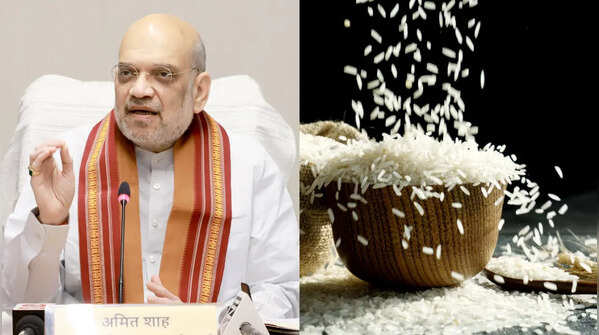
Rice is a popular Indian staple enjoyed in every household. From breakfast to dinner, it is enjoyed in different forms. For some, it is best enjoyed as idli, dosa, and for some leftover and there are who enjoy it in the form of cheela or pitha. This Indian grain is proven to be an excellent source of carbohydrates, providing the body with energy for daily activities. It is naturally gluten-free, making it suitable for people with gluten intolerance or celiac disease too. This humble grain also got the attention of Amit Shah, who praised a variety of rice in his speech and this is why you also need to add it in your diet.
What did Amit Shah say?
According to the ANI report, in October 2024, Amit Shah praised the decision of the union cabinet to continue the supply of free fortified rice to around 80 crore Indians. He said that such a decision would help tackle anemia and deficiency of nutrients. For the uninitiated, the Union Cabinet, chaired by Prime Minister Narendra Modi approved the continuation of free fortified rice till December 2028 under the Pradhan Mantri Garib Kalyan Yojana (PMGKAY) in its present form from July 2024 and upto December 2028. In a post on X, Home Minister Shah said that the scheme will benefit 80 crore people, with Rs 17,082 crore being allocated to the scheme. "Modi ji has shown the resolve of welfare of the poor and Antyodaya by realizing it on the ground. Today, the Union Cabinet approved the continuation of supply of free fortified rice till December 2028 under PM Garib Kalyan Anna Yojana and other welfare schemes. Rs 80 crore citizens of the country will benefit from this scheme of Rs 17,082 crore. This will prevent the problem of anemia and improve the deficiency of nutrients," read the post.
Why was rice distribution needed?
According to the National Family Health Survey (NFHS-5) conducted between 2019 and 2021, anaemia remains a widespread issue in India, affecting children, women, and men across various age groups and income levels. Besides iron deficiency, other vitamin and mineral deficiencies, such as Vitamin B12 and folic acid, also persist, impacting the overall health and productivity of the population. Food fortification has been used globally as a safe and effective measure to address anaemia and micronutrient malnutrition in the vulnerable population.
What is fortified rice?
Fortified rice refers to the regular rice that has been processed and enriched with essential vitamins and minerals to improve its nutritional value. According to experts, the fortificaton process, nutrients such as iron, folic acid, and vitamin B12 are added to rice kernels, which are then blended with ordinary rice before distribution. The main purpose of fortifying rice is to help address nutrient deficiencies, particularly iron-deficiency anaemia and deficiencies of key micronutrients that are common in many populations.
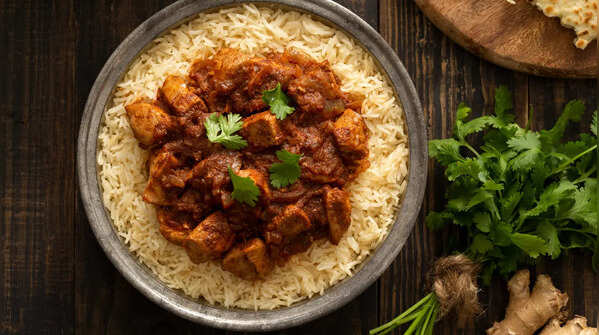
3 ways to use fortified rice
Steamed rice: It can be cooked like regular rice and served with dal, sabzi and salad for added nutrition.
Pulao or Biryani: This rice can also be used to make pulao or biryani, where one can pack it with veggies and meat to meet the daily nutritional needs.
Khichdi: It is also best used fo making comfort food like khichdi, where dal and veggies are added for protein, fiber, vitamins and minerals.
Featured In Food

MORE FROM ETIMES
life & style