
- News
- lifestyle
- fashion
- celeb-style
- The Vanasingaram weave that made Vijay Deverakonda’s wedding look iconic: History, draping style and price breakdown
The Vanasingaram weave that made Vijay Deverakonda’s wedding look iconic: History, draping style and price breakdown
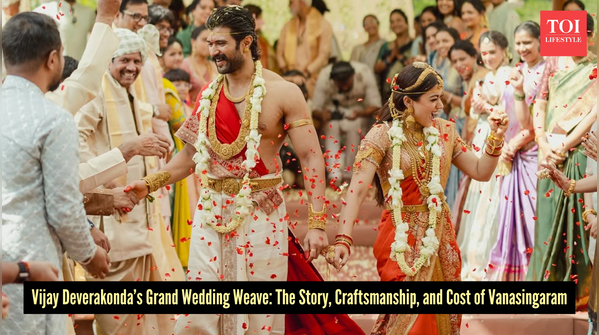
From Heritage to Haute
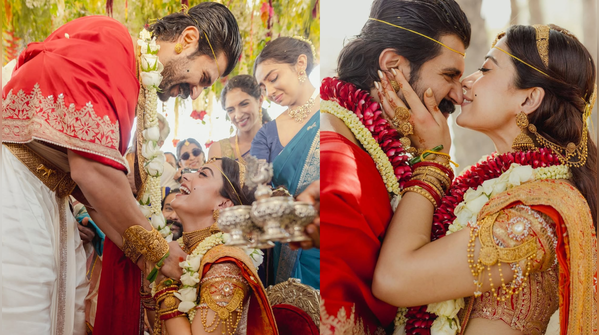
The moment the first pictures from Vijay Deverakonda and Rashmika Mandanna’s intimate Udaipur wedding hit the internet, menswear circles let out a collective sigh of relief. Finally, a break from the endless sea of heavily sequined, pastel sherwanis. For the much-talked-about 'Virosh' mandap, Vijay ditched the usual designer bling. Instead, he showed up wearing a literal piece of textile history.
(Image Credits: Instagram)
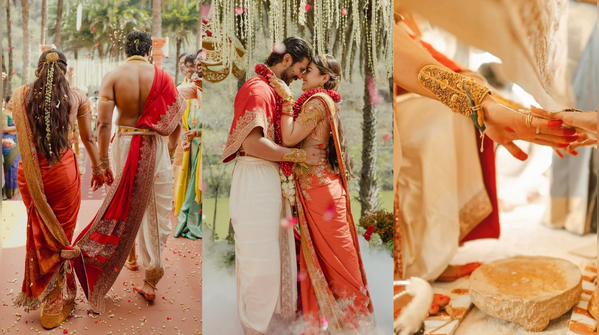
Bringing Hyderabad’s Loom to the Mandap
The anchor of his outfit comes straight from Hyderabad’s incredibly complex textile archives. The ensemble heavily borrows from the Vanasingaram weave. If you aren't a textile nerd, that name essentially translates to the "glory of the forest." It is a notoriously difficult weaving technique. Instead of just embroidering patterns on top of the fabric, master artisans actually loom intricate, sprawling nature scenes directly into the material itself. By choosing this hyper-regional handloom, Vijay made a pretty loud sartorial statement: pure, traditional Indian textiles can easily rival the grandeur of crystallized modern menswear.
(Image Credits: Instagram)
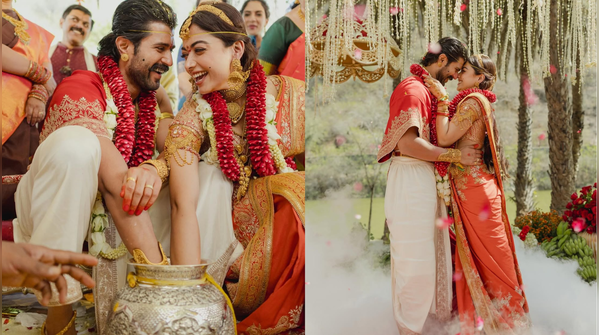
Fixing the Dhoti Dilemma
Let's talk about the silhouette. A lot of modern grooms avoid the traditional dhoti or pancha because they worry it’ll look too relaxed or messy next to a bride decked out in heavy Kanjeevaram silk. Vijay’s Udaipur look offered a masterclass in solving that exact problem. His ivory dhoti was sharply tailored to his body but kept enough fluidity so he could actually move during the rigorous wedding rituals. Plus, this crisp, muted ivory acted as a brilliant blank canvas. It let his heavy antique temple gold—specifically those layered harams and carved kadas—pop without fighting the fabric for attention.
(Image Credits: Instagram)
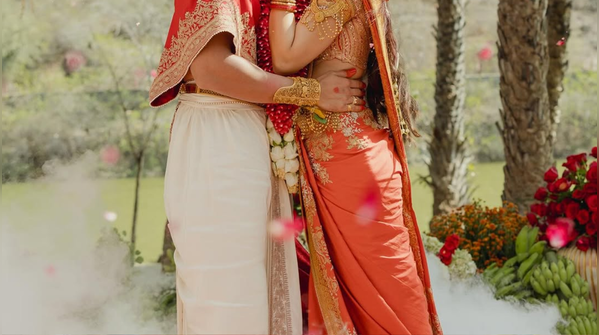
More Than Just a Red Drape
Breaking up all that sharp white was a bold vermillion angavastram slung across his shoulder. This wasn't just a red cloth with a generic gold border. The vibrant drape featured heavy detailing packed with specific forest and temple-inspired motifs. In Indian textile history, these aren't just pretty designs a stylist pulled from a mood board. These specific Vanasingaram patterns are actual visual references to power, lineage, and sacred architecture. Pairing that rich vermillion with clean white creates a commanding, masculine vibe that feels deeply rooted in South Indian authenticity.
(Image Credits: Instagram)
Sourcing the Look (And What It Costs)
Commissioning a garment with this much historical weight isn't quite like walking into a boutique and buying off the rack. If you're a groom wanting to bring this textile-forward energy to your own wedding, here is what the market actually looks like right now: ● The Authentic Handloom Route: Getting a custom Vanasingaram weave done by master artisans—using real silver or gold zari—is a generational investment. Depending on how intricate the temple motifs are and how long it sits on the loom, you need to budget anywhere between ₹85,000 and ₹2,50,000. ● The Accessible Alternative: If you want that same visual impact but are on a tighter timeline or budget, semi-handloomed silk drapes from South Indian weaving clusters are your best bet. You can source beautifully crafted ivory and vermilion sets with traditional borders for a much friendlier ₹15,000 to ₹40,000.
The Vanasingaram weave is finally getting the mainstream hype it deserves. By trading the expected pastel uniform for pure Indian handlooms, Vijay might have just rewritten the groom's style guide for the entire wedding season.
(Image Credits: Instagram)
Featured In lifestyle

MORE FROM ETIMES
life & style