
Ditch the pastel winds: What Vijay Deverakonda's and Rashmika Mandanna's wedding outfits taught us
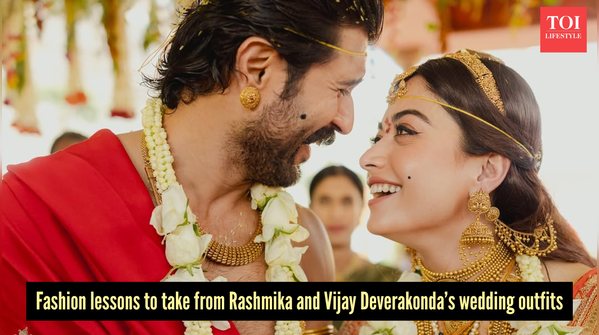
Ditch the pastel wedding trends
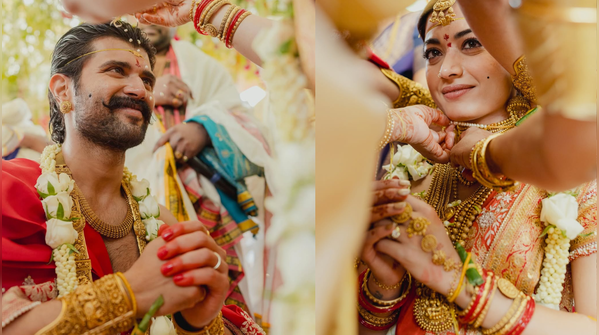
There used to be an unspoken dress code for A-list weddings: match your partner at all costs. If the bride showed up in pastel mint, the groom’s sherwani had to be cut from the exact same color palette. We can't deny that the whole 'Pantone twin' vibe guaranteed a flawless photo op. But recently, the perfectly synchronized wardrobe has started to feel a little exhausting—less like a couple expressing their actual taste and more like they were handed a mandatory uniform. Luckily, the bridal fashion scene is finally shifting gears, making room for couples to actually look like two distinct individuals again. The Udaipur wedding pictures of Vijay Deverakonda and Rashmika Mandanna capture this new mood perfectly, proving that couples can look completely unified without stepping out of the exact same dye vat.
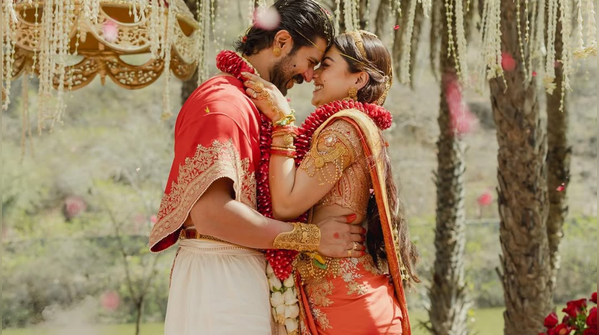
Beyond the Uniform
There is a distinct charm in letting both partners command their own visual space. Asymmetrical coordination is a styling trick that allows a couple to retain their individual aesthetics while still looking like they belong in the same frame. Rather than blending into one giant block of color, this approach highlights two distinct main characters bringing their own energy to a shared ritual. It is sophisticated, deeply intentional, and far more interesting to look at.
(Image Credits: Instagram)
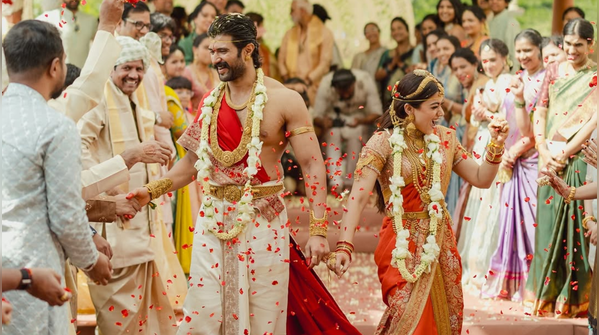
The Art of the Subtle Visual Bridge
Look closely at how the styling works in these portraits. Rashmika is the immediate focal point in a rich, vibrant vermilion Kanjeevaram silk saree. The heavy gold zari work and the traditional drape naturally demand attention. If they had followed the old formula, Vijay would have been styled in a matching red sherwani, which easily could have flattened the visual impact of both their outfits. Instead, he anchored his look with a sharply tailored, crisp ivory dhoti. The visual bridge tying them together is just one single, powerful element: his heavy vermilion angavastram (shoulder drape). He echoes her aesthetic instead of copying it outright. Keeping his base outfit completely neutral also allowed his intricate antique gold temple jewelry to stand out without competing against a loud fabric.
(Image Credits: Instagram)
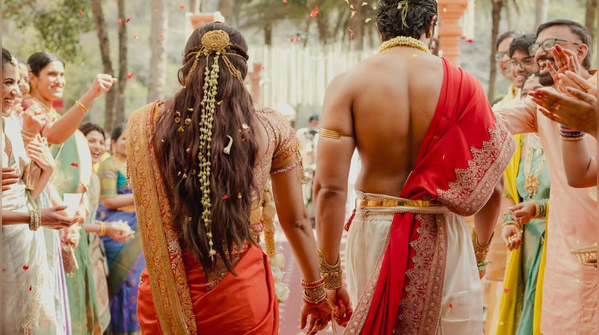
Pulling Off the Unmatched Look
If you are currently wedding planning and want to recreate this grounded, effortless aesthetic, the strategy is surprisingly simple. Here is how modern couples can pull off asymmetrical coordination for the upcoming season:
● Anchor and Accent: Let one person wear the highly saturated, dominant color. The other partner should build their look around classic, grounded neutrals like ivory, warm beige, or deep charcoal.
● The Single Thread: You only need one strategic accessory to tie the two looks together. A traditional safa (turban), a pocket square, or a woven shoulder stole matching your partner's primary shade does the job perfectly.
● Texture Over Color: Instead of obsessing over perfectly matched dyes, coordinate your fabrics. If the bride is wearing a heavy Kanjeevaram silk, the groom can opt for a raw silk kurta or add matching silk borders to his dhoti. Sourcing high-quality, color-coordinated silk borders for a groom’s neutral outfit is a highly affordable styling trick, usually adding a very manageable ₹3,000 to ₹7,000 to the tailoring budget.
(Image Credits: Instagram)
Final Verdict
Matching outfits will always have a nostalgic charm, but subtle, asymmetrical coordination feels like the definitive future of wedding fashion. It photographs beautifully, looks incredibly elegant, and best of all, you won't look like you are wearing a team uniform.
(Image Credits: Instagram)
Featured In lifestyle

MORE FROM ETIMES
life & style