Trending
This story is from October 17, 2017
12 Awesome Rangoli Designs to try out
Rangoli is a form of art in India, where patterns are made on the floor. From living rooms, outside the house to courtyards, rangoli is a form of decoration done during festivals.
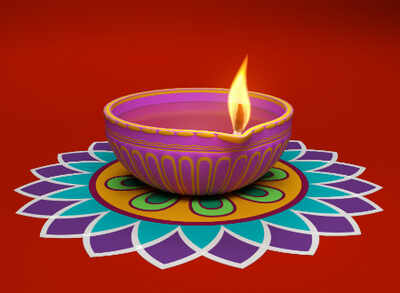
This tradition is very popular during Diwali celebrations. From offices to residential areas, this decoration is made to bring good luck. The designs can be simple in geometric shapes, floral designs and even impression of Gods. From using chemical colours to rice powder, people also deck up rangolis with diyas and flowers. This tradition of decorating homes also represents Hindu culture to please Goddess Lakshmi.It is believed she showers her worshippers with good luck and fortune. There are a lot of ways you can decorate your home with rangoli this Diwali. From flowers, pom-poms to floating diyas,rangoli designs can be made with rice, flowers and burst of colours.
Here are 12 Beautiful Rangoli designs to try out
1. Flower and petals rangoliIf you're looking for an easy design, then this flower rangoli is perfect for you. For this design, you would need rangoli stickers, rose petals, diyas and marigold flowers in yellow and orange colours. Put a diya in the centre and decorate with rose petals and marigold flower in a circle. Next, decorate other stickers with the petals and put the diyas on the corners of the design.
2. Pom pom rangoli
If you have a limited space to make a rangoli at home, you can try this one. For this rangoli, you would need diyas and colourful pompoms. Put a diya at the centre and make two circles of pom poms like shown. You can use double-sided tape to keep the pom-pom in place. You make more than one and get creative with this simple design.
3. Ganesha rangoli
One of the most popular designs of rangoli is the Ganesha design. You can outline the design with a pencil or a sketch pen first and then create a border with white powder. Get creative with colours and try a mix of bright colours.
4. Peacock rangoli
Another popular design is the peacock rangoli. This design is all about bold and bright colours. You can make a sketch first and create borders with colours and fill in the colours.
5. Peacock feather rangoli
If trying a peacock rangoli is tough for you, you can try the peacock feather rangoli. You can use green and blue colours for this design and make the designs by using your fingers.
6. Circular patterns
One of the most common traditional rangoli is the circular pattern. This design can be made in a lot of ways. From floral patterns inside to more designs, you can experiment a lot of ways with this design.
7. Floating flower rangoli
Another way to decorate your house with rangoli and diyas is this one. You can keep a bowl of water with flowers and floating diyas. Next, you can make a rangoli design in a semi-circle around the bowl of floating diyas.
8. Corner rangoli design
If you have not much space to make a rangoli, then this triangular shape rangoli on the corners of your house is perfect. Try the semi-circle designs in the corner and you can also decorate the ends with diyas and flowers.
9. Shubh Labh rangoli design
Decorate your house with good luck signs this Diwali. From Om, Swastika to Lakshmi Padukas, there are a lot of signs you can try. You can make colourful circles and make the signs with white powder.
10. Chowk designThis design is the oldest form of rangoli in India. It is made with wheat flour, vermilion or turmeric. It is believed to be very auspicious as it pleases God and Goddess.
11. Floating rangoli design
This design is made in water with floating diyas, flowers, petals and candles. A bowl of water is kept, which is decorated with watercolours, flower petals and floating diyas.
12. Alpana rangoli
Alpana is a rangoli made with grinned paste of rice. This auspicious rangoli is made to welcome Goddess Laxmi. The rangoli is made with fingers and is one of the popular designs made by women during many Indian festivals.
End of Article
Follow Us On Social Media
Visual Stories






Photostories
Tired of too many ads?go ad free now
Featured In Lifestyle

Tired of too many ads?go ad free now
Hot on the Web
Virat KohliRaid 2 Box Office CollectionNeena GuptaBabil KhanGround Zero Box Office CollectionRetro Box Office CollectionRaid 2 Movie ReviewHIT 3 Box Office CollectionKesari 2 CollectionSnake PlantsLongevity RulesDehydration SymptomsCOVID-19 House Of HorrorsMika SinghBaby Boy NamesAishwarya RaiBrain Ageing HabitsBig CatsAloe Vera Gel BenefitsPakistani Artists BanPet GoldfishAnimals Own HomesHigh Blood Pressure SymptomsMedicine HerbsColourful FishPush Ups BenefitsFood for Kidney HealthOptical illusionSharmila TagoreOldest Living AnimalsEarth Largest SnakeMost Beautiful Aquarium FishKidney Damage SymptomsMuscle Growth SupplementsRaghav JuyalVirat Kohli NicknameAvneet KaurPawandeep Rajan Car AccidentSitaare Zameen ParAdnan SamiChia SeedsAlia Bhatt
Trending Topics
Latest MoviesBollywood MoviesHollywood MoviesTamil Movies 2025Telugu Movies 2025Malayalam Movies 2025Kannada Movies 2025Marathi Movies 2025Bengali Movies 2025Top Rated Movies 2025Best Hindi MoviesBest English MoviesBest Telugu MoviesBest Tamil MoviesBest Malayalam MoviesBest Kannada MoviesBest Bengali MoviesUpcoming Hindi MoviesBest Movies Of All TimeBest Hindi Movies of All TimePisces Horoscope TodayAquarius Horoscope TodayCapricorn Horoscope TodaySagittarius Horoscope TodayScorpio Horoscope TodayLibra Horoscope TodayVirgo Horoscope TodayLeo Horoscope TodayCancer Horoscope TodayGemini Horoscope Today
Popular Categories
Aries May HoroscopeTaurus May HoroscopeGemini May HoroscopeCancer May HoroscopeLeo May HoroscopeVirgo May HoroscopeLibra May HoroscopeScorpio May HoroscopeSagittarius May HoroscopeCapricorn May HoroscopeAquarius May HoroscopeEntertainment NewsBollywood NewsTollywood NewsKollywood NewsMollywood NewsMovie ReviewsLatest Hindi MoviesLatest Tamil MoviesParenting TipsHome RemediesWeight LossBeauty TipsParenting TipsHindi VideosHindi Video SongsBhojpuri Music VideosLatest Telugu MoviesBhojpuri Music VideoHindi TV News
Latest News
"She has dirt on him": Bill Belichick's controversial relationship with 24-year-old Jordon Hudson sparks wild speculationFollowing Trump 100% tariffs on foreign-produced films annoucement, the netizens question the controversial decisionHow to get a Turtle Shell in MinecraftApple is changing its biggest iPhone launch event of the year starting 2026Big economic setback! Pakistan economy has more to lose than India - Moody's warning amid ongoing tensionsTaurus Horoscope Tomorrow, May 06, 2025: Day filled with joy and emotional warmthDespite the official statement by Babil Khan’s team, worried fans express their concerns: “A 26-year-old boy, who loved his father and lost him, must be dealing with..”Sidharth Malhotra carries preggers Kiara Advani's bag, ahead of their Met Gala appearance in NYC- UNSEEN videoDonald Trump's 100% movie tariff: Will Indian and global cinema pay the price?White Lotus Group to invest Rs 700 crore in new housing projects in BengaluruBeware! Repeat traffic violations could soon lead to license suspension: DetailsScottie Scheffler dominates CJ Cup Byron Nelson 2025 in spectacular homecoming victoryAries Horoscope Tomorrow, May 06, 2025: Singles might encounter someone special'Russia assures full support': Putin dials PM Modi after Pahalgam terror attack‘Hera Pheri 3’ teaser to release before IPL 2025 Finale, confirms Suniel Shetty; Fans rejoiceGermany's far-right AfD sues intelligence agency over 'extremist party' label“We have to select everybody on merit”: Cadillac unveils Formula 1 team logo before 2026 debut with merit-based driver selection emphasisThe Impending Day