Trending
This story is from August 2, 2016
Review: India’s Wars
The book is impressive on two counts: the research has been pretty detailed, killing the scope of jingoism to colour the narrative. Read on to know more.
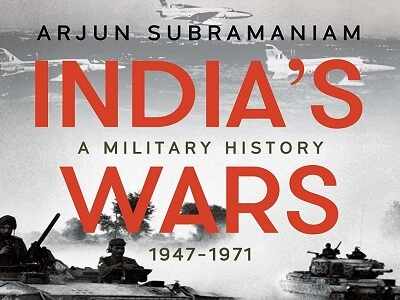

The people had very little idea of what was happening. Things haven’t changed much since those events. Enter India’s Wars: A Military History, 1947-1971 by Air Vice Marshal Arjun Subramaniam, a book that promises to fill the gaps in public consciousness about the wars Independent India has fought up to 1971.
The book is impressive on two counts: the research has been pretty detailed, killing the scope of jingoism to colour the narrative; and it tries to make military history more readable and acceptable to a layman.
In India, for long, military history writing has remained an exclusive domain of serving or retired soldiers. And overt nationalism has been the bane of some of these authors who have produced hagiographies that are at times quite laddish in tone and tenor.
Subramaniam’s work is different. He may have well written the first comprehensive history of the tri-services in India’s wars since 1947 and that by itself has been a mammoth task.
He impresses with the myth-busting around the first India-Pakistan war over Kashmir and the 1962 debacle. He brings out the less-acknowledged role of the Indian Air Force in both conflicts. For instance, the first troops were air-lifted to Srinagar in 1947. The first Stuart tanks of 7 Cavalry were also air-lifted, which fought a decisive action at Joji La leading to an Indian victory. He also talks about the IAF struggling to keep the supply lines open in 1962 when airdrops were the only means to keep the small Indian pockets of resistance going against the Chinese onslaught.
The author has also been critical of Pandit Jawaharlal Nehru for ignoring the Army’s needs, trying to wrest Goa from the Portuguese with diplomacy for too long, and provoking China without the wherewithal to resist an aggression. However, he has balanced it out with his appreciation of Nehru for the many rights he did, which included taking some strategic calls, such as overruling his British commanders and involving the IAF in 1947-48, or diverting troops to defend Poonch against the advice of his British and Indian commanders.
The book has a few pitfalls too, starting with some annoying factual errors to some amazing generalisations about India’s past: Subramaniam traces the DNA of Indian military to the Marathas and Sikhs but dismisses the Mughals completely as foreigners. On these two fronts, Subramaniam’s book stands at variance with established academic history. But these don't take away much from the book.
The book is important for the lay reader in that it makes him more aware of the military—its glorious past and present, its stellar role in upholding the vibrant Indian democracy, and its silent gallantry in putting lives on the line.
The Indian military is something to be proud of and celebrated. India’s Wars does just that. A must-read for all ages.
(Manimugdha S Sharma)
End of Article
FOLLOW US ON SOCIAL MEDIA





Photostories
Featured In Lifestyle

MORE FROM ETIMES
life & stylePopular Categories
Entertainment NewsBollywood NewsTollywood NewsKollywood NewsMollywood NewsMovie ReviewsLatest Hindi MoviesLatest Tamil MoviesMX PlayerParenting TipsHome RemediesWeight LossBeauty TipsParenting TipsHindi VideosHindi Video SongsBhojpuri Music VideosLatest Telugu MoviesBhojpuri Music VideoHindi TV News
Trending in Entertainment
Latest MoviesBollywood MoviesHollywood MoviesTamil Movies 2024Telugu Movies 2024Malayalam Movies 2024Kannada Movies 2024Marathi Movies 2024Bengali Movies 2024Top Rated Movies 2024Best Hindi MoviesBest English MoviesBest Telugu MoviesBest Tamil MoviesBest Malayalam MoviesBest Kannada MoviesBest Bengali MoviesUpcoming Hindi MoviesBest Movies Of All TimeBest Hindi Movies of All Time
Trending in Etimes
Horoscope TodayNumerology Predictions TodayWalking BenefitsBreast Cancer DiagnosisYung Filly Rape CaseTaylor Rousseau GriggBelly FatSean Diddy CombsOzempic PersonalityDepression RiskBelly Fat LossDurga Visarjan 2024Toxic FriendshipDonald TrumpElon MuskDussehra 2024Durga Ashtami 2024Multitasking TipsSaraswati Visarjan 2024
Trending in TV
Trending in Lifestyle
Trending in Regional
Movie Reviews
Binny And Family ReviewLove, Sitara ReviewWill & Harper ReviewWolfs ReviewYudhra ReviewJo Tera Hai Woh Mera Hai ReviewKahan Shuru Kahan Khatam ReviewHis Three Daughters ReviewNever Let Go ReviewDancing Village: The Curse Begins ReviewTransformers One ReviewFirst Love ReviewBerlin ReviewThe Buckingham Murders Review
Upcoming Hindi Movies
Upcoming Regional Movies
Latest News
Salman Khan’s security beefed up after Baba Siddiqui’s murder; ‘Sultan’ star looked uncomfortable after visiting the late politician’s family at 3 amOver 70 injured at Devaragattu Banni stick festival during Dussehra celebrationsPassion missing, players don’t want to work hard, lament former intl’sHow tomato, potato, onion influence food inflationBiker’s death ignites village fury in Odisha's Boudh, massive traffic jam on NH-57Reliance Jio sends 'complaint letter' to telecom minister Jyotiraditya ScindiaWomen's T20 World Cup: Why India need Pakistan victory over New Zealand to secure semifinal berthSpaceX's fifth Starship test flight achieves historic booster catchCops probing Bishnoi gang's links to Siddique's murderNews brief: 'Who is listening? Modi?': Kapil Sibal takes a dig at RSS chief Mohan BhagwatPapankusha Ekadashi 2024: Date, Parana Time, Puja Rituals and SignificanceKenya's Ruth Chepngetich breaks women's world record at Chicago MarathonAI’S OppenheimerMahela Jayawardene returns as Mumbai Indians head coachMidnight queues, long waits, bad advice: It's not easy getting therapy in IndiaBaba Siddique murder case: Slum dispute that sparked ED inquest to be part of probeFor 20 years, Thar getting more rain than normalSpiritual fervour marks Bagh Savari festival held at Tirumala
Other Group Sites -
ETimes is an Entertainment, TV & Lifestyle industrys promotional website and carries advertorials and native advertising.