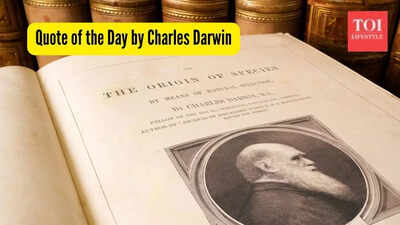
Quote of the Day by Charles Darwin "It is not the strongest of the species that survives, not the most intelligent that survives. It is the one that..."

About the AuthorTOI Lifestyle Desk
End of Article
Follow Us On Social Media
Tired of too many ads?go ad free now
lifestyle videos
Featured In Lifestyle

Tired of too many ads?go ad free now

MORE FROM ETIMES
life & styleHot on the Web
Catherine O'Hara Death NewsRanveer SinghWill SmithGandhi Talk ReviewBhagyashri BorseVaranasiMardaani 3 ReviewFlying UmbrellaJana NayaganDon RitchieInternational VisaDhurandhar OTT ReleaseRani MukerjiBorder 2 CollectionAnke Gowda StoryNelson DilipkumarBorder 2 Movie ReviewArijit SinghBrain CancerShyam PathakRobert BrowningNortheast DishesFebruary 2026 Horoscope PredictionsSeneca QuoteBhoot Police 2Purnima 2026Sunaina RoshanPadayappa 2Dhurandhar Movie ReviewChandra Grahan 2026William ShakespeareWorld Largest Late Roman HoardPink DolphinsTim CookQuote Of The Day By Richard FeynmanWorld Longest Road TunnelCrocodile RiverApple Products To Launch In 2026Sam Altman QuoteAsteroid 2024 YR4 May Hit MoonHawaiian Happyface Spider
Trending Topics
Latest MoviesBollywood MoviesHollywood MoviesTamil Movies 2026Telugu Movies 2026Malayalam Movies 2026Kannada MoviesMarathi MoviesBengali Movies 2026Top Rated Movies 2026Best Hindi MoviesBest English MoviesBest Telugu MoviesBest Tamil MoviesBest Malayalam MoviesBest Kannada MoviesBest Bengali MoviesUpcoming Hindi MoviesBest Movies Of All TimeBest Hindi Movies of All TimeLatest English MoviesLatest Malayalam MoviesEnglish TV NewsTamil TV NewsTelugu TV NewsMalayalam TV NewsKannada TV NewsMovie ReviewsBhojpuri Cinema NewsGujarati Cinema News
Popular Categories
Viral NewsK Pop NewsWeb Series NewsAnime NewsUpcoming English MoviesUpcoming Tamil MoviesUpcoming Telugu MoviesUpcoming Malayalam MoviesUpcoming Kannada MoviesFashion TipsTravel NewsEntertainment NewsBollywood NewsTollywood NewsKollywood NewsMollywood NewsFood NewsLatest Hindi MoviesLatest Tamil MoviesParenting TipsHome RemediesWeight LossBeauty TipsParenting TipsHindi VideosHindi Video SongsBhojpuri Music VideosLatest Telugu MoviesBhojpuri Music VideoHindi TV News
Latest News
MLB trade rumors: New York Mets predicted to sign $10.15 million Cy Young in a blockbuster deal with the Detroit Tigers ahead of deadlineTrump administration to add roughly 65,000 H-2B guest worker visas this yearWB offers 5-year $8-10bn support in new structureWorst month for Rupee in 3 years; RBI intervenes, halts 92 breach"Everyone's clicking": Penguins’ win streak isn’t a fluke as Anthony Mantha reveals what finally unlocked Pittsburgh’s offenseAquarius Horoscope Today, January 31, 2026: Make one smart money moveDaily Horoscope: Today's astrological predictions for January 31, 2026Samsung confirms Galaxy F70 series India launch in February'Prakambanam' box office collections day 1: Ganapathi's horror film gets decent opening; Makes Rs 43 lakhs worldwideNBA insider makes stunning Cooper Flagg–LeBron James comparison after teenage recordHalle Berry says she won't be ashamed of her ageET NOW ready for ‘wall-to-wall’ budget coverageOla Electric to lay off 5% of workforce‘Lower govt stake can fetch higher receipts’Taylor Swift–Travis Kelce wedding buzz grows as Kylie Kelce stays THIS about the big dayIs Nikola Jokic playing tonight vs the Los Angeles Clippers? Latest update on the Denver Nuggets star's injury report (January 30, 2026)The New York Yankees has lost last active player from the 2009 World Series roster after David Robertson’s retirement'Valathu Vashathe Kallan' box office collections day 1: Jeethu Joseph film gets good push; Crosses Rs 1 crore