Trending
This story is from September 20, 2023
Moby Dick: Last line encapsulates the novel's themes of obsession, tragedy, and the relentless pursuit of a goal
The last line of "Moby-Dick" by Herman Melville reflects on the ship Rachel's search for its missing crew, connecting with the themes of loss and tragedy in the novel. It indirectly relates to the title by emphasizing the theme of pursuit and obsession, similar to Captain Ahab's pursuit of the white whale. The line serves as a reflection on the futility of these obsessions and the destructive nature of unrelenting quests, ultimately leading to more loss and sorrow.
Meaning of the last line:
The "devious-cruising Rachel" refers to a ship called the Rachel, which is mentioned earlier in the novel.

The phrase "retracting search after her missing children" refers to the Rachel's desperate search for its missing crew members, who were lost at sea. In the context of the story, this search is an allegory for the characters' quests and obsessions.
The line concludes with the idea that the Rachel, in its search for its lost crew, only found "another orphan," implying that the ship's quest for its missing members led it to encounter more loss and tragedy.
Connection with the title:
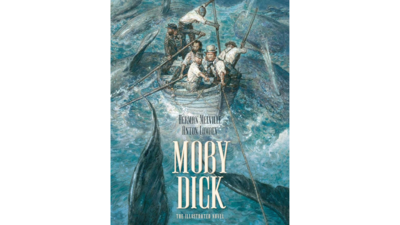
The title of the book, "Moby-Dick," refers to the novel's central antagonist, the white whale Moby Dick. The book explores Captain Ahab's relentless pursuit of Moby Dick, which ultimately leads to tragedy and destruction.

AI-generated image/Lexica.art
The last line indirectly connects to the title by highlighting the theme of pursuit and obsession. In the case of the Rachel, its search for its missing crew is akin to Ahab's pursuit of Moby Dick. Both pursuits are driven by an unrelenting desire to reclaim something lost, whether it be crew members or revenge against the whale.
Relation to the story and its Characters:
The characters in "Moby-Dick" are often driven by their own quests and obsessions. Captain Ahab's pursuit of Moby Dick is the most prominent example, as he is consumed by vengeance and driven to the point of self-destruction.
The last line serves as a reflection on the futility of these obsessions. It suggests that even when characters embark on their quests with noble intentions (in the case of the Rachel, to find their missing crew), they often encounter more tragedy and loss along the way. This mirrors the broader theme of the novel, which explores the destructive nature of unrelenting obsessions.
It connects with the title by highlighting the destructive nature of such pursuits and serves as a reflection on the characters' journeys throughout the story. Ultimately, it underscores the idea that in their quests, characters often find not what they seek, but rather more loss and sorrow.
End of Article
FOLLOW US ON SOCIAL MEDIA









Photostories
Featured In Lifestyle

Popular Categories
Entertainment NewsBollywood NewsTollywood NewsKollywood NewsMollywood NewsMovie ReviewsLatest Hindi MoviesLatest Tamil MoviesMX PlayerParenting TipsHome RemediesWeight LossBeauty TipsParenting TipsHindi VideosHindi Video SongsBhojpuri Music VideosLatest Telugu MoviesBhojpuri Music VideoHindi TV News
Trending in Entertainment
Latest MoviesBollywood MoviesHollywood MoviesTamil Movies 2024Telugu Movies 2024Malayalam Movies 2024Kannada Movies 2024Marathi Movies 2024Bengali Movies 2024Top Rated Movies 2024Best Hindi MoviesBest English MoviesBest Telugu MoviesBest Tamil MoviesBest Malayalam MoviesBest Kannada MoviesBest Bengali MoviesUpcoming Hindi MoviesBest Movies Of All TimeBest Hindi Movies of All Time
Trending in Etimes
Horoscope TodayNumerology Predictions TodayAustria ElectionJoe BidenKamala HarrisPopulated Indian CitiesAlcohol Cancer RiskIsrael Beirut WarSunita WilliamsIsrael Hezbollah WarNepal FloodBarbra StreisandSnoring Prevention TipsDonald TrumpMagnesium DeficiencyRelationship TipsSean Diddy CombsAlzheimers DiseaseFunniest Wildlife Photos 2024
Trending in TV
Trending in Lifestyle
Trending in Regional
Movie Reviews
Binny And Family ReviewLove, Sitara ReviewWill & Harper ReviewWolfs ReviewYudhra ReviewJo Tera Hai Woh Mera Hai ReviewKahan Shuru Kahan Khatam ReviewHis Three Daughters ReviewNever Let Go ReviewDancing Village: The Curse Begins ReviewTransformers One ReviewFirst Love ReviewBerlin ReviewThe Buckingham Murders Review
Upcoming Hindi Movies
Upcoming Regional Movies
Latest News
Sagittarius, Daily Horoscope Today, October 1, 2024: A day of inner peace and happinessWATCH: Alia Bhatt exudes elegance as she’s all set to join Kareena Kapoor on her showJohns Hopkins University vs. Stanford University: Which University Dominates in Anatomy & Physiology?Aquarius, Daily Horoscope Today, October 1, 2024: Optimism in the airBasic Home Loan raises Rs 87.5 crore in a Series B funding roundMallikarjun Kharge's remarks on PM Modi distasteful, disgraceful: Amit ShahPriyanka Chopra shares charming throwback pictures of her transformation from 9 to 17 years old: 'Not a girl, not yet a woman'Zodiac Signs’ Favorite Ways to De-StressLaughter Chefs: Rahul Vaidya shares a fan's heartfelt message for them; Chef Harpal Singh Sokhi breaks down in tears, 'My sister was in ICU...'Gemini, Daily Horoscope Today, October 1, 2024: Day of hard work and focus'Terrorism has no place in our world': PM Modi tells Israel's NetanyahuBhuvan Bam: Digital creators can thrive in mainstream cinemaLamborghini convoy stuns Mussoorie: 71 cars on hill steal the spotlightMumbai vs Rest Of India: Irani Cup tie offers chance for hopefuls and rejects to impress selectorsOlivia Culpo and Christian McCaffrey buy George Clooney's mansion for $14.5 millionKaun Banega Crorepati 16: Amitabh Bachchan believes he is 'Half-Sikh' recalling his maternal roots; reveals his aunts called him 'Amitabh Singh'WWE Superstar CM Punk responds to the passing of legendary singer Kris KristoffersonRG Kar case: Kolkata court extends judicial custody of ex-principal, suspended cop till October 4
Other Group Sites -
ETimes is an Entertainment, TV & Lifestyle industrys promotional website and carries advertorials and native advertising.