Trending
This story is from October 9, 2020
Facts about Nobel literature prize 2020 winner Louise Gluck
Here we list down some interesting facts about Nobel Prize in Literature 2020 winner Louise Gluck. Read on!
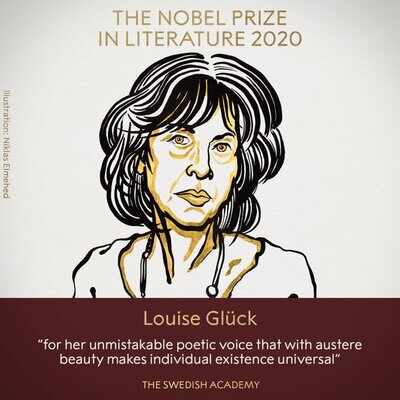
(Photo: Nobel Prize/ Twitter)

1. Born on 22 April, 1943 in New York City, United States of America, Louise Glück debuted as a writer in 1968 with her first poetry collection ‘Firstborn’. She currently lives in Cambridge, Massachusetts.
2. Glück is the 117th winner of the Nobel Prize in Literature, which was started in 1901. And, she is the 16th woman to have won the prestigious award.
3. Apart from the Nobel Prize in Literature, Louise Glück has also won notable awards like Pulitzer Prize for Poetry in 1993 and the National Book Award in 2014, among others. She was also the US Poet Laureate from 2003–2004.
4. She won the Pulitzer Prize in 1993 for her poetry collection 'The Wild Iris' (1992); in one of her poems 'Snowdrops' she describes the magical return of life after a cold and deadly winter. Gluck also won the National Book Award in 2014 for 'Faithful and Virtuous Night'.
5. Louise Glück has published 12 poetry collections and some essays. Some of her most acclaimed works include: 'The Triumph of Achilles' (1985), 'The Wild Iris' (1992), 'Averno' (2006), 'Faithful and Virtuous Night' (2014) among others.
6. Apart from being a poet and essayist, Louise Glück works as a professor of English at Yale University, Connecticut.
7. Elaborating on her works, a statement on the Nobel Prize's website reads, 'Childhood and family life, the close relationship with parents and siblings, is a thematic that has remained central with her. In her poems, the self listens for what is left of its dreams and delusions, and nobody can be harder than she in confronting the illusions of the self. But even if Glück would never deny the significance of the autobiographical background, she is not to be regarded as a confessional poet. Glück seeks the universal, and in this she takes inspiration from myths and classical motifs, present in most of her works.'
End of Article
FOLLOW US ON SOCIAL MEDIA









Photostories
Featured In Lifestyle

Popular Categories
Entertainment NewsBollywood NewsTollywood NewsKollywood NewsMollywood NewsMovie ReviewsLatest Hindi MoviesLatest Tamil MoviesMX PlayerParenting TipsHome RemediesWeight LossBeauty TipsParenting TipsHindi VideosHindi Video SongsBhojpuri Music VideosLatest Telugu MoviesBhojpuri Music VideoHindi TV News
Trending in Entertainment
Latest MoviesBollywood MoviesHollywood MoviesTamil Movies 2024Telugu Movies 2024Malayalam Movies 2024Kannada Movies 2024Marathi Movies 2024Bengali Movies 2024Top Rated Movies 2024Best Hindi MoviesBest English MoviesBest Telugu MoviesBest Tamil MoviesBest Malayalam MoviesBest Kannada MoviesBest Bengali MoviesUpcoming Hindi MoviesBest Movies Of All TimeBest Hindi Movies of All Time
Trending in Etimes
Horoscope TodayNumerology Predictions TodayAustria ElectionJoe BidenKamala HarrisPopulated Indian CitiesAlcohol Cancer RiskIsrael Beirut WarSunita WilliamsIsrael Hezbollah WarNepal FloodBarbra StreisandSnoring Prevention TipsDonald TrumpMagnesium DeficiencyRelationship TipsLake Michigan DiscoveryElon MuskEkadashi in October 2024
Trending in TV
Trending in Lifestyle
Trending in Regional
Movie Reviews
Binny And Family ReviewLove, Sitara ReviewWill & Harper ReviewWolfs ReviewYudhra ReviewJo Tera Hai Woh Mera Hai ReviewKahan Shuru Kahan Khatam ReviewHis Three Daughters ReviewNever Let Go ReviewDancing Village: The Curse Begins ReviewTransformers One ReviewFirst Love ReviewBerlin ReviewThe Buckingham Murders Review
Upcoming Hindi Movies
Upcoming Regional Movies
Latest News
Dashing dad Ranveer Singh's dapper looks dole out men's fashion goals - PicsShark Tank India 4: Sharks begin shooting for the new season; Sahiba Bali and Ashish Solanki join as new hostsMahima Chaudhry reveals she begged Ajay Devgn and Prakash Jha to keep her near-fatal car accident secret: 'I feared industry boycott'Vijay's 'GOAT' gets an OTT release; official date announced!CSK to connect with MS Dhoni in 'coming week', undecided on using IPL uncapped player ruleHow to use charcoal powder to whiten teethA night-long musical extravaganza, ‘Raat Pohalo Sharodo Praate’ to usher Devipokkho with unforgettable melodiesOlivia Culpo and Christian McCaffrey buy George Clooney's mansion for $14.5 millionElon Musk lost legal battle over unpaid severance to former Twitter employeeBohurupi trailer promises to be a gripping heist drama'CM Yogi's mindset towards Muslims ...': Faizabad MP hits back at BJP in Ayodhya rape caseLate actress Park Ji Ah's co-stars Song Hye Kyo, Park Sung Hoon, and others to attend funeralBill Belichick Leaves Tom Brady Jokes Behind to Join Nike in Boosting Lacrosse, America’s Sport on the RiseMumbai Indians the winners under new IPL retention ruleSurabhi Lakshmi on receiving praise from Akshay Kumar: I never imagined he would remember me; overwhelmed by his wordsIsraeli military announces assassination of key Hezbollah Weapons Commander Muhammad Jaafar QasirKenishaa Francis reacts to backlash over alleged NDA violation in Jayam Ravi and Aarti Ravi's divorce issueStock market today: BSE Sensex rises over 300 points; Nifty50 above 25,850
Other Group Sites -
ETimes is an Entertainment, TV & Lifestyle industrys promotional website and carries advertorials and native advertising.