
6 authors who captured March perfectly: Timeless literary lines about change and transition
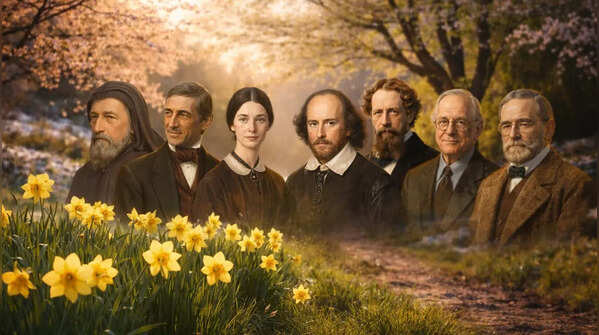
6 authors who captured March perfectly: Timeless literary lines about change and transition
March has always seemed to have a sort of appeal to writers, balancing the harshest of winter and spring in a sort of delicate dance. March is a month of contrasts—harsh winds and blooming flowers, endings and beginnings in tandem. For centuries, literary voices have used March not just as a season, but as a reflection of emotional shifts, capturing the tension between uncertainty and renewal that defines both nature and the human experience.There have been many writers who have turned to March as a metaphor for the unpredictability of life, the importance of patience in growth, and the promise of what comes next. Though these quotes may not literally have anything to do with March, they have to do with the emotions that March brings. March becomes a metaphor for the fact that change is never immediate but is always significant and only happens in retrospect.
PC: AI-Generated

William Shakespeare
“Daffodils,
That come before the swallow dares, and take
The winds of March with beauty.”
In The Winter’s Tale, Shakespeare says that March is a test of strength, and the daffodils bloom in the face of strong winds. This is an image of strength in weakness, where development does not take place in anticipation of the best conditions but in adversity. March has become a powerful symbol of strength.PC: Wikipedia

Ralph Waldo Emerson
“Our life is March weather, savage and serene in one hour.”
In his essay Experience, Emerson has made an outstanding analogy between human life and the ever-changing nature of March. This quote emphasises the idea that life has a tendency to change rapidly in terms of emotions and situations, from calmness to chaos within a matter of moments. This quote portrays the unpredictability of life, which reminds us that instability is not uncommon in life but a part of life’s rhythm.
PC: Wikipedia

Emily Dickinson
“Dear March – Come in –
How glad I am –
I hoped for you before –”
In her poem “Dear March — Come in —”, Dickinson’s words are so personal, so inviting, like opening the door to an old friend. March is depicted as a time of expectation and emotional transformation, where hope starts to seep in and supplant the quiet of winter. Her words evoke the quiet thrill of change, and how change, no matter how slight, is full of emotional significance.
PC: Wikipedia

Geoffrey Chaucer
“Whan that Aprille with his shoures soote…
The droghte of March hath perced to the roote.”
In The Canterbury Tales, Chaucer describes March as a time when dryness is broken, and life begins to stir again. The imagery here connects the physical idea of life stirring on the earth to a deeper idea. March becomes a turning point, and the harshness of winter begins to give way to life.
PC: Wikipedia
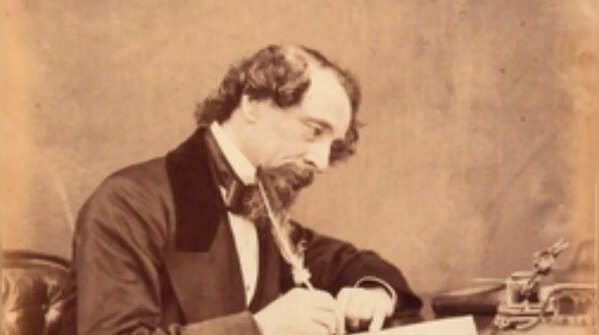
Charles Dickens
“It was one of those March days when the sun shines hot and the wind blows cold: when it is summer in the light, and winter in the shade.”
The essence of March is reflected in Charles Dickens’ novel "Great Expectations." Dickens’ description is characteristic of the unpredictability of March, as there is both cold and hot weather at the same time. The coexistence of both cold and hot weather is characteristic of the complexities and unpredictability of life, and March is symbolic of life’s uncertainties.
PC: Wikipedia

Lewis Thomas
“In March, winter is holding back, and spring is pulling forward. Something holds and something pulls inside of us, too.” — Lewis Thomas
In The Lives of a Cell, Thomas says March is a quiet tug of war between seasons, much like an emotional struggle taking place inside a person. His words imply that, much like change in nature, there are moments of change in people, and this quote is an indication of that. It shows March as a symbol of change in people’s lives.
PC: Wikipedia
Featured In lifestyle

MORE FROM ETIMES
life & style