
Collagen for hair and skin: 5 powerful benefits you should know

Collagen benefits you should know
Scroll through your Instagram feed on any given morning, and you're bound to spot someone casually stirring a scoop of beige powder into their iced latte. Collagen is absolutely everywhere right now. But is it just another fleeting wellness trend pushed by influencers, or is there real science backing up the hype?
Spoiler alert: It’s the latter. Collagen is the most abundant structural protein in the human body. Think of it as the literal glue holding your skin, hair, and nails together. The catch? Right around our mid-20s, our natural supply hits a wall and begins a slow, steady decline. If you’ve found yourself staring in the mirror lately, wondering why your skin lacks its usual bounce or why your hair feels unusually brittle, this biological slow-down is the likely culprit.
Here are five scientifically backed reasons why adding this powerhouse protein to your daily routine is the ultimate non-negotiable for long-term skin and hair health.
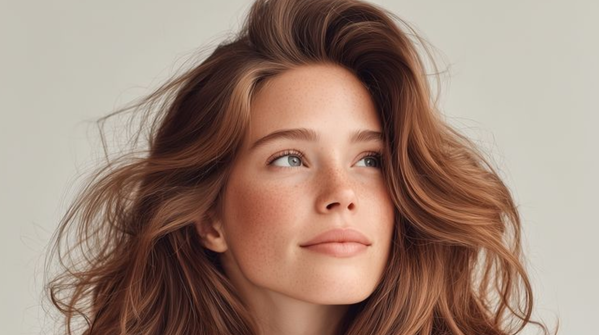
It’s the invisible scaffolding for your face
Imagine a brand-new, high-quality mattress. It’s firm, plump, and springs right back the second you press into it. That’s exactly what collagen does for your dermis—the thick middle layer of your complexion. Over time, thanks to age, UV rays, and late nights, that dense matrix starts to break down. The springs give out.
By supplementing, you essentially wake up your fibroblasts (the cells responsible for producing the protein). This keeps your internal framework incredibly strong, actively preventing the dreaded sag and smoothing out fine lines before they settle.
(Image Credits: Pinterest)

It hands your body the raw materials for better hair
We hear a lot about keratin in the beauty world. It makes sense, considering your hair is practically made of it. But here is what most people miss: to actually build that keratin, your body desperately needs specific amino acids.
Proline is the heavy lifter here, and collagen is packed to the brim with it. Instead of just slathering an expensive mask on the dead ends of your hair, you are feeding your system the foundational building blocks it needs to grow resilient, thicker strands right from the source.
(Image Credits: Pinterest)

It locks your roots firmly in place
Speaking of the source, let’s talk about where your hair lives. Your hair follicles are anchored deep within the dermal layer of your scalp, which happens to be made up of about 70% collagen. When those protein levels inevitably drop, the skin around the follicle weakens. It literally loses its grip. If you've been noticing a bit more hair in the shower drain than usual, this is often why. Replenishing your collagen thickens that dermal layer back up, providing a secure, healthy environment that prevents age-related hair thinning.
(Image Credits: Pinterest)

It triggers a massive surge of internal hydration
Nobody wants dull, textured skin. While your favorite rich moisturizer feels amazing on the surface, collagen pulls off an inside job. Research shows that collagen peptides actually trick your body into naturally producing more hyaluronic acid. Yes, the exact same molecule famous for holding up to a thousand times its weight in water. This internal hydration mechanism plumps your cells from within. The result is that coveted, dewy, lit-from-within glow that no amount of surface-level highlighter can truly replicate.
(Image Credits: Pinterest)

It acts as a shield against daily urban damage
Everyday life is surprisingly rough on our cells. City pollution, daily stress, and even a poor diet trigger oxidative stress. This releases free radicals—unstable, chaotic little molecules that wreck your cellular DNA, degrade your skin's matrix, and are even linked to premature graying. Enter collagen, particularly the marine variety.
It brings potent antioxidant properties to the fight, effectively neutralizing these free radicals before they can inflict lasting environmental damage on your face or your follicles.
(Image Credits: Pinterest)

The Bottom Line
Collagen isn't just a cosmetic band-aid. It’s a fundamental biological requirement. Whether you prefer sipping on rich bone broths or simply mixing a high-quality, hydrolyzed peptide supplement into your morning smoothie, maintaining this protein is the smartest move you can make for your body. It is time to stop treating the symptoms and start feeding the foundation.
(Image Credits: Pinterest)
Featured In lifestyle

