
- News
- India News
- When Mumbai’s iconic red fleet took city on road to recovery
Trending
This story is from July 16, 2020
When Mumbai’s iconic red fleet took city on road to recovery
As the pandemic haunted Mumbai, the city’s iconic red fleet – BEST buses – ferried healthcare workers. After lockdown eased, it carried over a million people going to work even as its own staff battled the disease. The 2,000 drivers and conductors who operate the BEST fleet kept it running even at the height of the lockdown. Now the fleet has doubled running 3,100 buses.
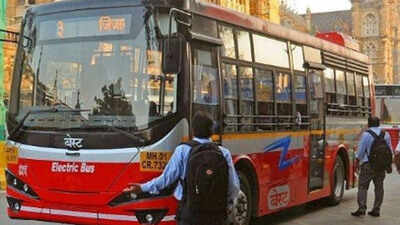
VROOMING AGAIN: The pandemic brought out the best in the 3,000-plus BEST fleet of Mumbai, bouncing back to carry 2.5 lakh people in mid-June when lockdown eased
It’s 3 am when Ashish Khilari leaves for the morning shift. He kisses his five-year-old son goodbye and dons his face shield, mask and gloves before stepping out into the pre-dawn darkness on a street in Kalbadevi in the heart of Mumbai’s commercial district.

Among the thousands of essential workers commandeered for duty, Khilari, 30, works for a team that literally keeps the wheels of a metropolis moving.
The 2,000 drivers and conductors who operate the BEST fleet kept the transport utility running even at the height of the lockdown. At a time when local trains, taxis, autos and ride-hailing services came to a halt, Mumbai’s iconic red buses were on the roads, carrying healthcare and government staff.

“We were operating just 1,200 to 1,500 buses during the worst days of the lockdown. Now the fleet has doubled and we have brought out 3,100 buses to ensure the city keeps moving," says Khilari.
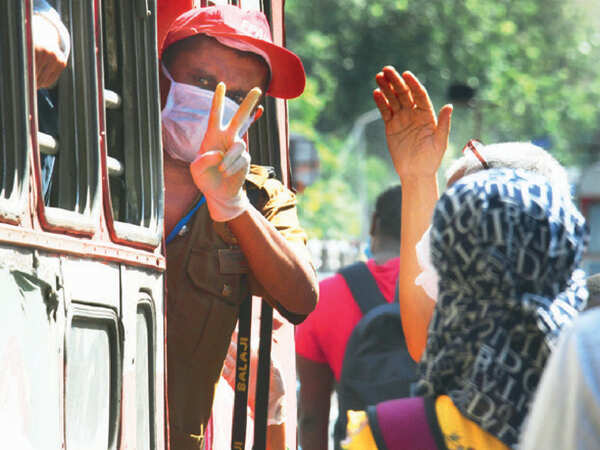
Gradually scaling up services, BEST has regained nearly a third of its patronage. From transporting 60,000-80,000 essential workers in April and May, ridership rose when offices and shops reopened in June, going up to 2.5 lakh by mid-June. Now, it has touched more than a million, with no compromises on social distancing – not more than 25 seated passengers are allowed and standing commuters are restricted to five.
The recovery has exacted a toll. A section of BEST’s workforce has been infected, landing them in quarantine or hospital. "But we are soldiering on to bring back services for the common man,'' said BEST spokesperson Manoj Varade.
The effort is as much driven by individual enterprise as by collective drive. Bus inspector Ramchandra Shinde, who retired on May 31, despite being Covid positive and having recovered a few days ahead of retirement, was in his seat for the last four days.
“I wanted to give a message that we will keep running buses against all odds,'' he said.
This spirit of service prompted workers to even ignore a strike call by union leaders. Vaidehi Ankolekar, 43, one of 15 women conductors in BEST, said she would keep working despite risk of infection. “It is a responsibility to ensure commuters reach workplaces on time and safely,” she said.
(This story is part of a series in association with Facebook. Facebook has no editorial role in this story.)

About the Author
Somit SenEnd of Article
FOLLOW US ON SOCIAL MEDIA









Photostories
Hot Picks
TOP TRENDING
Popular Categories
Hot on the Web
Top Trends
Election Results 2024 LiveIsrael Hezbollah WarMohamed Muizzu India VisitTravis KelceAssembly Election Result 2024 DateENG vs SA HighlightsSunil GavaskarKayla NicoleDipa KarmakarHaryana Assembly Constituencies 2024Top Pharmacy Colleges of IndiaDiddyWomen's T20 World CupTop MBA Colleges of IndiaT20 WC ScheduleWomen T20 World Cup Points TableLive Cricket Score
Trending Topics
Bigg Boss 18 Launch LIVE UpdatesBigg Boss Tamil 8 Contestants ListBigg Boss Tamil 8 Launch LIVE UpdatesNavratri Colours 2024Navratri Day 2 ColourDurga Puja 2024Bigg Boss 18 House PhotoDevara CollectionNita AmbaniDeepika PadukoneGovindaDevaraGovinda NewsDevara Movie ReviewSwatantrya Veer SavarkarColdplay India tour 2025Watch NFL Live StreamDress To ImpressCall Of Duty Black Ops 6Wordle Answer
Living and entertainment
Latest News
Ranveer Singh: I have a man crush on Tiger ShroffGhum Hai Kisikey Pyaar Meiin: Savi accuses Jigar of misbehaviourUrban apathy drags voter turnout in Haryana5 must follow rules of Ayurveda to lose 5kg in 30 daysONGC Apprenticeship Recruitment 2024 registration begins: Check direct link here'Singham Again' Trailer: Ranveer Singh kisses wife Deepika Padukone's poster as she skips grand launch eventMy effort in internationalising Shatatantri Veena among the next generation seemingly paying dividends says Tarun Bhattacharya on his return from US Tour‘Ke Prothom Kachhe Eshechi’s Mihi aka Radhika Karmakar makes an appearance in ‘Rannaghar’ with her motherVaibhav & Athulya Ravi's 'Chennai City Gangsters' trailerBest Gaming Laptops Under 60000 That Deliver High Performance'Toolkit used to open trunk, paper scanned': CBI gives full details of how UG-NEET paper was leaked'Nervous Nineties': Sachin Tendulkar’s 'unwanted' record in international cricketHoroscope Today, October 8, 2024: Read your today's astrological predictionsBigg Boss 18: Chum Darang and Shehzada Dhami lock horns as the latter passes comments on her ethnicity; here’s how she reactedUS elections, and Kamala Harris, in eye of another storm: Hurricane Helene, make way for MiltonWhat Each Zodiac Sign Complains AboutHow this UN report may have just confirmed why it may not be wrong to ban TelegramWhen Amitabh Bachchan revealed he felt 'so bad' working in Aishwarya Rai-Vivek Oberoi starrer 'Kyun Ho Gaya Na' for THIS reason
Copyright © 2024 Bennett, Coleman & Co. Ltd. All rights reserved. For reprint rights: Times Syndication Service