
The God on our plates
It’s no easy task to plan and prepare meals, day after day, year after year. But are the hands that prepare these and the food itself, revered enough? This week’s episode is on what the Thirukkural says about the value of food and its makers.
Sep 14, 2024, 0:00 IST
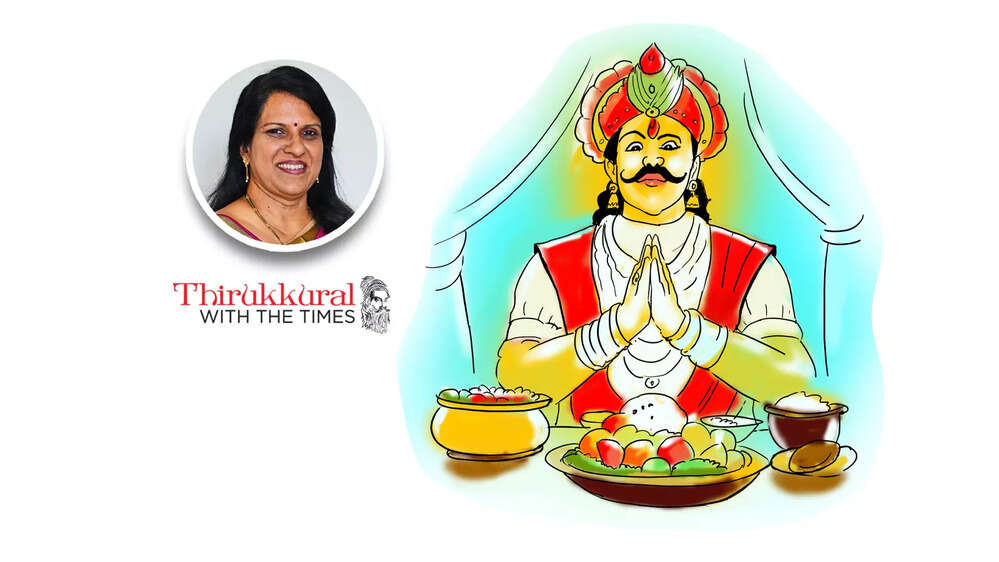
Thirukkural with the Times explores real-world lessons from the classic Tamil text ‘Thirukkural’. Written by Tamil poet and philosopher Thiruvalluvar, the Kural consists of 1,330 short couplets of seven words each. This text is divided into three books with teachings on virtue, wealth, and love and is considered one of the great works ever on ethics and morality. The Kural has influenced scholars and leaders across social, political, and philosophical spheres.Motivational speaker, author and diversity champion Bharathi Bhaskar explores aspects of this masterpiece. This week, she talks about what the Thirukkural says about the value of food and its makers.The most difficult decision in daily life often revolves around what to cook. In most households, a mother or wife starts her day by asking the family what they want to eat, only to hear the convenient response, "Anything is fine." But for the one cooking, the menu shouldn't be repetitive, must be nutritious, made with available ingredients, and tailored to individual preferences.Sometimes, I decide what to cook based on colours that inspire me. The vibrant red of tomatoes against green lettuce, the neutral hues of pasta with colourful sauces, or yellow dal against rice. Deep purple brinjals, red beets, and yellow peppers inspire me the way an evening sky inspires an artist. Cooking, after all, is an artistic endeavour.Only multi-taskers survive in the battlefields called the kitchen. The person there is parsing, mixing, testing, tasting, verifying flavour, adjusting consistency—the cook is almost like a virtuoso precentor. They make magic with their hands.Cooking is also a sensory experience, engaging all five senses – the eyes assess the browning potatoes, the ears hear the milk hissing as it boils, the nose catches the aroma of rasam, signalling it needs more salt. One touches the rice to check if it’s fully cooked and tastes a spoonful of sambar to ensure it’s just right.Yet, despite these efforts, meals are often not given the respect they deserve. Many households have lost the tradition of dining together. Instead of gathering at the table, people eat while scrolling through phones or watching TV. Often, the grown-up children order food or eat outside.When we don’t pay attention to a meal, we also disrespect the one who made it. There's a story of a king who, after spending his youth in battlefields, finally conquered a kingdom and hired a renowned chef. On the first day, the chef prepared a lavish meal, but the king, unfamiliar with such a spread, awkwardly peeled a banana and ate it whole. The chef took this as an insult to his culinary skills. “Oh king, even a monkey peels a banana little by little and eats in portions,” said the chef. “Not dining on a spread properly is a humiliation to the cook. I can’t take you as my master. I am quitting.”The court expected the king to punish the chef, but instead, the king humbly acknowledged his ignorance and explained that no one had ever taught him to eat properly, as he spent his life in war. The chef then taught him the art of eating, a lesson that transformed the king into a wise ruler. Eating is a necessity, but eating elegantly and respectfully is an art.‘Value the person who brings food to your plate,’ reminds Valluvar in the chapter about agriculture. Through the ten couplets, he lists the importance of farmers and one of the couplets hails those who feed others. Such a person asks nothing from others but provides for everyone.This couplet is also about the person in our kitchen who toils -- wives, mothers, husbands, and fathers. Respecting the one who cooks, is in essence, respecting the food itself.Iravaar Irappaarkonru Eevar KaravadhuKaiseydhu Oonn Maalayavar.They ask nothing from others, but to askers give food—ThoseWho make with their hands, the food on which everyone lives.
Explore Every Corner
Across The Globe
NZ vs SALeon DraisaitlChris BassittIND vs PAKIndigo Pilot HiringIND vs PAK T20 World CupEdmonton OilersTravis Kelce MotherJosh Morrissey InjuryMyles GarrettWinter Olympics 2026Slovakia Olympic HockeyArizona State UniversityJannik SinnerDarron Lee GirlfriendAuston MatthewsHenrik LundqvistChris Paul RetirementKyle Busch and Samantha Busch Net WorthKayla NicoleNBA All Star Weekend 2026Cardi BBrad MarchandConnor McDavid WifeKendall JennerLawrence BishnoiH 1B Visa RestrictionsHenrik LundqvistIND vs PAK Head to HeadT20 World Cup 2026 Schedule
Hot on the Web
Maha Shivratri WishesAnurag KashyapVijay DeverakondaValentine's Day QuotesSalman KhanRajpal YadavShraddhaDhanushBaby NamesValentine Day Gift IdeasGeorge ClooneyInderjeet Singh'O'Romeo' Box Office CollectionSnakes Hiding SpotsSmriti MandhanaGauri KhanPriyanka ChopraKrushna AbhishekPandit Ravi ShankarDrishyam 31987 Dinner MenuMardaani 3 Box Office CollectionSufi Heritage Festival 2026Hair Care TipsBorder 2 CollectionRobert FrostBorder 2 Movie ReviewZodiac SignsFarhan AkhtarTu Yaa Main Movie ReviewToday Gold Rate in ChennaiDelhi Weather TodayDelhi AQI TodayMumbai AQI TodayMaharashtra Public Holidays 2026JPMorganQuote Of The Day By Marie CurieElon MuskSridhar VembuJensen HuangAnthropic Ceo
Trending Topics
Tom BradyNew Zealand vs South Africa Live ScoreUSA vs Netherlands ScorecardTeam USA HockeyKhamzat ChimaevErika KirkUSA vs Netherlands HighlightsBFUHS Staff Nurse Recruitment 2026Suryakumar YadavTravis HeadDrake MayeBangladesh Election ResultsAbhishek SharmaSohaib KhanAuston MatthewsTarique RahmanCardi BNikhil GuptaGurpatwant Singh PannunSheikh HasinaT20 World CupIndia vs PakistanPOSH Act ImplementationBad BunnyGabriella CarvalhoJannik SinnerOmar AbdullahSheikh HasinaTaylor SwiftStefon DiggsChhattisgarh HCKerala womanNoida techieMahbubnagar municipal corporation resultsMaharashtra pharmacy distributorKarnataka school headmasterGujarat murderDelhi UniversityCM Himanta Biswa SarmaHow to watch ICC T20 World Cup 2026 in USAHow to watch ICC T20 World Cup 2026 in CanadaHow to watch T20 World Cup online in India
Popular Categories
HeadlinesSports NewsBusiness NewsIndia NewsWorld NewsBollywood NewsHealth+ TipsIndian TV ShowsTechnologyTravelEtimesHealth & FitnessHow to watch T20 World Cup OnlineIndia vs Pakistan MatchAstrologyAutoWeather TodayGold Rate Today DelhiSilver Rate TodayPlatinum Rate TodayIs Bank open todayBank Holidays in February 2026Public Holidays in February 2026DeorhiTechnology NewsInternational SportsPublic HolidaysBank HolidaysT20 World Cup Squad IndiaT20 Wprld Cup Squad
Trending Videos
‘Fight Isn’t Over’: Denmark EXPLODES Over Trump’s Greenland Threat | ‘He’s Still Very Serious’Abhishek Sharma is back and India to unravel a mystery slinger‘FLOCK OF SHEEP!’: Pro-Russia EU Ally Drops Bombshell, ‘Europe SLEEPWALKS With No Real Leader’Kerala CM Pinarayi Vijayan Inaugurates Silver Jubilee Complex of EMS Memorial Hospital in PerinthalmannaAmit Shah Slams Rahul Gandhi Over FTAs, Backs Modi Govt’s Trade DealsMetro Pillar Collapse In Mulund Leaves One Dead, Three InjuredSinger Mika Singh offers prayers at Shree Jagannath Temple in PuriPulwama Heroes Remembered: CRPF’s 137th Battalion Pays Tribute in UdhampurP Goyal Rejects Rahul On US Deal, PM's Big Push For Assam Projects, Brahmaputra Link And More‘HELLISH TERROR!’: Russia Unleashes FIRESTORM, Rips West’s ‘Billions For Ukraine’ Agenda At MunichAnti-Iran Tsunami SHAKES Munich; 200,000 Protesters Rally To Topple Khamenei After Deadly UnrestNancy Guthrie’s Final Nextdoor Post Resurfaces as Cameras Become Key Evidence In ProbeIndia XI: Abhishek Sharma in, who goes out and what about Kuldeep Yadav?Allahabad Budget Push, Urination Killing Case, Solar Plan, Rs Three Hundred Killing, HC Rap‘Got Assurance From India...’ Marco Rubio On Russian Oil After Trade DealNigerian Rock Star Spreads Love on the Streets: Clayrocksu Redefines Valentine’s Day Bella Ramsey Breaks Down Her Emotional Acting TechniqueRose Byrne Crowned Hasty Pudding Woman of the Year By Harvard
Latest News
Bhagavad Gita shloka of the day for emotional enduranceCapricorn Horoscope Today, February 15, 2026: A good day to review long term plans5 must-read books about fabric history'Spa' box office collections day 2: Abrid Shine’s adult comedy shows slow growth; Collects Rs 9 lakhs'O' Romeo' box office collection Day 2: Shahid Kapoor starrer crosses Rs 20 crore mark on Valentine's weekendDelhi man arrested for strangling wife to death on Valentine’s Day over domestic disputeTravis Kelce’s retirement dilemma takes emotional turn as Donna Kelce shares deeply personal perspective publiclyChhattisgarh horror: Out on bail, rape accused kills survivor, later dies by suicide‘Drishyam 3’: Mohanlal's film to have no fan shows; Mandatory four weeks of theatre screeningMumbai Metro mishap: 5 arrested after parapet segment collapse leaves 1 dead, 3 injured in Mulund; MMRDA slaps Rs 6 crore fineNFL trade rumors: San Francisco 49ers $12.6 million Buffalo Bills edge rusher to bolster pass-rush; Possible Nick Bosa reunion?NFL trade rumors: Pittsburgh Steelers predicted to be perfect home for $72 million Houston Texans' wide receiver in free agency to bolster rotationSagittarius Horoscope Today, February 15, 2026: Best day for accumulation and investment“TS deserves to have the only one”: Swifties turn on designer after Travis Kelce’s engagement ring for Taylor Swift goes on saleNo annual Rera reports in 75% of states: Forum“I have a fantastic stylist”: Erin Andrews reveals how her sold-out NFC championship coat sparked a social media frenzyMahashivratri: Awakening to The Call of TimeSahibzada Farhan vs Jasprit Bumrah, Babar Azam vs Kuldeep: Five battles that could decide India vs Pakistan clash
Copyright © 2026 Bennett, Coleman & Co. Ltd. All rights reserved. For reprint rights: Times Syndication Service