
- News
- India News
- No fresh suits, orders or surveys till we decide on pleas against Places of Worship Act: SC
Trending
No fresh suits, orders or surveys till we decide on pleas against Places of Worship Act: SC
The Supreme Court halted new lawsuits against the 1991 Places of Worship Act during its ongoing hearing. It also prohibited lower courts from issuing survey orders in related cases. The government has four weeks to respond to petitions challenging the Act's provisions, particularly the August 15, 1947, cut-off date for maintaining religious character.
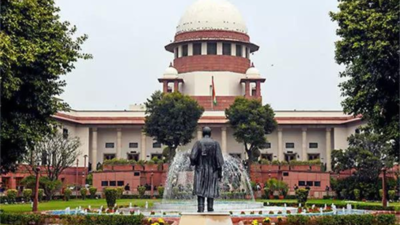
Supreme Court
"We deem it fit to direct that no fresh suits shall be registered or proceedings be ordered. In the pending suits, no effective interim orders or final orders including orders of survey can be granted by civil courts till the next date of hearing," a bench led by Chief Justice of India (CJI) Sanjiv Khanna observed.
A three-judge bench of Justice Sanjiv Khanna, and Justices Sanjay Kumar and K V Viswanathan, was hearing a batch of public interest litigations (PILs) that challenged the validity of some provisions of the Places of Worship Act 1991.
The Supreme Court was informed that 18 lawsuits are currently pending across the country concerning 10 mosques or shrines.
The bench also provided the Central government with four weeks to submit an affidavit in response to a series of petitions challenging specific provisions of the Places of Worship (Special Provisions) Act, 1991.
The outcome of the case could impact ongoing lawsuits filed by Hindu plaintiffs seeking rights to properties containing Muslim mosques, based on claims that these mosques were constructed over ancient temples.
These cases include disputes involving the Shahi Jama Masjid in Sambhal, the Gyanvapi Mosque in Varanasi, the Shahi Eidgah Masjid in Mathura, and the Ajmer Dargah in Rajasthan. Muslim parties have contested the validity of such lawsuits, citing the Places of Worship Act.
What is Places of Worship Act?
The 1991 Places of Worship (Special Provisions) Act prohibits conversion of places of worship, provides for the maintenance of religious character as existed on Aug 15, 1947. The Act, however, made an exception for the Ram Janmabhoomi site, which formed the foundation of the Supreme Court's 2019 verdict in the Ayodhya case, granting the disputed land at Ayodhya to the child deity Ram Lalla.
What do petitions say?
Petitions argue that the Places of Worship (Special Provisions) Act was arbitrary, contending that: a) There was no valid justification for establishing August 15, 1947, as the cut-off date, and b) No logical connection exists between India's political independence, the formation of the Republic, and addressing the civilizational conflict arising from the colonial suppression of Hindu identity and the cultural dominance imposed by Islamic invaders.
Stay updated with the latest news on Times of India. Don't miss daily games like Crossword, Sudoku, and Mini Crossword.

About the Author
TOI News DeskEnd of Article
FOLLOW US ON SOCIAL MEDIA










Photostories

Hot Picks
TOP TRENDING
Explore Every Corner
Across The Globe
Popular Categories
Hot on the Web
Top Trends
Bully RayIndia vs AustraliaTaylor Swifts 35th BirthdaySimone BilesSunil GavaskarCBSE Schools in JaipurJustin Trudeau ResignFollow on Rule ExplainedRohit SharmaOne Nation One ElectionIndia Team Follow OnWaking up early for successUS CollegesOklahoma City Thunder vs Milwaukee DucksIvy League SchoolsKL RahulElon MuskLive Cricket Score
Trending Topics
Pushpa 2 America Box Office CollectionPushpa 2 ReviewShatrughan SinhaOptical illusionJustin BieberBaba VangaPushpa 2 OTT ReleaseDiabetes Type 2Major Predictions for SaturnPadma Shri Tulsi GowdaPushpa 2Shahid AfridiFull Cold Moon December 2024Skincare Tips for WinterWeight Loss TipsHair FallNYT ConnectionsNarayana MurthyElon Musk
Living and entertainment
Latest News
Jalen Rose’s daughter, Mariah Rose, slams haters for attacking Travis Hunter’s fiancéeBrazilian court orders Adele’s 2015 song 'Million Years Ago' removed over plagiarismBigg Boss 18: Tajinder Bagga visits Mahakaal Temple after eviction; prays for Shrutika Arjun’s victoryKevin Owens Sparks a WWE Title Debate: Who is the Real Champion?Supreme Court collegium ticks off HC judge Shekhar Kumar Yadav for his speech at VHP eventGiant Infomercial? WWE Hall of Famer SLAMS Saturday Night's Main EventDid you know Vijay Sethupathi named his son Surya in memory of his late childhood friend?Bigg Boss 18: Karan Veer Mehra discusses Chum Darang's dilemma about their relationship with Shilpa Shirodkar; says 'she has everything to lose, not me'NTA will hold only entrance exams, not job tests: Dharmendra PradhanJagjit Singh Vadher and Chetan Dhanani stir anticipation with thrilling 'Victor 303' trailer - WATCHKaun Banega Crorepati 16: Contestant Praveen Nath fails to answer question worth Rs 25 Lakhs on Paris Olympics 2024; Amitabh Bachchan says 'You answered questions we couldn't imagine'Oscars 2025 final shortlist: India's Oscar hopes ride on Guneet Monga's 'Anuja' after Kiran Rao's 'Laapataa Ladies' misses the cutLuka Doncic mourns loss of Basketball star who ended his life leaving two-word message for “Anya”Uddhav Thackeray calls on Devendra Fadnavis, seeks Bharat Ratna for Veer SavarkarVarun Dhawan REVEALS how Diljit Dosanjh was Atlee's first choice for 'Nain Matakka' in 'Baby John'When Jasprit Bumrah got Google CEO Sundar Pichai and Elon Musk talking cricketAjith Kumar and Trisha Krishnan walk hand -in- hand in a new pic from the sets of 'Vidaamuyarchi' in BangkokWho is OJ Simpson's Wife? Exploring the personal life details of the NFL Superstar
Copyright © 2024 Bennett, Coleman & Co. Ltd. All rights reserved. For reprint rights: Times Syndication Service