
- Iran secretly bought Chinese satellite tech via UAE — then struck Abu Dhabi: Report
- ‘He belonged to the mountains’: Family decides against retrieving Hyderabad techie’s body from Everest 'death zone'
- Gujarat woman shot dead in US store; chilling CCTV footage emerges
- No Krishna Nagar in Lahore? Pakistan pauses heritage renaming plan after outrage by extremist elements
 Loading..






EC orders FIR against Rahul Gandhi for TV interview on Gujarat poll eve
File that could solve Bose’s death mystery ‘closed for 100 years’
Somnath temple visit: Rahul Gandhi listed as 'non-Hindu'
Woman passenger, Air India duty manager slap each other at Delhi IGI airport
Saudi prince vows new Islamic alliance 'will wipe out terrorists from earth'
Over 200 worshippers killed at Egypt mosque in deadliest terror attack
PIC: Adira's birth announcement cradle filled with goodies!
Rumoured 'Dabangg 3' actress leaks topless pics for publicity?
PIC: AbRam kissed by two girls!





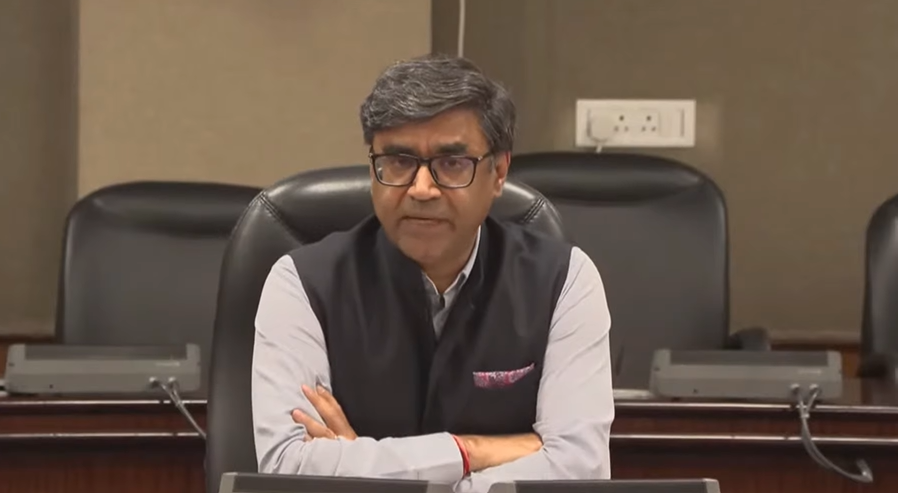
India Pakistan Ceasefire Live highlights: 'Pak has violated ceasefire over last few hours, India giving befitting reply,' says MEA
India Pakistan Tensions Live: J&K CM Omar Abdullah en route to Jammu to assess situation
Jammu & Kashmir chief minister Omar Abdullah's convoy headed for Jammu via Udhampur, to assess the situation after last night’s failed Pakistani drone attack targeting Jammu city and other areas in the region.
A complete blackout has been imposed in Jammu after explosions and warning sirens were reported near the Line of Control in the Poonch and Rajouri districts early Friday morning. Similar incidents had occurred in the region earlier. The presence of loitering munitions was reported in the skies.
As tensions between India and Pakistan continue to rise, Delhi has been placed on high alert, leading to the suspension of leave for all city government employees. The heightened security measures follow cross-border shelling in several regions, including Jammu, and a failed attempt by Pakistan’s military to strike multiple locations such as Awantipura, Srinagar, Jammu, Pathankot, Amritsar, and others. In response, Indian forces not only intercepted the attacks but also neutralised a Pakistani air defence system in Lahore.
In the national capital, the security response has intensified. Visitors at India Gate were asked to vacate the area as police issued alerts and managed traffic flow. However, New Delhi deputy commissioner Devesh Mahala downplayed the move, calling it a routine step to ease congestion, adding, “Anyone can come tomorrow and see it.”
District magistrates have held emergency preparedness meetings, particularly focusing on health and disaster management. A police official confirmed that night patrolling has been stepped up and additional forces will be deployed in sensitive areas. The services department later issued an official directive barring government employees from taking leave until further notice.
Across Delhi, security has been significantly strengthened, with additional paramilitary forces deployed at key locations. Special commissioners in all zones are holding review meetings with deputy commissioners from the capital’s 15 districts to assess readiness and reinforce quick response mechanisms. East Delhi authorities have reportedly focused on identifying and addressing operational gaps in their emergency systems.
Tensions continue to escalate between the two nations after India's Operation Sindoor was launched to avenge the Palahgam terror attack that claimed 26 lives, including 25 Indian nationals and 1 Nepali citizen. Under the operation, the Army targeted nine terror hideouts linked to banned organisations, including Jaish-e-Mohammed, Lashkar-e-Taiba, and Hizbul Mujahideen, located in Pakistan and Pakistan-occupied Kashmir (PoK). It strategically struck four locations within Pakistan and five more in PoK.
After the precision strikes, India engaged with several global capitals, briefing senior officials on its anti-terror actions against Pakistan. NSA Ajit Doval spoke with US NSA and secretary of state Marco Rubio, providing details of the operations carried out.
The government informed in an all-party meeting that 'Operation Sindoor', carried out had resulted in the death of over 100 terrorists, according to PTI sources. During the meeting, defence minister Rajnath Singh briefed political parties on the precision strikes executed on terrorist locations in Pakistan and Pakistan-occupied Kashmir. He also confirmed that Operation Sindoor is "still ongoing."
PM Narendra Modi had granted the armed forces full operational freedom to choose the mode, targets, and timing of the response to the Pahalgam terror attack in a high-level meeting with top defence officials on April 29.
India Pakistan Tensions Live: BSF foils major infiltration bid along International Border in Samba
India’s security forces remain on high alert following a series of border incidents involving Pakistan. Late on Thursday night, the Border Security Force (BSF) thwarted a significant infiltration attempt along the International Boundary in the Samba district of Jammu and Kashmir. The BSF confirmed the incident in a post on X, stating that the attempt was made around 11 pm on 8 May.
In a related development, defence sources reported that Indian air defence systems had possibly downed a Pakistani Air Force jet over Punjab’s Pathankot sector. However, the government has not yet issued an official statement on the matter.
Meanwhile, the Indian Army intercepted and destroyed two Pakistani drones in the Naushera sector during a heavy exchange of artillery fire. According to the Integrated Defence Staff, Pakistan also launched drones and missiles at military stations in Jammu, Pathankot, and Udhampur. Indian forces responded swiftly and neutralised the threats without any casualties.
Union Home Minister Amit Shah chaired a high-level meeting on Thursday with the chiefs of India’s border forces, reviewing preparedness after Pakistan’s attempted drone and missile strikes on several Indian areas, including RS Pura, Arnia, and Jaisalmer. All missiles were successfully intercepted.
As tensions between India and Pakistan continue to rise, Delhi has been placed on high alert, leading to the suspension of leave for all city government employees. The heightened security measures follow cross-border shelling in several regions, including Jammu, and a failed attempt by Pakistan’s military to strike multiple locations such as Awantipura, Srinagar, Jammu, Pathankot, Amritsar, and others. In response, Indian forces not only intercepted the attacks but also neutralised a Pakistani air defence system in Lahore.
In the national capital, the security response has intensified. Visitors at India Gate were asked to vacate the area as police issued alerts and managed traffic flow. However, New Delhi deputy commissioner Devesh Mahala downplayed the move, calling it a routine step to ease congestion, adding, “Anyone can come tomorrow and see it.”
District magistrates have held emergency preparedness meetings, particularly focusing on health and disaster management. A police official confirmed that night patrolling has been stepped up and additional forces will be deployed in sensitive areas. The services department later issued an official directive barring government employees from taking leave until further notice.
Across Delhi, security has been significantly strengthened, with additional paramilitary forces deployed at key locations. Special commissioners in all zones are holding review meetings with deputy commissioners from the capital’s 15 districts to assess readiness and reinforce quick response mechanisms. East Delhi authorities have reportedly focused on identifying and addressing operational gaps in their emergency systems.
Tensions continue to escalate between the two nations after India's Operation Sindoor was launched to avenge the Palahgam terror attack that claimed 26 lives, including 25 Indian nationals and 1 Nepali citizen. Under the operation, the Army targeted nine terror hideouts linked to banned organisations, including Jaish-e-Mohammed, Lashkar-e-Taiba, and Hizbul Mujahideen, located in Pakistan and Pakistan-occupied Kashmir (PoK). It strategically struck four locations within Pakistan and five more in PoK.
India Pakistan Tensions Live: Explosions heard near LoC in Poonch and Rajouri amid escalating India-Pakistan tensions
Tensions between India and Pakistan have intensified following a series of security incidents along the border. Explosions were reported early Friday near the Line of Control (LoC) in Poonch and Rajouri districts of Jammu and Kashmir, prompting heightened alert levels.
On Thursday night, the Border Security Force (BSF) successfully blocked an infiltration attempt along the International Boundary in Samba. The incident occurred around 11 pm on 8 May, with BSF Jammu confirming the operation in a post on X.
Separately, Indian Air Defence systems are believed to have shot down a Pakistani Air Force jet in Punjab’s Pathankot sector, though the government has yet to officially confirm the incident.
In the Naushera sector, two Pakistani drones were downed by the Indian Army amid artillery fire. Defence officials added that Pakistan attempted to target military stations in Jammu, Pathankot and Udhampur using missiles and drones. The Indian Armed Forces responded, neutralising the threat with no casualties.
As tensions between India and Pakistan continue to rise, Delhi has been placed on high alert, leading to the suspension of leave for all city government employees. The heightened security measures follow cross-border shelling in several regions, including Jammu, and a failed attempt by Pakistan’s military to strike multiple locations such as Awantipura, Srinagar, Jammu, Pathankot, Amritsar, and others. In response, Indian forces not only intercepted the attacks but also neutralised a Pakistani air defence system in Lahore.
In the national capital, the security response has intensified. Visitors at India Gate were asked to vacate the area as police issued alerts and managed traffic flow. However, New Delhi Deputy Commissioner Devesh Mahala downplayed the move, calling it a routine step to ease congestion, adding, “Anyone can come tomorrow and see it.”
District magistrates have held emergency preparedness meetings, particularly focusing on health and disaster management. A police official confirmed that night patrolling has been stepped up and additional forces will be deployed in sensitive areas. The services department later issued an official directive barring government employees from taking leave until further notice.
Across Delhi, security has been significantly strengthened, with additional paramilitary forces deployed at key locations. Special commissioners in all zones are holding review meetings with deputy commissioners from the capital’s 15 districts to assess readiness and reinforce quick response mechanisms. East Delhi authorities have reportedly focused on identifying and addressing operational gaps in their emergency systems.
Tensions continue to escalate between the two nations after India's Operation Sindoor was launched to avenge the Palahgam terror attack that claimed 26 lives, including 25 Indian nationals and 1 Nepali citizen. Under the operation, the Army targeted nine terror hideouts linked to banned organisations, including Jaish-e-Mohammed, Lashkar-e-Taiba, and Hizbul Mujahideen, located in Pakistan and Pakistan-occupied Kashmir (PoK). It strategically struck four locations within Pakistan and five more in PoK.
The government informed in an all-party meeting that 'Operation Sindoor', carried out had resulted in the death of over 100 terrorists, according to PTI sources. During the meeting, defence minister Rajnath Singh briefed political parties on the precision strikes executed on terrorist locations in Pakistan and Pakistan-occupied Kashmir. He also confirmed that Operation Sindoor is "still ongoing."
PM Narendra Modi had granted the armed forces full operational freedom to choose the mode, targets, and timing of the response to the Pahalgam terror attack in a high-level meeting with top defence officials on April 29.
India Pakistan Tensions Live: Complete blackout enforced in Jammu after explosions near LoC
A total blackout was enforced in Jammu early Friday after sirens and loud explosions were reported near the Line of Control (LoC) in Poonch and Rajouri, fuelling tensions in the region.
Simultaneously, the Border Security Force (BSF) thwarted a significant infiltration bid near the International Boundary in Samba district late on Thursday night. BSF Jammu confirmed the incident, saying it took place around 11 pm on 8 May.
Reports also emerged of an Indian Air Defence system shooting down a Pakistani Air Force jet in Punjab’s Pathankot sector, though official confirmation remains pending.
Meanwhile, Indian Army personnel downed two Pakistani drones in the Naushera sector amid heavy cross-border artillery fire. Defence sources revealed Pakistan had also attempted to target military installations in Jammu, Pathankot, and Udhampur using drones and missiles. In a post on X, the Integrated Defence Staff said these threats were “neutralised with kinetic and non-kinetic means” and confirmed there were no casualties.
These developments follow India’s launch of “Operation Sindoor” on 7 May. The mission involved precision missile strikes on nine terror camps across Pakistan and Pakistan-occupied Jammu and Kashmir (PoJK). According to Indian officials, the targets included infrastructure linked to terror outfits such as Lashkar-e-Taiba and Jaish-e-Mohammed.
The strikes were a direct response to the 22 April terrorist attack in Pahalgam, Jammu and Kashmir, which left 26 civilians dead.
As tensions between India and Pakistan continue to rise, Delhi has been placed on high alert, leading to the suspension of leave for all city government employees. The heightened security measures follow cross-border shelling in several regions, including Jammu, and a failed attempt by Pakistan’s military to strike multiple locations such as Awantipura, Srinagar, Jammu, Pathankot, Amritsar, and others. In response, Indian forces not only intercepted the attacks but also neutralised a Pakistani air defence system in Lahore.
In the national capital, the security response has intensified. Visitors at India Gate were asked to vacate the area as police issued alerts and managed traffic flow. However, New Delhi Deputy Commissioner Devesh Mahala downplayed the move, calling it a routine step to ease congestion, adding, “Anyone can come tomorrow and see it.”
District magistrates have held emergency preparedness meetings, particularly focusing on health and disaster management. A police official confirmed that night patrolling has been stepped up and additional forces will be deployed in sensitive areas. The services department later issued an official directive barring government employees from taking leave until further notice.
Across Delhi, security has been significantly strengthened, with additional paramilitary forces deployed at key locations.
Tensions continue to escalate between the two nations after India's Operation Sindoor was launched to avenge the Palahgam terror attack that claimed 26 lives, including 25 Indian nationals and 1 Nepali citizen. Under the operation, the Army targeted nine terror hideouts linked to banned organisations, including Jaish-e-Mohammed, Lashkar-e-Taiba, and Hizbul Mujahideen, located in Pakistan and Pakistan-occupied Kashmir (PoK). It strategically struck four locations within Pakistan and five more in PoK.
PM Narendra Modi had granted the armed forces full operational freedom to choose the mode, targets, and timing of the response to the Pahalgam terror attack in a high-level meeting with top defence officials on April 29.
India Pakistan Tensions Live: Union home minister Amit Shah reviews border, airport security with top officials amid heightened vigilance
Union home minister Amit Shah met with chiefs of India’s border guarding forces on Thursday to assess security preparedness following Pakistan’s recent missile and drone attacks on Jammu and Rajasthan. All incoming missiles were intercepted by Indian air defences, preventing significant damage.
Shah reviewed troop readiness and surveillance systems along the 3,323-km India-Pakistan border, with particular focus on coordination across agencies. He also evaluated nationwide airport security with the CISF amid heightened alerts.
Additional blasts in Jammu and Jaisalmer prompted evacuations. The review followed India’s May 7 Operation Sindoor, which targeted terror camps in Pakistan after a deadly attack in Pahalgam.
As tensions between India and Pakistan continue to rise, Delhi has been placed on high alert, leading to the suspension of leave for all city government employees. The heightened security measures follow cross-border shelling in several regions, including Jammu, and a failed attempt by Pakistan’s military to strike multiple locations such as Awantipura, Srinagar, Jammu, Pathankot, Amritsar, and others. In response, Indian forces not only intercepted the attacks but also neutralised a Pakistani air defence system in Lahore.
In the national capital, the security response has intensified. Visitors at India Gate were asked to vacate the area as police issued alerts and managed traffic flow. However, New Delhi Deputy Commissioner Devesh Mahala downplayed the move, calling it a routine step to ease congestion, adding, “Anyone can come tomorrow and see it.”
District magistrates have held emergency preparedness meetings, particularly focusing on health and disaster management. A police official confirmed that night patrolling has been stepped up and additional forces will be deployed in sensitive areas. The services department later issued an official directive barring government employees from taking leave until further notice.
Across Delhi, security has been significantly strengthened, with additional paramilitary forces deployed at key locations. Special commissioners in all zones are holding review meetings with deputy commissioners from the capital’s 15 districts to assess readiness and reinforce quick response mechanisms. East Delhi authorities have reportedly focused on identifying and addressing operational gaps in their emergency systems.
Tensions continue to escalate between the two nations after India's Operation Sindoor was launched to avenge the Palahgam terror attack that claimed 26 lives, including 25 Indian nationals and 1 Nepali citizen. Under the operation, the Army targeted nine terror hideouts linked to banned organisations, including Jaish-e-Mohammed, Lashkar-e-Taiba, and Hizbul Mujahideen, located in Pakistan and Pakistan-occupied Kashmir (PoK). It strategically struck four locations within Pakistan and five more in PoK.
After the precision strikes, India engaged with several global capitals, briefing senior officials on its anti-terror actions against Pakistan. NSA Ajit Doval spoke with US NSA and Secretary of State Marco Rubio, providing details of the operations carried out.
India also neutralised Pakistan's air defence system in Lahore, in retaliation to Pakistan's military and drone attacks on Northern and Western regions on Wednesday night. The forces employed Integrated Counter UAS Grid and Air Defence systems, alongside Israeli Harpy drones, to counter the Pakistani assaults. These attacks targeted areas including Awantipura, Srinagar, Jammu, Pathankot, Amritsar, Kapurthala, Jalandhar, Ludhiana, Adampur, Bhatinda, Chandigarh, Nal, Phalodi, Uttarlai, and Bhuj.
PM Narendra Modi had granted the armed forces full operational freedom to choose the mode, targets, and timing of the response to the Pahalgam terror attack in a high-level meeting with top defence officials on April 29.
India Pakistan Tensions Live: EAM Jaishankar speaks to Italian counterpart, discusses India's targetted, measured response to counter terrorism
External affairs minister S Jaishankar held several diplomatic engagements on Thursday amid rising tensions with Pakistan. In separate phone conversations, he spoke with Italy’s Foreign Minister Antonio Tajani and European Commission Vice-President Kaja Kallas, emphasising that India’s response to terrorism had been targeted and proportionate. He warned that any further escalation would be met with a decisive reply.
Earlier in the day, Jaishankar also met Iran’s Foreign Minister Seyed Abbas Araghchi during the 20th India-Iran Joint Commission Meeting. Both sides witnessed the signing of memoranda of understanding on customs cooperation and regulation of medical products.
Jaishankar also praised the Indian Army for executing 'Operation Sindoor' against terrorist hideouts in Pakistan and Pakistan-occupied Kashmir. Reaffirming India’s firm stand against terrorism, he said, “The world must adopt zero tolerance towards terrorism.”
Meanwhile, Pakistan launched a fresh missile and drone attack late Thursday, targeting areas in Jammu, including Satwari, RS Pura and Arnia. Indian air defences successfully intercepted all eight missiles. Explosions were also reported as drones were brought down over Udhampur.
In response to the April 22 Pahalgam terror attack, India had earlier launched Operation Sindoor, striking terror camps in Pakistan and Pakistan-occupied Kashmir. Foreign Secretary Vikram Misri stated that India’s actions were precise and focused only on terror infrastructure, adding that New Delhi is responding proportionately to Pakistan’s continued provocations. He reiterated that India’s intent is not to escalate the conflict but to defend itself firmly against any aggression.
Tensions continue to escalate between the two nations after India's Operation Sindoor was launched to avenge the Palahgam terror attack that claimed 26 lives, including 25 Indian nationals and 1 Nepali citizen. Under the operation, the Army targeted nine terror hideouts linked to banned organisations, including Jaish-e-Mohammed, Lashkar-e-Taiba, and Hizbul Mujahideen, located in Pakistan and Pakistan-occupied Kashmir (PoK). It strategically struck four locations within Pakistan and five more in PoK.
After the precision strikes, India engaged with several global capitals, briefing senior officials on its anti-terror actions against Pakistan. NSA Ajit Doval spoke with US NSA and Secretary of State Marco Rubio, providing details of the operations carried out.
The government informed in an all-party meeting that 'Operation Sindoor', carried out had resulted in the death of over 100 terrorists, according to PTI sources. During the meeting, defence minister Rajnath Singh briefed political parties on the precision strikes executed on terrorist locations in Pakistan and Pakistan-occupied Kashmir. He also confirmed that Operation Sindoor is "still ongoing."
India also neutralised Pakistan's air defence system in Lahore, in retaliation to Pakistan's military and drone attacks on Northern and Western regions on Wednesday night. The forces employed Integrated Counter UAS Grid and Air Defence systems, alongside Israeli Harpy drones, to counter the Pakistani assaults. These attacks targeted areas including Awantipura, Srinagar, Jammu, Pathankot, Amritsar, Kapurthala, Jalandhar, Ludhiana, Adampur, Bhatinda, Chandigarh, Nal, Phalodi, Uttarlai, and Bhuj.
PM Narendra Modi had granted the armed forces full operational freedom to choose the mode, targets, and timing of the response to the Pahalgam terror attack in a high-level meeting with top defence officials on April 29.
India Pakistan News Live: JD Vance says 'That's fundamentally none of our business,' addresses India-Pakistan tensions
US vice president JD Vance amid growing fears of a broader conflict between India and Pakistan has said that the United States will not be drawn into a war that he says is “fundamentally none of our business”. Speaking during a televised interview, Vance said while Washington is deeply concerned about any escalation between nuclear-armed nations, it cannot and will not try to control sovereign governments.
“We’re concerned any time nuclear powers are involved in a major conflict,” he said, but stressed that America’s role would be limited to encouraging dialogue. Referring to recent statements by President Donald Trump and Secretary of State Marco Rubio, Vance said the Trump administration wants tensions to de-escalate, but the US would not act as an arbitrator in a regional conflict. “We can’t tell the Indians or the Pakistanis to lay down their arms,” he added.
His comments came just days after a devastating terrorist attack in Pahalgam, Jammu and Kashmir, killed 26 civilians, many of them tourists. The Vice President and his family were in India on an official visit when the attack occurred on April 22. In response, India launched Operation Sindoor on May 7, targeting nine terrorist camps in Pakistan and Pakistan-occupied Kashmir (PoJK). The strikes reportedly focused on infrastructure linked to Lashkar-e-Taiba and Jaish-e-Mohammed.
The situation escalated further on Thursday night when India neutralised a Pakistani attempt to hit military installations in Jammu, Pathankot, Udhampur, and other locations using missiles and drones. The Indian Ministry of Defence declared the nation "fully prepared to defend its sovereignty". According to defence sources, Indian forces also shot down two Pakistani drones in Naushera and reportedly brought down a Pakistani Air Force jet in Pathankot, although official confirmation is still pending.
Secretary of state Rubio separately spoke with external affairs minister S Jaishankar and Pakistani Prime Minister Shehbaz Sharif, urging both sides to avoid further conflict. Rubio reaffirmed US support for dialogue and condemned the April 22 attack, calling on Pakistan to act decisively against terrorist groups.
Meanwhile, the Border Security Force thwarted a major infiltration bid along the International Boundary in Samba, Jammu and Kashmir, late Thursday. Early Friday, loud explosions were heard near the Line of Control in Poonch and Rajouri, as military tension continued to rise across the region.
Tensions continue to escalate between the two nations after India's Operation Sindoor was launched to avenge the Palahgam terror attack that claimed 26 lives, including 25 Indian nationals and 1 Nepali citizen. Under the operation, the Army targeted nine terror hideouts linked to banned organisations, including Jaish-e-Mohammed, Lashkar-e-Taiba, and Hizbul Mujahideen, located in Pakistan and Pakistan-occupied Kashmir (PoK). It strategically struck four locations within Pakistan and five more in PoK.
After the precision strikes, India engaged with several global capitals, briefing senior officials on its anti-terror actions against Pakistan. NSA Ajit Doval spoke with US NSA and Secretary of State Marco Rubio, providing details of the operations carried out.
The government informed in an all-party meeting that 'Operation Sindoor', carried out had resulted in the death of over 100 terrorists, according to PTI sources. During the meeting, defence minister Rajnath Singh briefed political parties on the precision strikes executed on terrorist locations in Pakistan and Pakistan-occupied Kashmir. He also confirmed that Operation Sindoor is "still ongoing."
All Comments ()+^ Back to Top
Refrain from posting comments that are obscene, defamatory or inflammatory, and do not indulge in personal attacks, name calling or inciting hatred against any community. Help us delete comments that do not follow these guidelines by marking them offensive. Let's work together to keep the conversation civil.
HIDE