
- News
- India News
- High flying CM e-connects with investors, voters
Trending
This story is from December 31, 2007
High flying CM e-connects with investors, voters
Where Modi cannot reach physically, he uses technology to accomplish his goals as Bush realised to his chagrin.

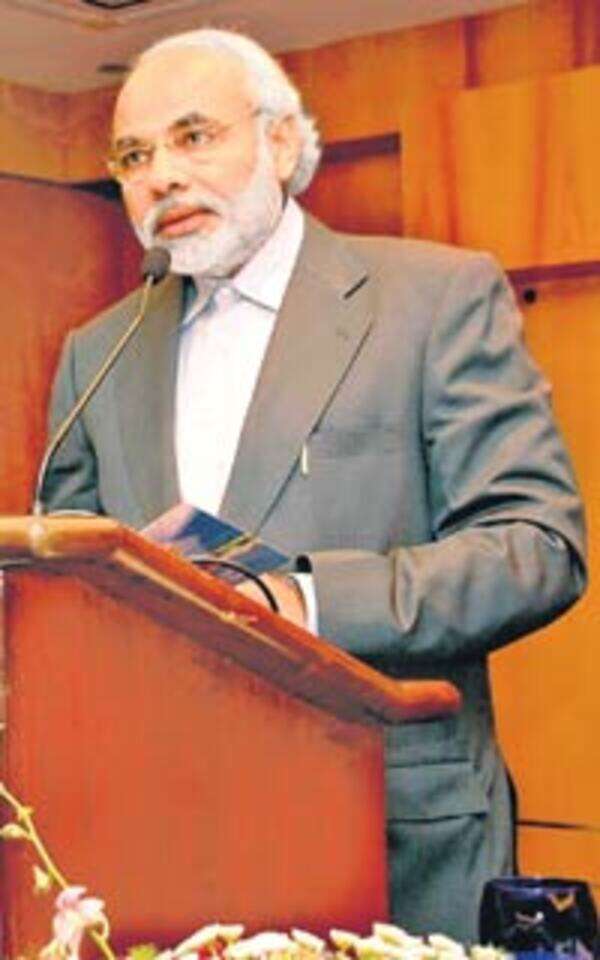

Not only did a defiant, tech-savvy Modi keep his date with the Asian American Hotel Owners’ Association at their Florida convention and with the NRIs at Madison Square Garden in New York through live web casting, the BJP leader also unleashed a blitzkrieg to make Gujarat a global investment destination, earning him the epithet of the state’s high-flying CEO.
Where Modi cannot reach physically, he uses technology to accomplish his goals as Bush realised to his chagrin. He has three laptops. There’s one in his bedroom, another for travelling and a third in his Sachivalaya office. He uses them to surf the net and reply to the 200- 250 odd emails he gets daily on his personal website. It is said he reads all of them and even replies to some personally. The website, it is claimed, got nearly 19 lakh hits in the past six months.
But laptops are not the only gadgets e-Modi boasts of. He has 24-inch plasma TVs in his office and home that are used for video-conferencing. Sometime back he also had a palmtop which has now been traded for a web-enabled mobile phone. He has also acquired a hard-disc video camera and a digital camera.
The gizmos have added to his brisk and businesslike image. Since his first business trip to the Russian town of Astrakhan in July 2006, with top guns of Gujarat Inc in tow, Modi has headed several other business teams to Singapore, China, Japan, South Korea and Switzerland, pitching Gujarat to foreign investors. This includes a trip to the ‘summer’ Davos at Dalian in China in September 2007.
Back home, his marketing and packaging skills were on display with the Vibrant Gujarat Global Investors’ Summit hoopla that saw Modi roll out the red carpet to Indian and global businesses beginning 2003. In 2007, Vibrant Gujarat managed to rake in just over Rs 6.5 lakh crore worth of investment commitments. It remains to be seen how much of those commitments are fulfilled.
Nonetheless, India Inc’s best and biggest have trooped in to Gujarat. Right from Mukesh and Anil Ambani to Shashi Ruia and Kumarmangalam Birla, they were all there. Everybody understood why Ratan Tata said at the opening of the 2007 Vibrant Gujarat summit that “you are stupid if you are not in Gujarat”. Indeed, the Gujarat Inc is rooting for him. The business community feels that Modi’s strategy of aggressively pitching the state, not just nationally but also globally, is the only way that Gujarat can emerge as a global powerhouse.
Modi’s ambitious Rs 30,000 crore Gujarat International Finance Tec-City (GIFT) project along with the Infrastructure Leasing & Financial Services Ltd, which he floated in mid 2007 to take on Mumbai as India’s commercial and financial hub, too has earned him brownie points with Gujarat Inc. Incidentally, the first phase of GIFT is slated to be up and running by 2010, the year Maharashtra and Gujarat celebrate their 50th year.
Modi has modelled himself on the lines of a laptop-toting former Andhra Pradesh CEO Chandrababu Naidu. But whereas Naidu is in political wilderness despite his efforts that put Hyderabad on the global IT map, Modi has raced ahead on the IT superhighway. Under Modi, Gujarat has also won awards for e-governance.
The BJP leader has got his ‘karmayogis’ (bureaucracy) to get into the e-routine of review meetings through video-conferencing and email updates. Unlike other politicians who print biographies, Modi has gone in for digital documentation of his work as CM. All his speeches, at official functions and rallies have been filmed and digitized. This was later packaged on Modi's direction into short films on various issues. These CDs have been distributed among the masses and shown on TV channels and the internet.
Thanks to the proliferation of internet (14 lakh users) and telephony (1.4 crore connections) in the state, he has been able to use techno-tools such as SMS, IVRS, IP TV channel ‘Vande Gujarat’ and internet broadcast sites along with conventional campaigning. This has led to the introduction of fresh policy initiatives in administration and helped bringing in new ideas from the ground level and developing delivery systems faster.
Senior state officials say he has introduced a “horizontal approach” to administration instead of “hierarchical” or vertical one. For instance, in his “chintan shivirs”, all officials, ranging from district development officers to the chief secretary and the chief minister himself, sit together and debate different policy issues before coming to a decision.
A crucial point in his administrative journey is also his decision to introduce the concept of efficiency to promote officials instead of following the seniority principle. Modi also hasn’t shied away from seeking professional help from institutes such as Indian Institute of Management, Ahmedabad, the CEPT University and the National Institute of Design.
Clearly, Narendra Modi does everything his own way.
End of Article
FOLLOW US ON SOCIAL MEDIA



Photostories

Hot Picks
TOP TRENDING
Popular Categories
Hot on the Web
Top Trends
Hurricane MiltonRatan Tata NewsNew UPI Transaction LimitRatan Tata DiesPM ModiShantanu NaiduTom BradyStock Market TodayNarayana MurthyNitish Kumar ReddyIsrael Hezbollah WarRahat Tata Inspiring QuotesManagement Colleges of IndiaTop Medical Colleges of IndiaTop Engineering Colleges of IndiaTop Pharmacy Colleges of IndiaLive Cricket Score
Trending Topics
Diwali WishesBigg Boss Tamil 8 Contestants ListBhool Bhulaiyaa 3 TrailerVettaiyan Twitter ReviewSanjay Leela BhansaliVettaiyan ReviewSalman KhanDevara CollectionBigg Boss 18Deepika PadukoneShraddha KapoorRatan Tata Passed AwayColdplayVettaiyan Movie ReviewSwatantrya Veer SavarkarDussehra 2024Watch NFL Live StreamDress To ImpressRatan Tata DeathWordle Answer
Living and entertainment
Latest News
Ratan Naval Tata: The inspiring journey of Padma Vibhushan laureate and golden-hearted business tycoonHow Chennai Night Race swerved past challenges to zoom toward a brighter motorsports futureJiiva's 'Black' censored U/A, the thriller drama to release on October 11TCS cancels Q2 earnings press conferenceHurricane Milton: Taylor Swift, Keith Urban, Dolly Parton and other celebrities donate to support relief effortsSamantha Ruth Prabhu shares playtime with Chinmayi Sripaada's daughter, says 'It took her 4.5 seconds to disown her parents'Mohanlal remembers late TP Madhavan: ‘His love and affection were akin to that of a father towards me'Buy only from Sanatanis, says Akhara ParishadWho is Noel Tata? Meet Ratan Tata’s half-brother, who could be successor at Tata TrustsDiljit Dosanjh pays tribute to Ratan Tata during live show: "He lived a flawless life, always helped others"Chiranjeevi, Mahesh Babu, Jr NTR mourn the loss of Ratan Tata, calling him "giant of industry" and "beacon of humanity"How to make Ginger Turmeric Shots for seasonal changePadma Vibhushan industrialist Ratan Tata dies at 86Ratan Tata: The industry titan with a golden heartAtishi bungalow row: AAP says BJP has anti-women mindsetManifesting with the 10/10 Portal: Zodiac-based guide for 2024Why are the CEOs of most luxury brands stepping down?9 proven techniques for fastest weight loss
Copyright © 2024 Bennett, Coleman & Co. Ltd. All rights reserved. For reprint rights: Times Syndication Service