
- News
- India News
- Bitter truth behind the brutality
Trending
This story is from May 21, 2006
Bitter truth behind the brutality
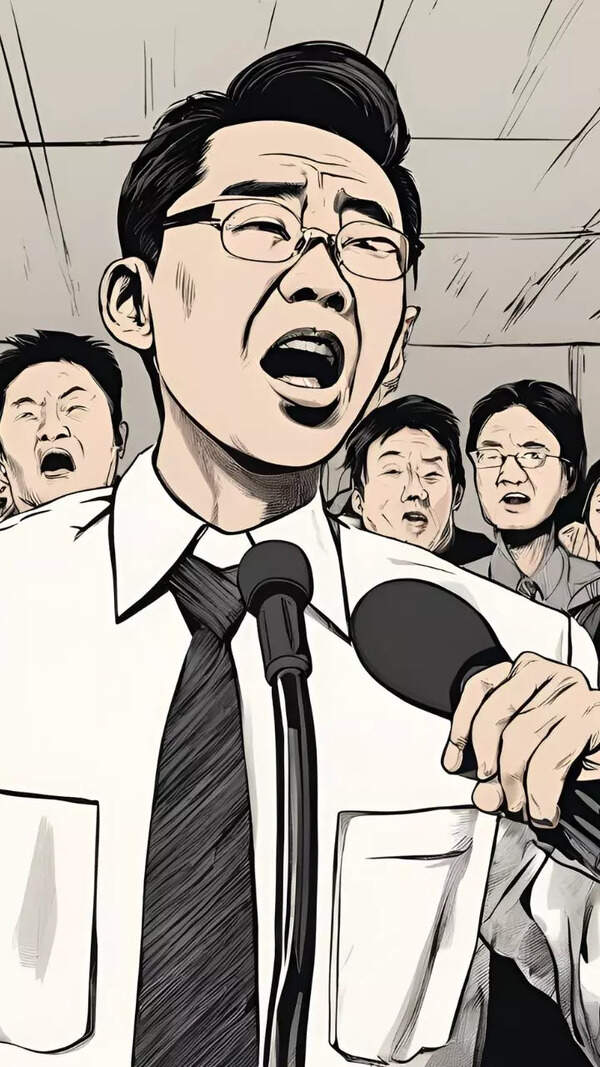
Policemen are the first to be contacted in a crisis, and often have to face emotionally charged people.

Constable Ram Singh had absolutely no clue how to handle this one: a mentally unstable 20-year-old had crept under a car and was refusing to come out for hours.
Singh's first impulse was to start the car (hoping it would scare him out) and his second, to drag him out. Gentle persuasion?
Didn't even cross the cop's mind. Policemen are the first to be contacted in a crisis, and often have to face emotionally charged people.
Yet, whether it's a suicide attempt, a peaceful demo or a riot, they have one set of rules to handle it all ��� talk tough, bulldoze into line, psyche into submission.
"They are still in rural policing mode, of control, scaring people and using oppositional force to bring down a situation. But they have to shift to cosmopolitan policing, where you treat people as equals and not as offenders," says Dr Rajat Mitra, psychologist, who has held several workshops to sensitise policemen.
Learning to talk and negotiate are the most important skills today, he says. "For the police to change, you have to treat it as any other profession. Like medicine or engineering, there should be a professional course for policemen," says Mitra.
So do we get the police force we deserve? "Certainly the one you pay for," says K P S Gill. A constable's salary ��� the constabulary forms 88% of the force ��� is about a third, even a 10th, of the pay other professionals get.
Talk of police brutality, and they will tell you they are the ones at the receiving end most of the time: "We work 12-24 hours at a stretch often, with no holidays even on festivals," says Avtar Singh, at his second home, a small, two-room police chowki in Gurgaon.
"Mob duty is killing. Hours in the scorching sun without a drop of water and no place to ease yourself...," recalls Arvind Verma, IPS officer from the Bihar cadre who quit the force to pursue studies.
"When we talk of police brutality, we should remember the force has been brutalised by inhuman working conditions." "The police have to work with limited manpower resources ��� the ratio is 1.2 policemen for every 1,000 people, according to NCRB ��� and poor service conditions," says Doel Mukherjee of CHRI.
"The isolation of the constable is manifold. They are treated as unskilled labour, get low salaries, and have poor social status." No wonder they aren't up to it.
"It's good to show indignation, but have we trained our police to act in any other way? Have we empowered them to act differently? When Japan and Korea were facing street demonstrations, they retrained the whole police force," says Gill.
"Do we train our police force to deal with mob rioting? Society has to be willing to invest more on their training."
Singh's first impulse was to start the car (hoping it would scare him out) and his second, to drag him out. Gentle persuasion?
Didn't even cross the cop's mind. Policemen are the first to be contacted in a crisis, and often have to face emotionally charged people.
Yet, whether it's a suicide attempt, a peaceful demo or a riot, they have one set of rules to handle it all ��� talk tough, bulldoze into line, psyche into submission.
If the police behave the way they do, it's because that's the only way they know, say experts.
"They are still in rural policing mode, of control, scaring people and using oppositional force to bring down a situation. But they have to shift to cosmopolitan policing, where you treat people as equals and not as offenders," says Dr Rajat Mitra, psychologist, who has held several workshops to sensitise policemen.
Learning to talk and negotiate are the most important skills today, he says. "For the police to change, you have to treat it as any other profession. Like medicine or engineering, there should be a professional course for policemen," says Mitra.
So do we get the police force we deserve? "Certainly the one you pay for," says K P S Gill. A constable's salary ��� the constabulary forms 88% of the force ��� is about a third, even a 10th, of the pay other professionals get.
Talk of police brutality, and they will tell you they are the ones at the receiving end most of the time: "We work 12-24 hours at a stretch often, with no holidays even on festivals," says Avtar Singh, at his second home, a small, two-room police chowki in Gurgaon.
"Mob duty is killing. Hours in the scorching sun without a drop of water and no place to ease yourself...," recalls Arvind Verma, IPS officer from the Bihar cadre who quit the force to pursue studies.
"When we talk of police brutality, we should remember the force has been brutalised by inhuman working conditions." "The police have to work with limited manpower resources ��� the ratio is 1.2 policemen for every 1,000 people, according to NCRB ��� and poor service conditions," says Doel Mukherjee of CHRI.
"The isolation of the constable is manifold. They are treated as unskilled labour, get low salaries, and have poor social status." No wonder they aren't up to it.
"It's good to show indignation, but have we trained our police to act in any other way? Have we empowered them to act differently? When Japan and Korea were facing street demonstrations, they retrained the whole police force," says Gill.
"Do we train our police force to deal with mob rioting? Society has to be willing to invest more on their training."
End of Article
FOLLOW US ON SOCIAL MEDIA









Hot Picks
TOP TRENDING
Trending Stories
In India
Entire Website
- 7 Must-Watch Films to Inspire Students
- Florida woman who sold all her possessions for a 3-year luxury cruise banned for WhatsApp messages
- Animal fat in Tirupati laddu: Centre intervenes, temple trust blacklists supplier - Top developments
- Indian Embassy official found dead at Washington DC office under mysterious circumstances
- Rohit Sharma gets angry at team-mate: 'Soye hue hain sab log'
- PM Modi on 3-day US visit for Quad summit: Key agendas, full schedule
- 10 Daily Habits for Students to Keep Their Minds Young and Sharp
- 'When temples are being attacked ... ': Andhra deputy CM Pawan Kalyan on Tirupati laddu row
- NIA conduct raids at several locations across Punjab in terror-conspiracy case linked to Gurpatwant Singh Pannun
- To challenge Ola and Uber, Chennai auto drivers rebuild ride-booking app after crippling hack
- 1st Test: Ashwin shines as India thrash Bangladesh by 280 runs
- PM Modi attends 6th Quad summit in US hosted by Biden: Key takeaways
- How Israel killed most wanted terrorist with a phone call in 1996
- 'Strikes will continue and ...': Israel after Hezbollah's rocket attack
- In US, PM Modi gifts train model to Joe Biden, pashmina shawl to Jill
- Struggling Virat Kohli advised to 'move with the times'
- There is a speed bump in bulldozer raj’s way
- How India prices of iPhone 16 compare with US, Canada, Singapore, Dubai
- 'All bullets & ...': Bengal man duped into joining Ukraine war returns
- At least 19 killed in coal mine blast in Iran's Tabas

Popular Categories
Hot on the Web
Top Trends
Trending Topics
Daughter's Day WishesDaughter's Day 2024 WishesAbdu RozikMukesh KhannaJayamSana Khan HusbandTirupati Laddoo ControversyGOAT CollectionVaazha OTT ReviewKozhipannai Chelladurai ReviewCheetahsKangana RanautAditi Rao HydariDalljiet KaurHoliday DestinationVikas SethiBest Selling Earbuds Under 1000Apple iPhone 16 ProVirat KohliWordle Answer
Living and entertainment
Latest News
Delhi CM’s statement highlights loyalty dilemma in Indian partiesHrithik Roshan SPOTTED filming intense action sequences for 'WAR 2' in Italy - WATCHKarnataka CM Siddaramaiah warns of legal action against those spreading fake newsLucky numbers for September 22 to September 28: Your weekly fortunate number revealedUP: Muslim 'healer' arrested for sexually assaulting teen girlMalaysian police arrest hundreds in child abuse probeAryan Khan or dad Shah Rukh Khan, who wore this lather jacket better?No rain likely for three days, temperature to go up; AQI turns worse in DelhiTapCoin daily bounty cards for September 22, 2024: Earn tokens, exclusive rewards and more'Trump made Robinson...': Harris' campaign aims to shift voters in NC amid scandalGemini, Daily Horoscope Today, September 22, 2024: Be mindful of diet and mental well-beingPalanpur tea seller's son gets into IIM RanchiUP couple sleeping on roadside crushed to death by reversing carTyreek Hill's Net Worth 2024, Current Salary, Personal Life and MorePankit Thakker: Playing Akash in the film Maaya Ka Moh was a transformative experienceAndhra Deputy CM Pawan Kalyan to undertake 11-day penance to propitiate Lord Venkateswara'Hiding among civilians': Israel reveals how IDF eliminated top Hezbollah commanderSalman Khan makes fans swoon over his English accent at Dubai event - WATCH
Copyright © 2024 Bennett, Coleman & Co. Ltd. All rights reserved. For reprint rights: Times Syndication Service