
- News
- India News
- Babri demolition case: 'Revive conspiracy charges against LK Advani, 13 others', says CBI to Supreme Court
Trending
This story is from April 6, 2017
Babri demolition case: 'Revive conspiracy charges against LK Advani, 13 others', says CBI to Supreme Court
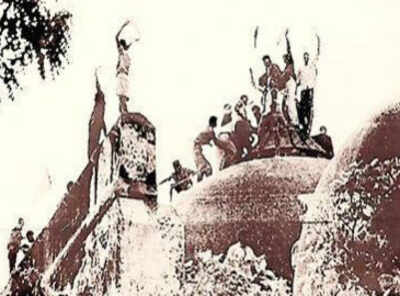
Babri Masjid being demolished in November 1992 (Photo: TOI)
Key Highlights
- There are two sets of cases - one against BJP veteran leader Advani and others, and the other against lakhs of 'karsevaks'
- '14 persons, including BJP leaders, acquitted of the charges under criminal conspiracy, should be tried in Lucknow Court," the CBI said
NEW DELHI: "Conspiracy charges must be initiated against some BJP leaders" including LK Advani, Uma Bharti and Murli Manohar Joshi, the CBI today told the Supreme Court with regard to the Babri Masjid demolition case, ANI reported.
"Criminal conspiracy charges were dropped against 21 accused, including several BJP leaders on technical grounds," the CBI told the top court. "(Of them) 14 persons, including BJP leaders, acquitted of the charges under criminal conspiracy, should be tried in Lucknow Court," the CBI added.
There are two sets of cases. One is against against veteran BJP leader Advani and others, who were on the dais at Ram Katha Kunj in Ayodhya on December 6, 1992 when the Babri mosque was demolished.
Earlier in the week , the apex court asked all parties to file their response in the matter.
The CBI had chargesheeted Advani and 20 others under Sections 153A (promoting enmity between classes), 153B (imputations, assertions prejudicial to national integration) and 505 (false statements, rumours etc. circulated with the intent to cause mutiny or disturb public peace) of the Indian Penal Code (IPC).
It had subsequently invoked charges under Section 120B (criminal conspiracy) of the IPC, which was quashed by the special court whose decision was upheld by the high court.
"Criminal conspiracy charges were dropped against 21 accused, including several BJP leaders on technical grounds," the CBI told the top court. "(Of them) 14 persons, including BJP leaders, acquitted of the charges under criminal conspiracy, should be tried in Lucknow Court," the CBI added.
There are two sets of cases.
Top Picks For You
Ramjanmabhoomi-Babri Masjid dispute: All you want to know
The other case was against lakhs of 'karsevaks' (volunteers) who were in and around the disputed structure.
Earlier in the week , the apex court asked all parties to file their response in the matter.
The CBI had chargesheeted Advani and 20 others under Sections 153A (promoting enmity between classes), 153B (imputations, assertions prejudicial to national integration) and 505 (false statements, rumours etc. circulated with the intent to cause mutiny or disturb public peace) of the Indian Penal Code (IPC).
It had subsequently invoked charges under Section 120B (criminal conspiracy) of the IPC, which was quashed by the special court whose decision was upheld by the high court.
End of Article
FOLLOW US ON SOCIAL MEDIA






Hot Picks
TOP TRENDING
Trending Stories
In India
Entire Website
- Malaika Arora's father Anil Arora dies by suicide in Mumbai
- 7 Key Reasons Why UPSC is the Toughest Exam in India
- 9/11 Remembrance Day: Key moments from the deadliest attack on US
- Howard University: 10 landmark firsts of the institution that shaped Kamala Harris
- Earthquake of magnitude 5.8 strikes Pakistan, tremors felt in Delhi, neighbouring areas
- Who were Barack Obama's challengers in 2008 and 2012 US presidential elections?
- 'A in INDIA alliance': Rahul Gandhi's slip-up during address to Indian-Americans goes viral
- Trump vs Harris: Betting markets reveal who’s expected to win the US presidential debate
- IGNOU December 2024 Term-End Exam: Registration Details, Important Dates, and Fee Structure
- Top 10 TED Talks to Boost Confidence and Success for Female Students
- Ayushman Bharat health insurance scheme to be expanded to cover elderly above 70
- Mosque row: Himachal tense as protesters clash with police
- Why growing lure of protein supplements is worrying health experts
- Impasse continues as Kolkata docs list new demands for Mamata
- Omar alleges BJP conspiracy over Rashid's release from Tihar jail
- 'Anti-national statements': Shah targets Rahul over remarks on quota
- iPhone success shows India can beat China to become world's factory
- iPhone 16 series launched: Complete features, price and how to pre-order
- Two terrorists killed by security forces in J&K's Udhampur
- The untold story of Ganguly’s Test debut

Popular Categories
Hot on the Web
Top Trends
Trending Topics
Deepika PadukoneMalaika Arora Father DeathArbaaz KhanJayram RaviAishwarya Rai BachchanSlat WaterWeight GainGOAT CollectionVikas Sethi DeathMalayalam ProducersIndia's Best Dancer 4Simi GarewalDilli BabuIndian National ParksLaung BenefitsVikas SethiiPhone 16Dubai Princess Sheikha MahraMG Windsor EvWordle Answer
Living and entertainment
Latest News
Manju Warrier expresses gratitude for birthday wishes: "Forever humbled and grateful"6,0,6,6,6 - Smashing Kieron Pollard rolls back the clock in Caribbean Premier League - WatchJiiva and wife escape with minor injuries after a road accidentWhy Banyan trees survive for centuries and spread indefinitely?Afghanistan vs New Zealand: Why is Greater Noida stadium hosting a Test match?Shilpa Shetty and Raj Kundra spotted at the Siddhivinayak Temple; video insideNBA 2K25 locker codes September 2024: Locker codes revealed and know how to reveal themDonald Trump and Kamala Harris shake hands as they meet for first time on debate stage: Watch the 'awkward' momentBRS pushes for disqualification of turncoat MLAs after High Court rulingPrince William’s commitment to a lasting marriage with KateVarun Dhawan shares unfiltered reaction to Janhvi Kapoor's 'Daavudi' song from 'Devara: Part 1': 'So freaking good...'When Jaya Bachchan revealed she had a huge crush on Dharmendra, called him a 'Greek God' in front of Hema MaliniJr NTR starrer 'Devara: Part 1' completes censorship formalities; receives UA certificate'Trump should not be telling a woman what to do with her body', says Kamala Harris on abortion rights during US presidential debateJalen Ramsey demands action against Miami Police following Tyreek Hill's pulled from carArbaaz Khan spotted outside Malaika Arora's house along with police after the tragic news of her father's demise by alleged suicide - WATCH VIDEOShivaji statue collapse: Sculptor’s custody extended till September 13Vijay Sethupathi and Trisha starrer '96' to have a sequel, reveals Prem Kumar
Copyright © 2024 Bennett, Coleman & Co. Ltd. All rights reserved. For reprint rights: Times Syndication Service