
- News
- India News
- Assam-Meghalaya border residents keep fingers crossed
Trending
This story is from February 26, 2018
Assam-Meghalaya border residents keep fingers crossed
The tribal population along these border areas vote in both the states, with no resolution to the ongoing inter-state border dispute in sight.For these voters, the most significant issue is better civic amenities.
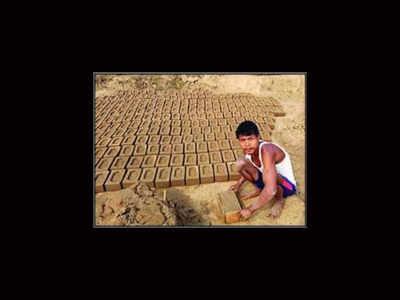
A brick kiln worker
The tribal population along these border areas vote in both the states, with no resolution to the ongoing inter-state border dispute in sight.

"Division of the two states was hardy a matter of concern for us. The needs of the people have remained almost the same here for over the last few decades. There has been some good work done in Meghalaya of late, with roads being developed in the hilly areas. But for the political parties, Mataikhar is yet to get due importance during poll campaigns. This is possibly due to the fewer number of voters here," said Kanika Rabha, a resident of Salser village in greater Mataikhar.
An activist from the area said though the Meghalaya government has taken a pioneering role in ushering in development by providing electricity years ago, they have not been of late successful in fulfilling the aspirations of the people. "In the greater Mataikhar area, there are about 3,000 voters, but only one secondary school. We also avail of healthcare services provided by the Assam. Hopefully, the next Meghalaya government will be more sympathetic to the cause of these poor families living in these fringe villages," the activist added.
Several governments have failed to focus on this area which has remained beyond their developmental agenda. Joblessness and crisis of pure drinking water still continue to haunt the area even though it is located close to Chandubi Lake in Kamrup, a celebrated tourist destination.
"Majority of the families in our area are dependent on agriculture. If any of the state governments take up initiatives to open food processing units and prioritize industries which tap into the natural resources, it will be a blessing for the villagers," said Paresh Rabha, a local youth in his 30s. He also feels that the tourism potential of the place can be developed, as the serene hills bordering Meghalaya have remained peaceful even when sections of the Garo and Rabha community fought each other in border villages of lower Assam.

About the Author
Kangkan KalitaEnd of Article
FOLLOW US ON SOCIAL MEDIA








Photostories
Hot Picks
TOP TRENDING
Popular Categories
Hot on the Web
Top Trends
Tirupati LadduIsrael Hezbollah WarRahul GandhiShan MasoodBryonna Burrows Net WorthIndian Team Fastest Test FiftyWTC Points TableUGC NET Result 2024GovindaWomen T20 World Cup Points TableWomen T20 World Cup ScheduleEarth Two MoonsIPL Player RegulationsAsteroid 2024 PT5DiddyTop Management Colleges of IndiaLive Cricket Score
Trending Topics
GovindaNavratri Colours 2024Deadpool and Wolverine OTT ReleaseNavratri WishesGandhi Jayanti WishesDevara CollectionGOAT OTT ReleaseGandhi Jayanti 2024Rajinikanth Health UpdateNavratri HistoryDevaraGovinda NewsDevara Movie ReviewHealthy RaitasSwatantrya Veer SavarkarColdplay India tour 2025Upcoming Smartphones In OctoberAmazon SaleSony Bravia 55 inch 4k Ultra HD TVWordle Answer
Living and entertainment
Latest News
Shark Tank India 4: Sharks begin shooting for the new season; Sahiba Bali and Ashish Solanki join as new hostsShannon Sharpe compares Patrick Mahomes' current situation to Tom Brady's past as Chiefs adjust to roster changesUCEED 2025 registration begins at uceed.iitb.ac.in, direct link to apply here: Check detailed admission scheduleMahima Chaudhry reveals she begged Ajay Devgn and Prakash Jha to keep her near-fatal car accident secret: 'I feared industry boycott'Vijay's 'GOAT' gets an OTT release; official date announced!Haryana polls: Brick thrown at car in Dushyant Chautala's convoy in Jind; case filedCSK to connect with MS Dhoni in 'coming week', undecided on using IPL uncapped player ruleHow to use charcoal powder to whiten teethA night-long musical extravaganza, ‘Raat Pohalo Sharodo Praate’ to usher Devipokkho with unforgettable melodiesOlivia Culpo and Christian McCaffrey buy George Clooney's mansion for $14.5 millionElon Musk lost legal battle over unpaid severance to former Twitter employeeStree 2 Box Office Collection day 47: Shraddha Kapoor starrer falls below Rs 1 crore for the first timeBohurupi trailer promises to be a gripping heist drama'CM Yogi's mindset towards Muslims ...': Faizabad MP hits back at BJP in Ayodhya rape caseLate actress Park Ji Ah's co-stars Song Hye Kyo, Park Sung Hoon, and others to attend funeralBill Belichick Leaves Tom Brady Jokes Behind to Join Nike in Boosting Lacrosse, America’s Sport on the RiseMumbai Indians the winners under new IPL retention ruleSurabhi Lakshmi on receiving praise from Akshay Kumar: I never imagined he would remember me; overwhelmed by his words
Copyright © 2024 Bennett, Coleman & Co. Ltd. All rights reserved. For reprint rights: Times Syndication Service