
- News
- India News
- Ameen Sayani, golden voice of radio, falls silent
Trending
This story is from February 22, 2024
Ameen Sayani, golden voice of radio, falls silent
Ameen Sayani, the iconic host of Binaca Geetmala on Radio Ceylon, passed away at 91. His show revolutionized Indian broadcasting, nurturing a special bond with listeners. Prime Minister Narendra Modi and Union Minister Anurag Thakur paid tribute to his contribution and charismatic voice.
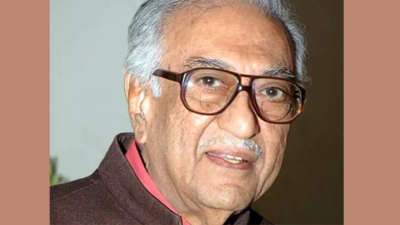
Mumbai-based radio personality Ameen Sayani, 91, who hosted that iconic hit parade of film songs from Dec 1952 to April 1994, passed away following a heart attack on Tuesday.
Sayani shaped & expanded golden era of radio
From 1950s-70s, radio ruled indoor entertainment in India. With a voice that seemed to be shaking hands and a style that was intimate, Sayani not only personified “the golden years of radio” but also shaped and expanded it. At a time when songs sold films, his show was pivotal to the fortunes of the Hindi feature. It spawned hundreds of shrota sanghs (listeners’ clubs) in towns and kasbahs. Overcoming the faint and wavering sound of short-wave radio, hundreds would press their ears to the ‘transistor’ to engage with a weekly register of songs. The programme’s emotional bonding with the listener is hard to explain, impossible to replicate.
Binaca (later Cibaca) Geetmala was born at a time when Hindi songs were banned on All India Radio by Union I&B minister B V Keskar, a classical music purist. Radio Ceylon grabbed the opportunity.
“Geetmala came on the scene as a low-priced experiment. I was given the job because none of the senior broadcasters cared much about it,” he told this reporter in a 2009 email interview.
The job entailed listing songs, writing the show’s script, presenting it and handling the feedback for Rs 25 per week. “Within a few months, AIR lost a major chunk of its popular listenership,” said Sayani, who was mentored by his elder brother Hamid, a reputed broadcaster.
The format of playing 16 hit tracks of the week for an hour (initially 30 minutes and seven numbers) was novel and exciting. But it was Sayani’s voice that became the 41-year-long show’s endearing USP. At its peak, the show received 65,000 letters every week.
Sayani’s easy, relaxed and flowing style led to first-rate interviews with major composers, lyricists and singers of the time. Bournvita Quiz Contest and S Kumar’s Ka Filmi Muqaddama were two other popular 70s show of his. Prolific with ad jingles, he also occasionally worked in the movies. The radio compere introduced Dev Anand’s Teen Devian (1965) with a background commentary and did a cameo for Mehmood’s Bhoot Bangla (1965).
Born into an enlightened and well-heeled Khoja family, Sayani graduated in history from St Xavier’s, Mumbai. Not many know he assisted his mother, Kulsum, in editing, publishing and printing a fortnightly journal for neo-literates on Mahatma Gandhi’s instructions. The fortnightly, Rahber (1940-60) was published in Devanagari, Urdu and Gujarati scripts.
Sayani also brought out a highly popular CD and cassette series, “Geetmala Ki Chhaon Mein”, which was peppered with film star interviews as well as digressions into the music of the past. He received Padma Shri in 2009.
On X, Prime Minister Narendra Modi mourned his passing with a tribute to the charm and warmth of Sayani’s golden voice. “Through his work, he played an important role in revolutionising Indian broadcasting and nurtured a very special bond with his listeners,” he wrote.
Union information and broadcasting minister Anurag Thakur posted, “For most of us, he was the voice of the radio, who, with his magical wordplay, entertained and engaged us in a way no one had before.”
End of Article
FOLLOW US ON SOCIAL MEDIA










Hot Picks
TOP TRENDING
Explore Every Corner
Across The Globe
Popular Categories
Hot on the Web
Top Trends
Public Holidays 2025IND vs ENG Schedule 2025Budget 2025Tax CalculatorDonald TrumpChhattisgarh Maoist Commander EncounterIncome Tax SlabsSaif Ali Khan CaseRinku SinghTrump Two Gender PolicySaif Ali Khan CaseJohn RockerSSC MTS Result 2024Linda FaganChampions TrophyWhere to Watch IND vs ENG SeriesTommy Paul GirlfriendLive Cricket Score
Trending Topics
Emergency Box Office CollectionBigg Boss 18 WinnerSara Ali KhanBigg Boss Tamil 8 WinnerEmergency Movie ReviewColdplaysNagarhole National ParkSaif Ali Khan InjuredMagnesium DeficiencyMemory SharpArchana Puran SinghMagnesium DeficiencyDaaku Maharaaj Box Office Collectionemergency Box Office CollectionShark Tank India 4NYT ConnectionsAmazon SaleSatya NadellaTOI News
Living and entertainment
Latest News
Ira Khan shares heartwarming childhood picture with brother Junaid KhanWhy has the New York Yankees been missing in action during the current off-season?WWE Star Kevin Owens Won't Turn On Sami Zayn For Teaming With Roman Reigns Like He Did With Cody RhodesUS Ambassador to India Eric Garcetti mentions Shah Rukh Khan's iconic dialogue from Om Shanti Om in his farewell video: 'Picture abhi baaki hai mere dost' - WATCHLogan Paul Will Be Making His First Appearance as a Wrestler In WWE RAW on Netflix Next WeekBITSAT 2025 registration window opens: Direct link to apply hereMoroccan truck drivers kidnapped in Burkina Faso have been releasedNY Mets' coach Mike Sarbaugh reveals Pete Alonso's 'better' replacement for first baseman“They leverage and manipulate officials": FOX Analyst Colin Cowherd critiques NFL's favoritism towards Patrick Mahomes and the Chiefs'Jailer' actor Vinayakan reacts to viral video of obscene behaviorTrump Inauguration: Why Melania Trump had her face hidden by a hatDarshan Thoogudeepa petitions the court to return the seized moneyFarman Haider gets candid about his character in Pocket Mein Aasmaan; says 'Digvijay is basically our society and the people who tell women they can’t do it all'California can’t use ocean water to battle wildfires; here’s whyIndia’s taxpayers are hopping mad. Will govt provide some relief?Discover the regions on Earth where snakes are not foundIvanka Trump took inspiration from late Audrey Hepburn for Givenchy gown'Chunavi Hindu': BJP targets Arvind Kejriwal for 'Raavan came in form of golden deer' remark
Copyright © 2025 Bennett, Coleman & Co. Ltd. All rights reserved. For reprint rights: Times Syndication Service