
- News
- Kahaani makes a comeback on radio
This story is from April 17, 2016
Kahaani makes a comeback on radio
From Manto and Satyajit Ray to history and horror, there’s a storytelling wave on radio
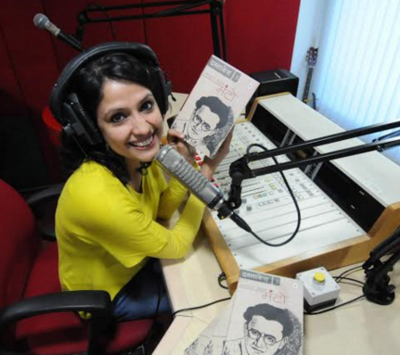
From Manto and Satyajit Ray to history and horror, there’s a storytelling wave on radio
Who, in this age of podcasts, would have imagined that radio would gradually regain its place as the original raconteur? A few months ago, Radio Mirchi started narrating Saadat Hasan Manto’s short stories for the first time on Indian radio, on a new show called Ek Purani Kahani.
One story is narrated every Friday at 11pm, even controversial ones like Bu and Khol Do (for the circumstances of their sexual encounters). In a couple of months, the series drove up Manto book sales by 20% at Rajkamal Prakashan, the Hindi publisher partnering with Mirchi.
“Who’d have thought the audio format would push people back to books,” says RJ Sayema, the mind and voice behind the series. Often, people tweet in at 11.30pm, when the story ended to discuss its subtext.
It was Sayema who rooted for Manto when Radio Mirchi decided to debut storytelling because intolerance was a hot-button topic. “We needed an author who has been fearless on subjects like caste and religion,” she says.
As FM channels look to differentiate themselves in a market homogenized by Bollywood music, they’re convinced that story-telling will be the disrupter. “Radio is the ideal medium for story-telling; it’s intimate and has immediacy,” says Sanjeev Srivastava, who started hosting 92.7 Big FM’s new show Nayak last month. The series – consisting of inspirational life stories of homegrown heroes (PT Usha, Vikram Sarabhai…) has been assigned drive-time (8-10pm, time spent driving) on all weekdays.
An early experiment was Fever 104’s lavishly produced Ramayana (a Rs 1-crore experiment featuring actors like Naseeruddin Shah, Om Puri and Anupam Kher) in 2010. Fever found its TSL rising from 2.5 to 10 minutes, the full length of each episode. (TSL, or Time Spent Listening is a measurement that indicates how much time a listener spends on one station before switching). Fever then produced other story series across categories: devotion, history, crime, and even a sitcom called Friends in a Metro. “We’re about to launch our next story line-up shortly, with new series across genres,” reveals Sumanto Ray, national creative and content head at Fever 104.
Radio tales are also beginning to pull in brand backing. Hero Pleasure, OLX, Birla Sun Life are some of the sponsors given cameos in the stories of Neelesh Misra, radio’s celebrity kahanikar. (A character may, for example, scooter down to meet a date on the sponsor’s bike). His biggest patron these days is the UP government that has been shrewdly ballyhooing its civic schemes through stories in a show called UP Ki Kahaniyan.
Misra, best known for his Yaadon Ka Idiotbox on Big FM, produced a 12-minute pilot that eventually ran as the series’ first episode: Diwali Ki Raat. “From 12-minutes we expanded to 18-minute stories,” says Misra. “The stories connected everyone, cutting across age, social strata and geography,” says Misra, whose writing group in Mumbai called Mandali, scripts original stories for broadcast.
Radio – the poor man’s medium – has had a rich literary life on All India Radio. Stories have been narrated (and regionally translated) on the long-playing ‘Hawa Mahal’ (on Vividh Bharti) since 1957, and drama, on the National Programme of Plays, since 1956. But AIR – with its lean production budgets that begin at Rs 20,000 an episode – sources its content from out-of-copyright classics, contemporary works and commissioned writing. On the other hand, some young broadcasters are chasing their own tale on private FM channels.
Almost all the 300 episodes of Red FM’s horror hit, Ek Kahani Aisi Bhi, were written by its two RJs, Praveen Sethia and Devankan Chakraborty. “We practically lived in the studio five days a week, ideating till 3am, scripting by 7am and recording at 8.30am,” says Chakraborty. Such was the popularity of the show that 25 stories from season one were published as a book in Kolkata.
The spillover to other mediums isn’t new. Radio Mirchi’s phenomenal success in Kolkata, Sunday Suspense – chiefly featuring Satyajit Ray’s Feluda coups – cultivated a cottage industry of audio anthologies on CD. Incidentally the series had co-opted some of Kolkata’s top screen stars, including director Rituparno Ghosh.
The success of Sunday Suspense led the network to replicate the format in other languages, says Tapas Sen, Radio Mirchi’s chief programming officer. “We’ve done 2-minute story festivals and Marathi plays in Pune; 2-minute horror stories every Sunday in Surat; Ek Minute Mein Ishq in Baroda; Stolen Stories in Tamil Nadu where classics have been contemporized; and Bheegi Mirchi (rain stories) in Nagpur,” Sen says. “You could say radio in India is 98% music; story-telling is 2% and growing fast to 5%.”
India currently lacks an accurate enumerator of radio listenership (broadcasters find RAM ratings unreliable) so networks rely partially on direct feedback. Two weeks ago, Manto’s grandson, Mohammed Farooq, who resides in Lahore, wrote to Sayema in response to Ek Purani Kahani. He’d heard episodes of the show on the internet and had started playing the stories to his mother, Manto’s daughter, Nuzhat Arshad. “I’m amazed you’re playing with fire at a time like this,” he told her.
End of Article
FOLLOW US ON SOCIAL MEDIA
Photostories

Hot Picks
TOP TRENDING
Popular Categories
Hot on the Web
Top Trends
Hurricane MiltonRatan Tata NewsNew UPI Transaction LimitRatan Tata DiesPM ModiRafael NadalShantanu NaiduTom BradyStock Market TodayNarayana MurthyEngland Cricket Team New RecordRatan Tata Inspiring QuotesManagement Colleges of IndiaTop Medical Colleges of IndiaTop Engineering Colleges of IndiaTop Pharmacy Colleges of IndiaLive Cricket Score
Trending Topics
Diwali WishesBigg Boss Tamil 8 Contestants ListDussehra WishesVettaiyan Twitter ReviewSanjay Leela BhansaliVettaiyan ReviewSalman KhanDevara CollectionBigg Boss 18Deepika PadukoneShraddha KapoorRatan Tata Passed AwayColdplayVettaiyan Movie ReviewSwatantrya Veer SavarkarDussehra 2024Watch NFL Live StreamDress To ImpressRatan Tata DeathWordle Answer
Living and entertainment
Latest News
How Chennai Night Race swerved past challenges to zoom toward a brighter motorsports futureAll-Star Tower Defense (ASTD) Codes October 2024Ranveer Singh: I have a man crush on Tiger ShroffWho is Noel Tata? Meet Ratan Tata’s half-brother, who could be successor at Tata TrustsHow to make Ginger Turmeric Shots for seasonal changeWhen Amitabh Bachchan slept on Marine Drive with rats as neighbours: I didn’t have a place to stayEthel Kennedy, widow of Senator Robert F Kennedy Sr suffers stroke in sleep, hospitalised'Stree 2' hits OTT after record-breaking box office success: Here’s where to watch!Da Hood Codes October 2024: Unlock new weapons to elevate your gameplayTriple centurion Harry Brook happy to break Dad's club record'Thalapathy 69': Here's how much Vijay will be earning in his last film!How The Tarot Suit Can Be Associated With The Elements'You're drunk': Britons stunned by BBC app's shocking 18,995 mph wind forecast!Hanging Lights For Living Room: Transform and Illuminate Your SpaceArko: The reach of Bollywood is greater than single albumsExclusive- Iss Ishq Ka Rab Rakha fame Shalini Kapoor Sagar on celebrating Navratri festivities says, "We will be shooting the Durga Puja track soon"Leaders of 24 countries, UN chief to attend BRICS summit: KremlinOnly a true creative genius can spot the odd unicorn in 12 seconds!
Copyright © 2024 Bennett, Coleman & Co. Ltd. All rights reserved. For reprint rights: Times Syndication Service