
- News
- Four first-time authors in 2019 JCB Prize for Literature longlist
This story is from September 4, 2019
Four first-time authors in 2019 JCB Prize for Literature longlist
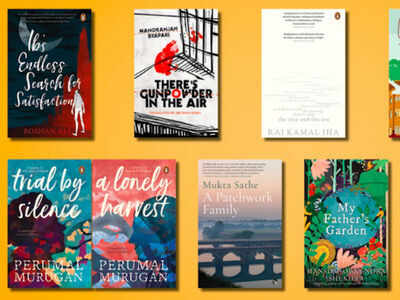
The award was established last year to “create greater visibility for contemporary Indian writing”, with prize money of Rs 25 lakh for winner.
If the winning work is a translation, the translator will receive an additional Rs 10 lakh. The shortlist of five titles will be announced on 4 October, with each of the shortlisted authors receiving Rs 1 lakh each. If the shortlisted work is a translation, then the translator will receive Rs 50,000.
The longlist was chosen from submissions from fourteen states in six languages, including Bengali, Hindi, Kannada, Tamil, Telugu and English, published between 1 August 2018 and 31 July 2019. Two works on the list are translations – Manoranjan Byapari’s There’s Gunpowder In The Air, translated from Bengali by Arunava Sinha and the twin novels Trial by Silence and Lonely Harvest by Perumal Murugan, translated from Tamil by Aniruddhan Vasudevan. Murugan had also featured in the 2018 list for his novel Poonachi.
The four first novels in the list include Roshan Ali’s Ib’s Endless Search for Satisfaction, Madhuri Vijay’s The Far Field, Mukta Sathe’s A Patchwork Family and Amrita Mahale’s Milk Teeth. The other entries are The City and the Sea by Rajkamal Jha, The Queen of Jasmine Country by Sharanya Manivannan, A Secret History of Compassion by Paul Zacharia and My Father's Garden by Hansda Sowvendra Shekhar.
The 2019 jury includes authors KR Meera, Anjum Hasan and Parvati Sharma, economist Arvind Subramanian and filmmaker and environmentalist Pradip Krishen.
“All of us on the jury were struck by the quantity of historical fiction currently being written. Indian history is now, like never before, the inspiration for novels that address the concerns of the present – painful memories of colonialism, the costs of nation building, the divisiveness of caste and religion, and the need to see the world through the eyes of women. As readers, we wondered what this said about the current zeitgeist,” Krishen said. “Many of the books we selected for the longlist expressed powerful hopelessness, irrevocable damage. Characters are constantly trying to resist a malevolent reality of which, nonetheless, they are fully a part.”
In 2018, the prize was awarded to Jasmine Days by Kerala-based novelist and short story writer Benyamin, translated from Malayalam by Shahnaz Habib.
End of Article
FOLLOW US ON SOCIAL MEDIA

Hot Picks
TOP TRENDING
Popular Categories
Hot on the Web
Top Trends
Trending Topics
Devara CollectionBigg Boss Kannada 11 Launch Live UpdatePawan KalyanJungle SafariStree 2 OTT ReleaseRose GardenDevara CollectionOTT Release MovieMasala OmeletteEmergencyDevaraTaaza Khabar 2 Twitter ReviewDevara Movie ReviewHealthy RaitasSwatantrya Veer SavarkarColdplay India tour 2025Smartphone DealsApple Macbook Air M1Amazon SaleWordle Answer
Living and entertainment
Latest News
West Bengal CM Mamata Banerjee holds meeting to address flood situation in North BengalSetting them up to flourish: Why parents and school are a tag teamAir Arabia launches early bird promotion on 500,000 seats from INR 5,727!Diljit Dosanjh presents a gift to his Pakistani fan at his Manchester concert - WatchFormer Deputy Chief minister Alla Nani faces legal trouble after lift incident in EluruIndian wushu team creates history, bags seven medals at junior worldsWall collapse near Mahakal temple: Two cops, two civic staffers, temple official suspendedAishwarya Rai Bachchan touches Nandamuri Balakrishna's feet as a sign of respect, the Telugu star blesses herCovid lockdown on earth led to dip in Moon's temperature: StudyHost Kiccha Sudeep to Bigg Boss Kannada 11 contestant Aishwarya Shindogi: Come back as a stronger personManipur CM Biren accuses Kuki militants of abducting 2 Manipuri youthsKhatron Ke Khiladi 14 winner: Karan Veer Mehra lifts the trophy and Krishna Shroff becomes the first runner-upWhat to expect after a facelift procedure"It sounds like they really had to squeeze responses out of Vince": WWE Hall of Famer discusses Vince McMahon's reluctance in speaking during Netflix seriesColleagues remember braveheart Delhi Police constable Sandeep: 'Would rush to crime scene alone'10 desk exercises for 40-plus men for a healthy lifeBaloch Human Rights slam Pakistan and China, call it 'a failed state'A killing & a tipping point
Copyright © 2024 Bennett, Coleman & Co. Ltd. All rights reserved. For reprint rights: Times Syndication Service