
- News
- Bringing up baby in the office
This story is from November 4, 2019
Bringing up baby in the office
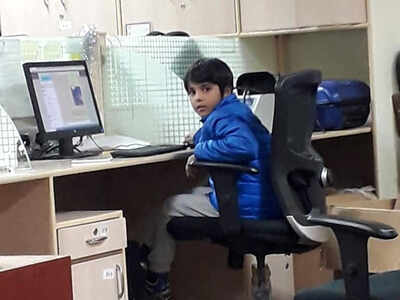
Archetype isn’t the only firm waking up to the need to accommodate and retain working mothers.
In fact, it’s becoming quite common to see a crib positioned near a desk or a pre-teen poring over homework in their parent’s cubicle. Of course, there’s the risk of a bawling baby drowning out an office call or a naughty teen running around but offices are willing to take that chance.
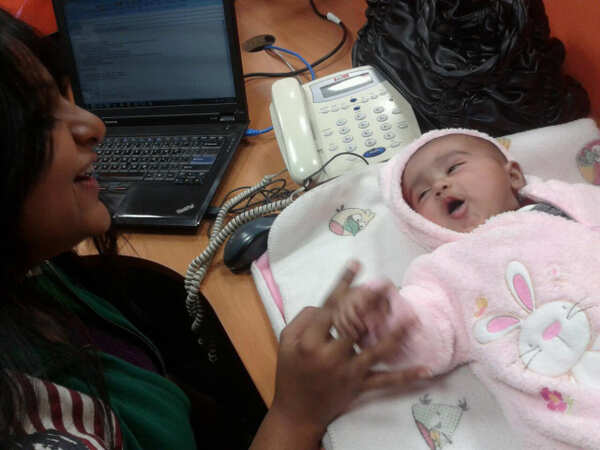
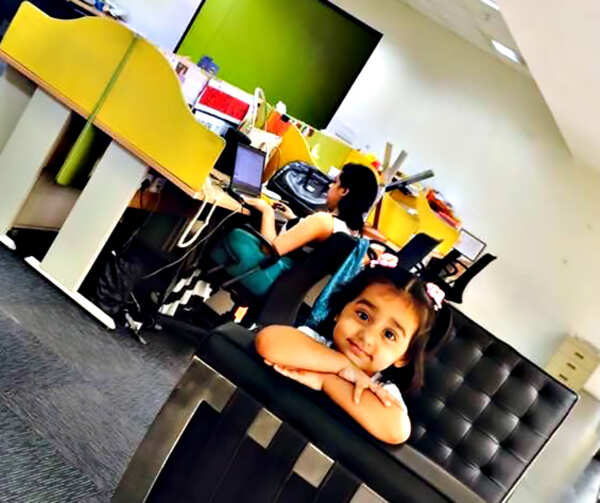
Mishika Nijhawan has been going to her mother’s office since she was three months old. She is now seven
Swapna Nair, vice-president HR at Sharechat, a social media startup in Bengaluru, gets her seven-year-old son Renaud Menon to office when the school is shut. “He looks forward to such visits. We have a playroom in office with carrom, table tennis and foosball. Kids usually keep themselves busy there. And when they feel tired we also have a nook where they can take a nap,” says Nair. Both men and women avail of this option at Sharechat.
As “bring your child” to office catches on, some high-profile parents are going the extra mile. For instance, former Yahoo CEO Marissa Meyer famously built a nursery for her newborn son, Macallister, next to her office. Karan Johar, head of Dharma productions, built a crèche at his Andheri office so that he could spend more time with his kids.
Last year, Delhi Assembly was attended by a two-month old baby, Advait. His mother and AAP MLA Sarita Singh told TOI that she was enjoying the fact that she could work and also have her child around her. While MLAs pitched in to take care of Advait during the Assembly session, party volunteers stepped in during meetings,” Singh told a TOI reporter.
Rituparna Chakraborty, co-founder and executive vice president, Teamlease Services, says the option makes employees more productive, and there is hardly any misuse. “Women especially are conscientious and take up this option only when there’s a dire need,” she adds.
For Neha Rastogi, 38-year-old COO of Agatsa, a medical devices startup, bringing her son Aryaman, 7, to office was more than just a matter of time management. When he was younger, she would leave him at day-care or with a help at home but he could never adjust to those environments. “He kept falling sick, and became aggressive. When he was 3-4 years-old, I started bringing him with me to work along with his sitter. He would play in the park near our office, or inside. We have an open office but have kept indoor games, TV and books for children. Gradually his health started improving and he became more social,” says Rastogi, adding that she has also taken him along to meetings with investors on many occasions. Other employees too bring their children to office.
Rastogi, who co-founded the startup with her husband, says that bringing Aryaman to work lets them work in peace. “A startup has no timings, so knowing that our child is near us allows us mental freedom to focus better on work,” she says.
Deepshikha Dharmaraj, managing director, Genesis BCW, recalls once interviewing a candidate who got her seven-month-old infant along. She left the baby at the reception while she went inside for the interview. “We ended up hiring her and she worked with us for five years. Even now when she calls me up, she fondly reminds me of this incident,” says Dharmaraj who also gets her 12-year-old son to office on some days.
But not everyone is sold on the idea. Corporate coach Aparna Jain feels that unless there’s a designated safe space for children, like a creche, it makes no sense to bring them to work. “If something happens to the child then it’s a huge liability problem. Most offices these days have an open floor and even without children employees find it distracting,” says Jain. She strongly suggests every office building have a creche run by a third party within the premises or at walking distance. “It should be a safe space with cameras, trained staff and facilities.”
That would be the ideal alternative but till guidelines on workplace creches are enforced, parents are happy with the next best thing — bringing their kids to work.
End of Article
FOLLOW US ON SOCIAL MEDIA
Photostories

Hot Picks
TOP TRENDING
Popular Categories
Hot on the Web
Top Trends
Russell WilsonsMohammed ShamiTom BradyRishabh PantShantanu NaiduUGC NET ResultNobel Peace PrizeMahadev Betting AppNew UPI Transaction LimitRatan Tata DiesCBSE Class 10 12 Practical ExamPopular Schools in Navi MumbaiManagement Colleges of IndiaTop Medical Colleges of IndiaTop Engineering Colleges of IndiaTop Pharmacy Colleges of IndiaLive Cricket Score
Trending Topics
Diwali WishesDussehra 2024 QuotesDussehra WishesVettaiyan OTT ReleaseVettaiyan CollectionVettaiyan ReviewNatasa StankovicDevara CollectionBigg Boss 18Deepika PadukoneShraddha KapoorRatan Tata Passed AwayJigra Movie ReviewVettaiyan Movie ReviewSwatantrya Veer SavarkarDussehra 2024Elon MuskDussehra Whatsapp StatusUltimate Football Codes October 2024Wordle Answer
Living and entertainment
Latest News
Internship scheme: 193 companies post over 90,000 slots on portalApplications for new power connections among services moved exclusively onlineInfosys to no longer send job offer letters and attachments, the company will ...Sara Arfeen Khan opens up about converting to Islam; says, 'I read all holy books and attended a lot of religious debates before converting'Amitabh Bachchan, Rambha, Khushboo and others check in on Govinda after gun misfire incident - ExclusiveCops on unusual hunt: For denturesDiscover 8 animals that suck blood for survivalHappy Dussehra 2024: Top 50 Wishes, Messages, Images and Quotes to Share with Your Loved OnesFortified-food plan faces questions from two PM panel membersCould Tyreek Hill Return to the Chiefs? Cryptic Posts Fuel Trade SpeculationWith special access card, disabled people can skip Exposition queuesForex reserves drop $3.7 billion in week, most since start of AugustAshton Kutcher and Mila Kunis consider leaving Hollywood amid Sean 'Diddy’ Combs' arrest fallout: ReportHow Green is your car?Robert Gronkowski Reacts to His Hilarious Impression in FX's American Sports Story: Aaron HernandezIf Rahul Gandhi fails to deliver, INDIA bloc may make LoP post rotational: BJP‘Kallanum Bhagavathiyum’: The Vishnu Unnikrishnan and Mokksha starrer is set to get a sequelAlia Bhatt, Bipasha Basu, Rhea Chakraborty and others seek blessings at Kajol and Rani Mukerji's Durga Puja pandal - See photos
Copyright © 2024 Bennett, Coleman & Co. Ltd. All rights reserved. For reprint rights: Times Syndication Service