
- News
- Health News
- Why your brain feels foggy after long work hours: Neurologists explain hidden triggers affecting focus and memory
Why your brain feels foggy after long work hours: Neurologists explain hidden triggers affecting focus and memory

Endless hours at the office often result in troubling 'brain fog,' a frustrating blend of exhaustion and lack of focus. Professionals highlight that this fatigue frequently originates from relentless mental pressure, sleepless nights, dehydration, and heightened stress. The human brain is not designed for relentless activity; it thrives on breaks and sufficient support to ensure clarity and memory retention.
Israel Iran War
Poll
What do you think is the biggest contributor to brain fog at work?

Neurologists emphasize that the brain needs regular breaks, proper nutrition, hydration, and adequate sleep to function efficiently.
The brain was never built for nonstop focus
Screens, multitasking and digital overload
When sleep debt quietly clouds the brain
- concentration
- reaction time
- memory recall
- emotional regulation
Dehydration and skipped meals affect thinking
Stress quietly overloads the brain
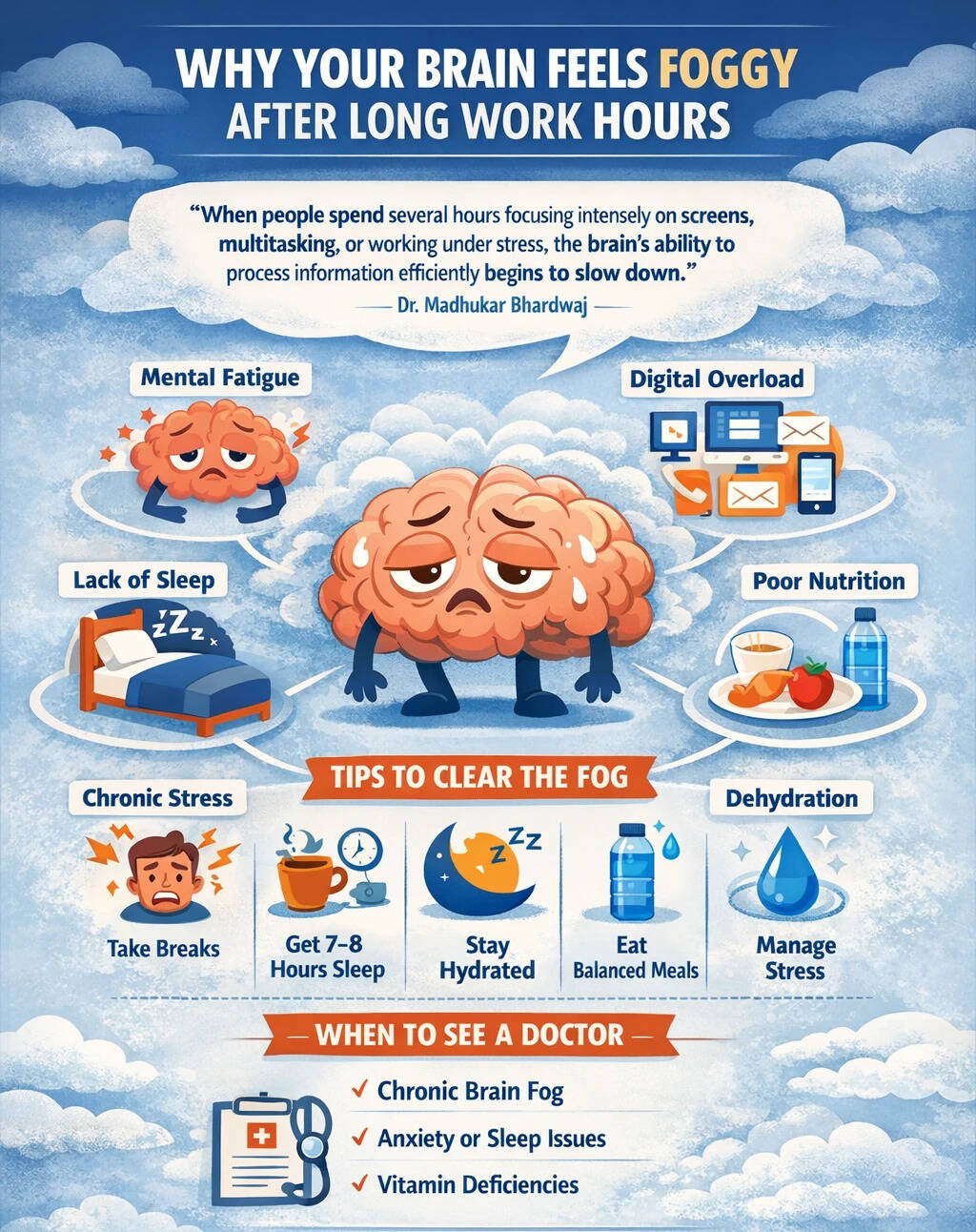
Adopting simple daily habits and managing stress can restore mental clarity and improve long-term brain health.
Small daily habits that protect mental clarity
- Scheduled mental breaks: Short pauses every 60-90 minutes help restore attention.
- Hydration during work hours: Even small drops in hydration affect brain efficiency.
- Balanced meals instead of quick snacks: Stable energy supports steady thinking.
- Reduced evening screen exposure: This helps improve sleep quality.
- Movement during the day: Walking or stretching increases blood flow to the brain.
When brain fog should not be ignored
- chronic stress
- anxiety
- vitamin deficiencies
- sleep disorders

About the AuthorAadya Jha
End of Article
Follow Us On Social Media
Hot Picks
Top Trending
Tired of too many ads?go ad free now
Trending Stories
In Section
Entire Website
- US-Israel-Iran War News Live Updates: UAE embassy in Iraq attacked, Hezbollah drones target Israel
- 'Historic $300 billion deal': Trump announces Reliance investment to build first new US oil refinery in 50 years
- NCERT corruption chapter row: SC asks to disassociate professors from work paid by public funds
- Iran launches fresh strike on UAE: Two drones hit near Dubai airport; Indian among 4 injured
- US-Iran war impact: What are the latest petrol, diesel prices in India, South Asian countries?
- Who is Harish Rana? Ghaziabad man in vegetative state for 12 years at centre of Supreme Court's passive euthanasia ruling
- 'Constantly humiliated, caused mental trauma': Mumbai dentist's chilling death note shocks kin; how troubled relationship ended in tragedy
- Kolkata Fatafat lottery result today (March 9): Check winning numbers and full winners' list
- At 40°Celsius, Mumbai sweats it out on its hottest day in 5 years
- ‘Without money, we will die here too’: Why fear of war has failed to deter Indian workers looking to head for Middle East
- US-Israel-Iran War News Live Updates: UAE embassy in Iraq attacked, Hezbollah drones target Israel
- 'Historic $300 billion deal': Trump announces Reliance investment to build first new US oil refinery in 50 years
- NCERT corruption chapter row: SC asks to disassociate professors from work paid by public funds
- Iran launches fresh strike on UAE: Two drones hit near Dubai airport; Indian among 4 injured
- US-Iran war impact: What are the latest petrol, diesel prices in India, South Asian countries?
- Who is Harish Rana? Ghaziabad man in vegetative state for 12 years at centre of Supreme Court's passive euthanasia ruling
- 'Constantly humiliated, caused mental trauma': Mumbai dentist's chilling death note shocks kin; how troubled relationship ended in tragedy
- Kolkata Fatafat lottery result today (March 9): Check winning numbers and full winners' list
- At 40°Celsius, Mumbai sweats it out on its hottest day in 5 years
- ‘Without money, we will die here too’: Why fear of war has failed to deter Indian workers looking to head for Middle East
Tired of too many ads?go ad free now



Explore Every Corner
Across The Globe
Israel Iran WarSilver Rate TodayUttam Nagar MurderIran Strike UAE AirportUS India Oil Refinery DealMumbai Dentist SuicideBAN vs PAK Live ScoreH 1B Visa FraudWhy Stock Market Down TodayAli KhameneiGautam GambhirHarbhajan SinghMS DhoniICC T20I RankingsAjit AgarkarShoaib AkhtarMohammed SirajParliament Budget SessionIranian Drone Shoot Down VideoCBSE Class 12 English ExamNCERTHarish Rana CaseICCHardik PandyaAirline Fare HikeWho is Harish RanaBhadreshkumar PatelVirat KohliIPL 2026IPL 2026 Schedule
Hot on the Web
Taapsee PannuTina AhujaDubai AirportsSalman KhanUAE Flights UpdateAkshay KumarAjith KumarCardi BBreast CancerTamannaah BhatiaArun TupeSalim MerchantDaniel JacksonDubai International AirportKuno National ParkHighest Paid South ActressesJasprit Bumrah HouseDevni DeviSudesh LehriNancy GuthrieYashIndian BreakfastGaurav KhannaJupiter Turns in GeminiQueen VictoriaGen Z PresidentHoroscope TodayNeanderthal MenWISA ActCooked Chicken Shelf LifeToday Gold Rate in ChennaiDelhi Weather TodayDelhi AQI TodayMumbai AQI TodayMaharashtra Public Holidays 2026Shivam Dube HouseWhite PhosphorusAnkur WarikooSam AltmanNasa Satellite CrashIndian Cobra VS Egyptian Cobra
Trending Topics
LPG Supply ShortageAlejandro Kirk WifeBill Belichick GirlfriendAja WilsonKanpur Priest AssaultBam AdebayoMiddle East ConflictWembley shop vandalizedBareilly Brain Dead Woman RevivedMumbai Temperature RecordSwitzerland Bus FireEl Nino EffectsMojtaba KhameneiParliament Budget Session 2026Iran Supreme LeaderTaranjit Singh SandhuAir India Express PlaneJoe Burrow Olivia Ponton relationship rumorsLuka Doncic referee gesture fineStefon Diggs net worthTravis Turner missing football coachStefon Diggs net worthAmy Luciani Dwight Howard wifeSakura JasonTheWeen breakupMeghalaya PollsPunjab budget sessionMumbai dentist suicideGulf visa applicationBrain dead womenJD VanceInstagram DownXiaomi 17 UltraSam AltmanElon MuskStephen HawkingAnthropic Ceo Dario AmodeiJasprit Bumrah HouseSundar PichaiScience NewsHow to watch ICC T20 World Cup 2026 in USAIPL 2026IPL Schedule 2026
Popular Categories
HeadlinesSports NewsBusiness NewsIndia NewsWorld NewsBollywood NewsHealth+ TipsIndian TV ShowsTechnologyTravelEtimesHealth & FitnessAstrologyInternational SportsDeorhiTechnology NewsAutoWeather TodayGold Rate Today DelhiSilver Rate TodayPlatinum Rate TodayIs Bank open todayIPL 2026IPL Schedule 2026Bank HolidaysPublic HolidaysBank Holidays in MarchPublic Holidays in MarchAries HoroscopeGemini Horoscope
Trending Videos
'DIRECT HIT': IRGC Missile Force 'BOMBS' American Military HQ In Iraqi Kurdistan Region | FULLBharti Singh Brings Laughter to Ramadan Iftar GatheringBobby Deol and Fatima Sana Shaikh to Star Together in Leh-Set FilmBrother Celebrates Sister’s Indian Army Achievement in Viral Video‘I Was Silenced’: Rahul Gandhi Repeats ‘PM Compromised’ Jibe, BJP Fiercely Hits Back At His ClaimsTrump Announces $300 Reliance Investment To Build Oil Refinery In Texas, Thanks 'Partners In India'Amritsar erupts as Abhishek Sharma’s family celebrates India’s T20 World Cup triumphWhy Britney Spears’ DUI Mugshot Is Being Kept Secret After Late Night Arrest?Trump Announces $300 Reliance Investment To Build Oil Refinery In Texas, Thanks 'Partners In India'IDF Says Iran Fired 300 Missiles At Israeli Territory, Occupied West Bank Since The Start Of WarOscars Afterparty Revealed As Stars Head To Exclusive Governors Ball Feast
Latest News
'I don't like living in s***,' says Priyanka Chopra about moving from Hindi cinema to Hollywood, took inspiration from Aishwarya Rai, Mindy KalingElderly man injured in elephant attack in Chhattisgarh forestsThe first phone call in history: Alexander Graham Bell’s nine words that transformed communication'Flaws in technique': Babar Azam skips National T20 to fix batting ahead of PSLAs Anduril buys space tech company ExoAnalytic Solutions; engineering VP says: We believe the Department of Defense deserves ...CUET PG 2026 exam underway: Check list of documents candidates must carry to exam centreICC T20I Rankings: Ishan Kishan closes in on No.1 Abhishek Sharma; Varun Chakaravarthy loses top spot'All help will be given to Indians in Gulf': PM Modi assures in Kerala; attacks Congress for 'politicising' issueCensus 2027: How India’s population count will be conducted in two phasesIran can’t win the air war. So it’s adapting to target America’s vulnerable defencesPearl V Puri in talks to play Ansh Gujral’s son in Kyunki Saas Bhi Kabhi Bahu Thi 2Dubai International Airport drone incident leaves four injured; air traffic operating as normal'People of Kerala ready to move beyond LDF-UDF politics': PM Modi in Kochi; attacks 'yuvraj' Rahul GandhiNCERT textbook row: SC asks Centre to review curriculum, bars social science panel chief and two members from textbook workSunita Ahuja was never there for Govinda's therapy sessions after gun shot incident, says physiotherapist: 'He's in pain'Kyunki Saas Bhi Kabhi Bahu Thi: Family reunites for Ritik’s wedding but Karan–Nandini fight creates dramaThank You, Surya! Now India must build for 2028Karnataka govt weighs 1 airport for 3 districts after Udan setback
Copyright © 2026 Bennett, Coleman & Co. Ltd. All rights reserved. For reprint rights: Times Syndication Service