
- News
- Health News
- What is ‘Saree cancer’? Why this rare condition develops and the simple habits that can help prevent it
What is ‘Saree cancer’? Why this rare condition develops and the simple habits that can help prevent it
All we need to know about 'Saree Cancer'
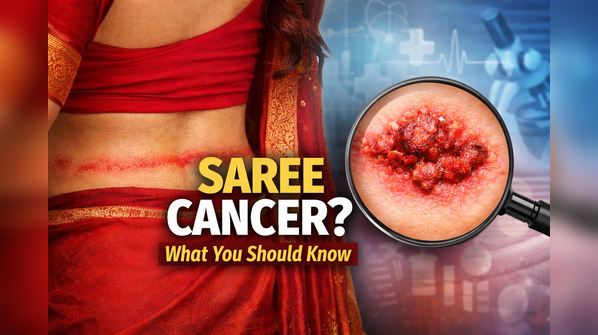
For millions of women across India, the saree is more than attire. It carries tradition, identity, and comfort. But, tucked within everyday routines lies a rarely discussed health concern referred to as “saree cancer.” The name sounds alarming, but the truth is far more nuanced. It is not the saree itself, but how it is worn over years that can create a problem.
Doctors stress that this condition is extremely rare. Still, awareness matters because early signs are easy to miss, and prevention is surprisingly simple.

What exactly is “saree cancer”?
“Saree cancer” refers to a form of skin squamous cell carcinoma, a type of skin cancer that develops in the outer layers of the skin.
It typically appears along the waistline, exactly where the saree or petticoat is tied tightly every day. Over time, the skin in that area undergoes repeated stress, which may lead to damage.
As Dr Prof Vishwanath S explains, “‘Saree cancer’ is a rather unusual form of skin squamous cell carcinoma that develops along the waistline from chronic rubbing of tightly worn sarees or petticoats.”

How does it develop over time?
This condition does not appear overnight. It is the result of years, often decades, of repeated friction.
Constant rubbing at the same spot causes:
Thickening of the skin (lichenification)
Darkening or discoloration
Persistent itching
Scratching worsens the cycle. The skin becomes fragile, and small wounds may appear.
“Long standing irritation causes chronic inflammation and over several years leads to malignant transformation,” notes Dr Vishwanath.
Eventually, these small wounds may turn into non-healing ulcers, which can slowly enlarge if ignored.
Why does it happen more in certain conditions?
Several factors make this condition more likely, though still uncommon.
Hot and humid weather increases sweating, which irritates the skin further
Tight tying of saree or petticoat at the same spot daily
Poor hygiene or repeated infections that delay healing
Limited access to early medical care in some communities
There is also emerging scientific interest in genetic factors.
“There is growing data suggesting a genetic susceptibility and mutations in TP53, a tumor suppressor gene,” the doctor adds.

Why it often goes unnoticed
One of the biggest concerns is how easily early signs are ignored. A small patch of itchy or thickened skin does not feel serious. Many women live with it for years.
Medical attention is usually sought only when:
A sore does not heal
The skin begins to ulcerate
Pain or bleeding develops
“Patients seek medical attention for non-healing tiny ulcers which coalesce and become big,” says Dr Vishwanath.
This delay is what turns a manageable issue into something more serious.
The reassuring truth: It is preventable
Despite the worrying name, this condition is largely preventable with simple daily changes.
“Saree is worn by millions of women in India and wearing a saree itself is not harmful. Tight tying at the same site over several years is the problem,” the doctor clarifies.
Helpful habits include:
Tie the saree and petticoat loosely, not tightly
Change the position of the knot regularly
Use broader waistbands to reduce pressure
Maintain good personal hygiene, especially in humid weather
Watch for any long-standing skin changes
What happens if someone is diagnosed?
If detected early, treatment is effective and similar to other skin cancers.
Doctors may recommend:
Surgical removal of the affected area
Radiation therapy in certain cases
Rarely, chemotherapy if the disease is advanced
“In case a diagnosis is made, the treatment is like any skin squamous cell carcinoma with surgery and radiation and rarely requiring chemotherapy,” explains Dr Vishwanath.
Early diagnosis often means simpler treatment and better recovery.
A quiet reminder, not a reason for fear
Clothing should never be feared. The saree, like any traditional attire, is safe when worn comfortably. The real message here is about listening to the body.
A small, persistent skin change is not something to ignore. A simple check at the right time can prevent years of trouble.
As the conclusion from Dr Vishwanath puts it best, “In conclusion, ‘saree cancer’ is real but exceedingly rare, and with early recognition and lifestyle modifications, it is almost entirely preventable.”

Medical experts consulted
This article includes expert inputs shared with TOI Health by:
Dr Prof Vishwanath S, Lead Onscosciences Karnataka Region, Senior Consultant and Academic Advisor, Department of Medical Oncology, Apollo Hospitals Bangalore.
Inputs were used to explain what “saree cancer” is, why this rare condition develops due to long-term skin irritation and chronic inflammation, and how simple preventive habits and early medical consultation can help reduce risk and support timely treatment.
Featured In Health

