
- News
- Gadgets News
- IIT Guwahati researchers discover new ways to prevent memory loss due to Alzheimer's disease
Trending
This story is from May 21, 2020
IIT Guwahati researchers discover new ways to prevent memory loss due to Alzheimer's disease
The research team headed by professor Vibin Ramakrishnan and professor HarshalNemade, of IIT Guwahati studied the neurochemical principles of Alzheimer’s, and explored new ways to prevent accumulation of neurotoxic molecules in the brain that are associated with short-term memory loss.
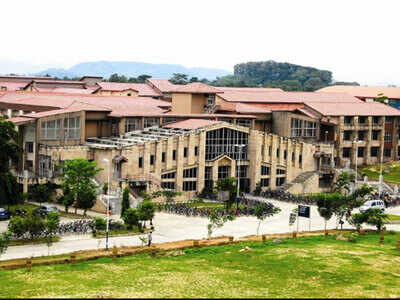
NEW DELHI: Researchers at Indian Institute of Technology (IIT) Guwahati have found a new way to reduce short-term memory losses associated with Alzheimer’s disease. The research team headed by professor Vibin Ramakrishnan and professor HarshalNemade, of IIT Guwahati studied the neurochemical principles of Alzheimer’s, and explored new ways to prevent accumulation of neurotoxic molecules in the brain that are associated with short-term memory loss.
One of the key reasons for memory loss in Alzheimer’s disease is the accumulation of "amyloid beta peptides" in the brain. The professors were looking at methods to reduce the accumulation of these peptides, in order to check the disease.
In 2019, the IIT Guwahati scientists found that application of a low-voltage, safe electrical field can reduce the formation and accumulation of toxic neurodegenerative molecules that cause short-term memory loss in Alzheimer’s disease. They found that the external electric and magnetic field modulates the structure of these peptide molecules.
“Upon exposure to the electric field, we could retard the degeneration of nerve cells to an extent of 17–35%. Objectively, this would translate to about a 10 years delay in the onset of the disease”, said professor Ramakrishnan.
“The idea of using ‘Trojan peptide’ comes from the mythological “Trojan Horse” used as subterfuge by the Greeks in the battle of Troy. The researchers have designed Trojan peptides by adopting a similar approach of ‘deceit’ to impede the aggregation of the amyloid peptide, arrest the formation of toxic fibrillar assemblies, and reduce poisoning of nerve cells that leads to memory loss,” as per a statement by the Ministry of Science and Technology.
“Our research has provided a different path that may extend the onset of Alzheimer's disease. However, it would take testing in animal models and clinical trials before bringing in such new therapeutic approaches into human treatment” said the researchers.
One of the key reasons for memory loss in Alzheimer’s disease is the accumulation of "amyloid beta peptides" in the brain. The professors were looking at methods to reduce the accumulation of these peptides, in order to check the disease.
In 2019, the IIT Guwahati scientists found that application of a low-voltage, safe electrical field can reduce the formation and accumulation of toxic neurodegenerative molecules that cause short-term memory loss in Alzheimer’s disease. They found that the external electric and magnetic field modulates the structure of these peptide molecules.
“Upon exposure to the electric field, we could retard the degeneration of nerve cells to an extent of 17–35%. Objectively, this would translate to about a 10 years delay in the onset of the disease”, said professor Ramakrishnan.
Working further in this area, the researchers explored the possibility of using ‘Trojan peptides’ to arrest aggregation of these neurotoxic molecules.
“The idea of using ‘Trojan peptide’ comes from the mythological “Trojan Horse” used as subterfuge by the Greeks in the battle of Troy. The researchers have designed Trojan peptides by adopting a similar approach of ‘deceit’ to impede the aggregation of the amyloid peptide, arrest the formation of toxic fibrillar assemblies, and reduce poisoning of nerve cells that leads to memory loss,” as per a statement by the Ministry of Science and Technology.
“Our research has provided a different path that may extend the onset of Alzheimer's disease. However, it would take testing in animal models and clinical trials before bringing in such new therapeutic approaches into human treatment” said the researchers.
End of Article
FOLLOW US ON SOCIAL MEDIA
Hot Picks
TOP TRENDING
Trending Stories
In Section
Entire Website
- Microsoft has cancelled plans for a redesigned Edge browser: What the company has to say
- Facebook, Instagram, YouTube and other social media websites may have this 'doctor problem'
- Microsoft co-founder Bill Gates shares ‘just one job’ that helped him grow the company
- Original Flappy Bird developer denies involvement in game’s relaunch, says "I did not sell anything"
- Ex-Rockstar developer on GTA 6 getting delayed to 2026: “...not in a position to determine…”
- How losing Sony's PlayStation 6 deal to AMD may have dealt another ‘big blow' to Intel
- Myntra may offer a 4-hour ‘solution’ for your fashion ‘needs’
- Hackers may have infected millions of Android-based streaming boxes in 197 countries: What users can do
- How a $2,289,751 cashier's cheque saved Google from a big ad tech case going to jury
- Diljit Dosanjh's Dil-Luminati Tour: Delhi Police has an important warning for you on buying online tickets
- 'Be cautious': VP Dhankhar reacts to Supreme Court's 'caged parrot' remark on CBI
- 2 attempts to 'kill' Trump in 2 months: How it may impact US polls
- Will Atishi replace Arvind Kejriwal as Delhi CM?
- Docs sit down for talks with Mamata; minutes of meet to be recorded
- 'I had a birdie putt': Trump's first reaction after 2nd assassination bid
- Kohli's jersey hogs limelight in Pakistan during Babar Azam's match
- Cow vigilantes killing a Brahmin is the wake-up call India needed
- Apple's biggest 'iPhone update' for year 2024 rollout starts today
- Make It Priceless: Gift them a customized TOI Front Page. Know More
- 'No talks with Pak till ...': Amit Shah accuses NC, Cong of 'nurturing' terrorism

Popular Categories
Hot on the Web
Top Trends
Who is Ryan RouthUPI Transaction LimitArvind Kejriwal ResignationNEET UG Admission CriteriaKolkata Doctor Rape CaseBorder Gavaskar TrophyRohit SharmaSports Stars Turned Power CouplesIBPS RRB Clark PO ResultDonald TrumpBianca Belair Net WorthIndia vs Korea LiveBMW Accident Madhya PradeshIndore BMW CrashPrince HarryMiami Dolphins OwnerLive Cricket Score
Trending Topics
Living and entertainment
Latest News
4 types of tea to improve gut health and ease digestive issuesWho was Illia 'Golem' Yefimchyk, the Belarusian bodybuilder who consumed 2.5 kg of meat and 108 sushi pieces daily before his death at 36?Vempalle Shareef's story is now a lesson for degree students in Andhra PradeshWhen Shah Rukh Khan performed 'Kanyadaan' at Farah Khan's wedding- See PICSBike rally held to raise voter awareness in Jammu and Kashmir's Doda ahead of assembly electionsFalcons' Predictable Offense and Cousins' Prime-Time Woes Spell Trouble in PhiladelphiaFather-son duo Eugene and Dan Levy's dazzling entrance at the EmmysLiza Colon becomes 1st Latina to win Best Supporting Emmy Award'Oh no!': Hilarious goof-up leads to missed catch, leaves bowler in smile. WatchJr NTR on shooting under water scene for 35 days in 'Devara Part 1': It is an important sequence!Last Lunar Eclipse of 2024: What it means for your zodiac signTop NFL Superstars Who Are Vegan: Derrick Morgan, David Carter, Theo Riddick and moreKSCA Invitational: Arjun Tendulkar takes match haul of 9 wickets in big Goa CA XI winAbhishek Kumar shares selfies with Alia Bhatt; recalls the time when he worked as a crowd artist in ‘Humpty Sharma Ki Dulhaniya’Jessica Gunning wins her 1st Primetime Emmy for 'Baby Reindeer'Shocking! Man celebrates birthday by lying among massive Pythons‘Stree 2’ star Shraddha Kapoor to reveal her character name! But there’s a catchSathiyan set to partner Sreeja in mixed doubles
Copyright © 2024 Bennett, Coleman & Co. Ltd. All rights reserved. For reprint rights: Times Syndication Service