Trending
What is 'Wooly Devil'? The new plant species discovered at a U.S. national park for the first time in nearly 50 years
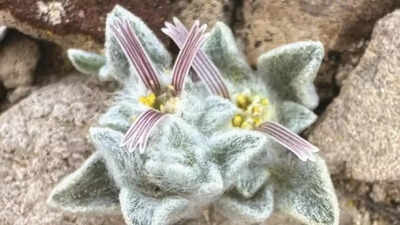
A new plant species, the Wooly Devil (Ovicula biradiata), has been discovered in Texas's Big Bend National Park. This tiny, fuzzy plant with red petals and wool-covered leaves is the first new plant species found in a U.S. national park in nearly 50 years, marking a significant botanical discovery.
There’s a new devil in town and currently, it’s in Texas!
As the National Park Service announced Monday, a new plant species has been discovered at Big Bend National Park in Texas. The tiny, fuzzy-looking plants with yellow flowers growing among desert rocks in a remote area on the northern end of the park were not anything like they had seen before. After searching plant databases, consulting experts and even asking for answers online, park officials said they began to realize that they had found something special.
The Wooly Devil!
Deb Manley, the volunteer, snapped pictures of the plant and uploaded them to the app iNaturalists, where botanists from around the globe chimed in to help identify the mysterious plant. But with no immediate answers, she and the ranger consulted herbarium records, plant publications, and local experts. Still, the plant's identity eluded them and raised questions.
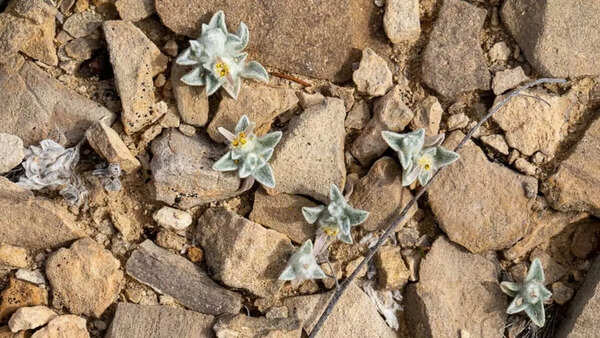
More than a year later, scientists have confirmed that what they came across in the arid Chihuahuan Desert was an entirely new plant species – the first such discovery to take place within a U.S. National Park in nearly half a century.
According to the California Academy of Sciences, which joined Big Bend National Park staff and Sul Ross State University to study the Wooly Devil (or Ovicula biradiata), it's the first time a new species of plant has been found at a U.S. national park in nearly 50 years.
Its name is inspired by its appearance. Ovicula means tiny sheep, a reference to the white ‘wool’ that covers the small plant's leaves. Biradiata is a reference to the strap-shaped petals in each flower.
The plant ranges in size from less than one centimeter to 3 to 7 centimeters across, researchers said. The Wooly Devil is what botanists refer to as a "belly plant," small plants that can only be property seen while laying on the ground. As suggested by its location – among desert rocks in a remote area in the northern reaches of the park – the plant can survive in rocky, drought-stricken environments.
A closer look:
According to researchers, who published their findings in peer-reviewed botanical journal PhytoKeys, the Wooly Devil is in the daisy family and it is closely related to paperflowers and bitterweed, both of which have yellow flowers. However, DNA analysis showed that the plant is so genetically distinct that it had to be considered a new genus.
The Wooly Devil is much smaller than its sister plants, according to the researchers, ranging from less than 1 centimeter to 3-7 centimeters across. It was given the formal name Ovicula, meaning tiny sheep, and biradiata, a reference to the two ray-like petals in each flower.
Big Bend National Park Superintendent Anjna O'Connor said in the news release, “Now that the species has been identified and named, there is a tremendous amount we have yet to learn about it."
Big Bend, in southwest Texas, is massive, covering more than 800,000 acres and part of the Chihuahuan Desert, which is considered the most diverse desert ecosystem in the Western Hemisphere.
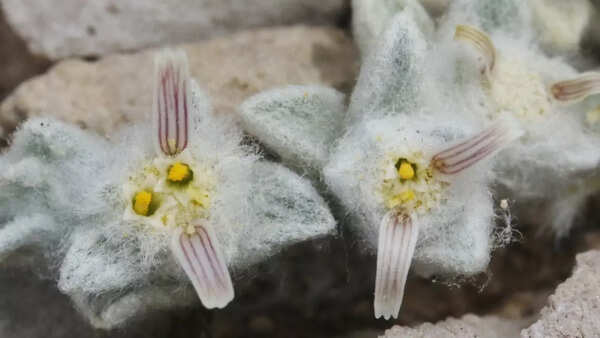
A newly published study in the botanical journal PhytoKeys said the Ovicula biradiata, or the ‘Wooly Devil’ as botanists have come to call it, is not only a new species but an entirely new genus within the daisy and sunflower family. Isaac Lichter Marck, one of the authors of the study, told the California Academy of Sciences, which was involved in the research, "O. biradiata is a member of the sunflower family, although it does not resemble its sunburst-shaped relatives at first glance." The taxonomist added that plants thriving in the desert are quite unique because they have evolved to withstand extreme weather conditions — but climate change still poses a threat to their existence. As per him, "We have only observed this plant in three narrow locations across the northernmost corner of the park, and it's possible that we've documented a species that is already on its way out." He also mentioned, "After sequencing its DNA and comparing it with other specimens in the Academy’s herbarium, we discovered that this small, fuzzy plant is not only a new species within the sunflower group, but it is also distinct enough from its closest relatives to warrant an entirely new genus.”
According to Big Bend National Park Superintendent Anjna O’Connor, “Now that the species has been identified and named, there is a tremendous amount we have yet to learn about it. I’m excited to discover whether there are other populations in the park, details of its life cycle, what are the pollinators, and due to the current drought, if it will be observed at all this spring.”
End of Article
FOLLOW US ON SOCIAL MEDIA





Tired of too many ads?go ad free now
Featured In Lifestyle

Tired of too many ads?go ad free now
Hot on the Web
Heart Blockage SymptomsChia Seeds for HairKing CobraIbuprofen GuideSunita WilliamsKomodo Dragon vs King CobraKaroline LeavittTanmay BhatGovindaElon MuskKrushna AbhishekRanveer AllahbadiaKunj AnandMagnesium Oil BenefitsGinger Turmeric Tea BenefitsDoomsday FishRajinikanthMere Husband Ki Biwi CollectionChhaava Box Office CollectionChhaava Movie ReviewSadhguru Diet HabitsAshwagandha for Hair GrowthChum DarangUnique AnimalsBig Cat Safari DestinationChickpea Curry RecipeSummer GardeningBaby Girl NamesTimeless Classic BooksUS National Parks
Trending Topics
Latest MoviesBollywood MoviesHollywood MoviesTamil Movies 2024Telugu Movies 2024Malayalam Movies 2024Kannada Movies 2024Marathi Movies 2024Bengali Movies 2024Top Rated Movies 2024Best Hindi MoviesBest English MoviesBest Telugu MoviesBest Tamil MoviesBest Malayalam MoviesBest Kannada MoviesBest Bengali MoviesUpcoming Hindi MoviesBest Movies Of All TimeBest Hindi Movies of All Time
Popular Categories
Latest News
From two moms to none: Why 4-month-old HIV+ Mumbai baby is nobody's childGoa transport dept won’t process applications for new rent-a-cabsIn a 1st, Goa govt outlines direct, indirect mining-impacted zonesFace the music if you misuse power, Goa chief minister Sawant warns new cops, excise officersHearing adjourned in Sinquerim hill matterUttarakhand avalanche: 4 dead, 4 missing as rescuers save 47 of 55 at BRO campSea breezes, low humidity reduce heatwave impact in state capitalHamster Kombat GameDev Daily Cipher codes for 2 March 2025: Unlock million coins and know how to play‘What did you do last week? Part II’: Trump, Musk double down on federal worker accountability with 'new reporting rule'Lawyers’ body meets CM over bogus certificatesDrive to regularise constructions in South Goa yields poor responseKonkani Mandal condemns stir outside Bhembre’s residenceSC acquits Haryana woman in 23-year-old murder caseLocals complain of non-operational landline of Bicholim fire brigadeLitter smothers Gothnim rivulet, plastic dumping worsens woesDonald Trump takes up Apple's case to UK PM: “We told him you can’t do that. That’s something ...Choked nullahs pollute Sal, WRD sets Dec clean-up deadlineNYT Connections hints and answers for today: March 2 puzzle solved