Trending
This story is from January 16, 2024
Dinosaur-era superstructure in the Pacific Ocean "still forming"
A scientific team unveils the secrets of the Melanesian Border Plateau, a colossal underwater plateau in the Pacific Ocean, larger than Idaho, that has been growing since the age of dinosaurs. Using seismic data, rock samples, and computer models, researchers discover four distinct phases of formation, influenced by tectonic plate movements, climate changes, and sea level fluctuations. Enriched in rare elements, the plateau holds significance for high-tech applications. The ongoing study aims to illuminate the origin and impact of such oceanic mid-plate superstructures.
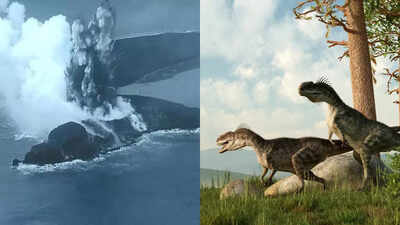
Located near the Solomon islands, The Melanesian Border Plateau has been forming since the time of the dinosaurs. Source: X
The researchers used a combination of seismic data, rock samples, geochemical analysis and computer models to reconstruct the history and structure of the Melanesian Border Plateau.
They found that the plateau is composed of different types of volcanic rocks, some of which are enriched in rare elements such as niobium and tantalum. These elements are used in high-tech applications such as smartphones, computers and medical devices.
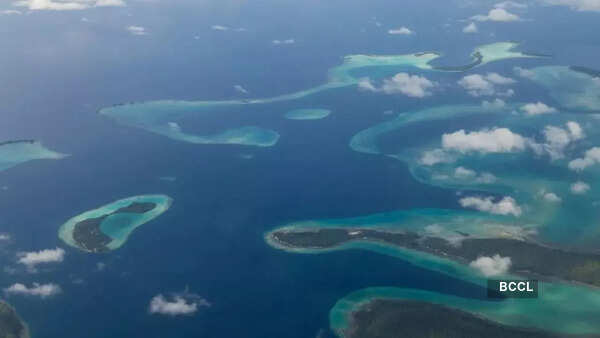
The Melanesian Border Plateau was formed in a series of four phases. Source: X
The study also revealed that the plateau has a complex topography, with ridges, valleys, basins and faults. Some of these features may have been influenced by the movement of the tectonic plates, the climate changes and the sea level fluctuations over millions of years.
The researchers discovered that the plateau formed in four distinct phases, each with a different root cause and a different volcanic signature. The first phase occurred about 120 million years ago, during the Cretaceous period, when a massive outpour of lava created an array of seamounts on the ocean floor. This phase was triggered by the breakup of the supercontinent Gondwana, which split into Africa, South America, Australia, Antarctica and India.
The second phase took place between 56 million and 33.9 million years ago, when the Earth's outer rocky shell, called the lithosphere, passed over a volcanic region called the Arago hotspot. This phase produced more seamounts and some oceanic islands, which later eroded and submerged. This phase was caused by the subduction of the Pacific plate under the Australian plate, which created a volcanic arc.
The third phase happened between 23 million and 5 million years ago, during the Miocene epoch, when the same islands and seamounts were reactivated and new volcanoes were formed. This phase was related to the collision of the Australian plate with the Ontong Java Plateau, a massive oceanic plateau that formed from a single huge volcanic event. This phase also involved the Samoa hotspot, another volcanic region that is still creating new islands today.
The fourth phase, which is still ongoing, is driven by the mantle plume, a column of hot rock rising from the Earth's core. This phase causes new volcanic eruptions at the plateau, as the lithosphere has been deformed by the rollback of the Pacific plate beneath the Tonga trench.
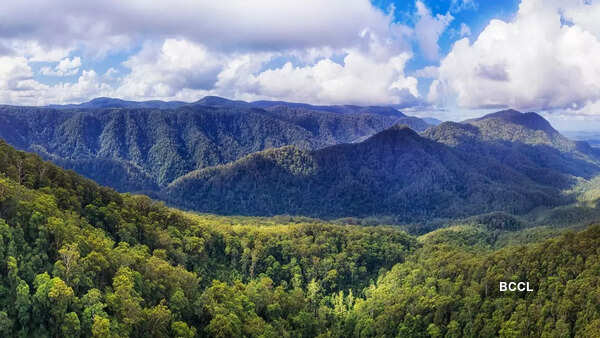
The formation of this super structure has been attributed to a number of factors including volcanic activity, shifting of tectonic plates, seismic activities, etc.
The Melanesian Border Plateau is one of the many oceanic mid-plate superstructures that exist in the Pacific basin. These superstructures are different from the large igneous provinces that are created by a single massive volcanic event. They are also distinct from the mid-ocean ridges that are formed by the spreading of the oceanic plates.
The researchers hope that their findings will shed light on the origin and evolution of these superstructures, as well as their impact on the environment and the biodiversity of the ocean. They also hope that their study will inspire further exploration and research of the hidden wonders of the deep sea.
Volcano erupts in southwest Iceland; two houses caught fire
End of Article
FOLLOW US ON SOCIAL MEDIA







Photostories
Featured In Lifestyle

Popular Categories
Entertainment NewsBollywood NewsTollywood NewsKollywood NewsMollywood NewsMovie ReviewsLatest Hindi MoviesLatest Tamil MoviesMX PlayerParenting TipsHome RemediesWeight LossBeauty TipsParenting TipsHindi VideosHindi Video SongsBhojpuri Music VideosLatest Telugu MoviesBhojpuri Music VideoHindi TV News
Trending in Entertainment
Latest MoviesBollywood MoviesHollywood MoviesTamil Movies 2024Telugu Movies 2024Malayalam Movies 2024Kannada Movies 2024Marathi Movies 2024Bengali Movies 2024Top Rated Movies 2024Best Hindi MoviesBest English MoviesBest Telugu MoviesBest Tamil MoviesBest Malayalam MoviesBest Kannada MoviesBest Bengali MoviesUpcoming Hindi MoviesBest Movies Of All TimeBest Hindi Movies of All Time
Trending in Etimes
Horoscope TodayNumerology Predictions TodayWalking BenefitsBreast Cancer DiagnosisYung Filly Rape CaseTaylor Rousseau GriggBelly FatSean Diddy CombsOzempic PersonalityDepression RiskBelly Fat LossDurga Visarjan 2024Toxic FriendshipDonald TrumpElon MuskDussehra 2024Durga Ashtami 2024Multitasking TipsSaraswati Visarjan 2024
Trending in TV
Trending in Lifestyle
Trending in Regional
Movie Reviews
Binny And Family ReviewLove, Sitara ReviewWill & Harper ReviewWolfs ReviewYudhra ReviewJo Tera Hai Woh Mera Hai ReviewKahan Shuru Kahan Khatam ReviewHis Three Daughters ReviewNever Let Go ReviewDancing Village: The Curse Begins ReviewTransformers One ReviewFirst Love ReviewBerlin ReviewThe Buckingham Murders Review
Upcoming Hindi Movies
Upcoming Regional Movies
Latest News
Harris overtakes Trump among suburban voters: Reuters/Ipsos pollSamantha Ruth Prabhu shares playtime with Chinmayi Sripaada's daughter, says 'It took her 4.5 seconds to disown her parents'Dilip Kumar-Saira Banu wedding anniversary: How the legendary actor surprised all by marrying his belovedSpiritual fervour all around as Sun God steers Lord's chariot at TirumalaInfosys to no longer send job offer letters and attachments, the company will ...Jaggery vs honey: Which one is better for weight loss?My mother would love to have a swayamwar for me: Raj AnadkatRanji Trophy: Focus on Shreyas Iyer as Mumbai begin title defenceHappy Dussehra 2024: Top 50+ Wishes, Messages, and Quotes to Share with Your Loved OnesBigg Boss 18: Karan Veer Mehra's comment on Arfeen Khan converting his wife's religion sparks anger; Arfeen says, "Agar ye ghar mein nahi hota main iski band baja deta"Amitabh Bachchan turns 82: Priyanka Chopra, Prabhas, Kajol, and other celebs extend heartfelt birthday wishes to the legendary starIndia's Steel City (Jamshedpur) mourns loss of iconic steel tycoon Ratan Tata“A fresh approach”: New York Jets' Interim Head Coach Jeff Ulbrich Replaced Nathaniel Hackett as Offensive Play Caller With Todd DowningKarnataka Congress faces backlash over case withdrawals linked to Hubballi riotsWomen's T20 World Cup: Don't need to be told about NRR, says Shafali VermaAxe the tainted & non-performers, PM Modi tells Union secretariesLead with AI and transform challenges into opportunities with GrowFast's AI and Analytics based Business Strategy online courseRanji Trophy: All eyes on Manav Suthar
Other Group Sites -
ETimes is an Entertainment, TV & Lifestyle industrys promotional website and carries advertorials and native advertising.