
All about California’s 1000-year-old storm

The 1000-year-old storm that rocked sunny California
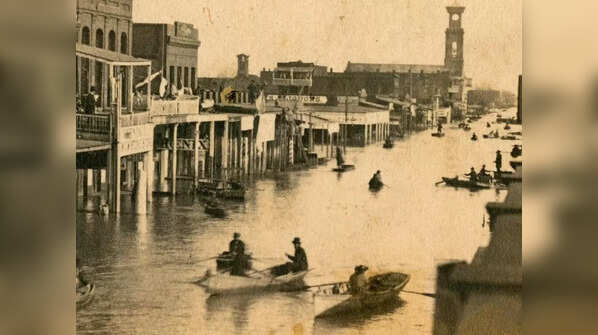
California is known for its sunny and mild weather, but it is also prone to extreme and devastating storms. One of the most remarkable and catastrophic storms in California’s history occurred in the winter of 1861–1862, when a series of powerful atmospheric rivers brought torrential rain and snow to the state for over 40 days. The result was a massive flood that submerged much of the Central Valley, destroyed thousands of homes and farms, and forced the state government to relocate from Sacramento to San Francisco. This storm, which is estimated to have a recurrence interval of 1000 years, is also known as the ARkStorm, short for Atmospheric River 1000 Storm.
Image: Canva
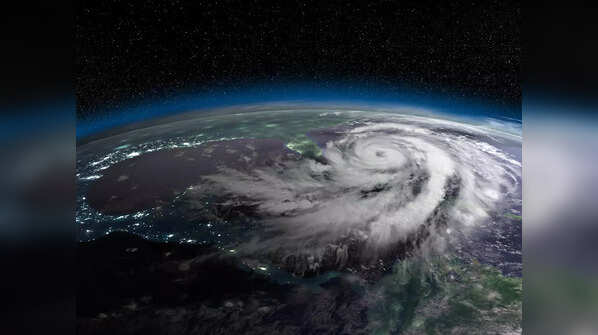
What is an atmospheric river?
An atmospheric river is a long and narrow band of moist air that transports water vapor from the tropics or subtropics to higher latitudes. Atmospheric rivers can be thousands of kilometers long and hundreds of kilometers wide and can carry more water than the Amazon River. When an atmospheric river encounters a mountain range, such as the Sierra Nevada or the Coast Ranges, it is forced to rise and cool, releasing its moisture as rain or snow. Atmospheric rivers are responsible for most of the precipitation and water supply in California, especially in the winter months. However, they can also cause severe flooding, landslides, and mudslides when they are too strong or persistent.
Image: Canva
What caused the 1861–1862 storm?
The 1861–1862 storm was caused by a series of at least 10 atmospheric rivers that hit California between December 1861 and January 1862. The atmospheric rivers were fueled by a strong El Niño event, which is a periodic warming of the eastern Pacific Ocean that alters global weather patterns. The El Niño event created a persistent high-pressure system over the eastern Pacific, which blocked the usual storm tracks and diverted the atmospheric rivers towards California. The atmospheric rivers were also enhanced by a low-pressure system over the Gulf of Alaska, which provided a source of cold air and instability. The combination of these factors created a perfect storm scenario for California, which received more than 200% of its normal annual precipitation in just two months.
Image: California History Room, California State Library, Sacramento, California.
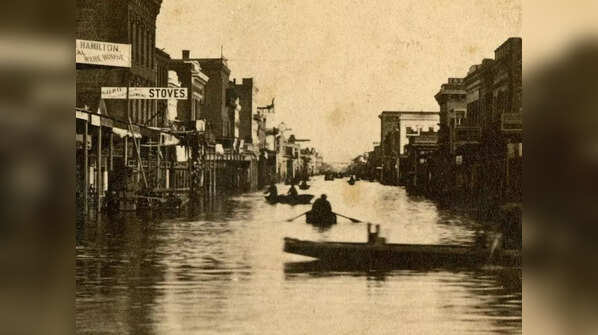
What were the impacts of the 1861-1862 storm?
The impacts of the 1861-1862 storm were devastating and widespread. The storm caused the worst flood in California’s history, which covered an area of about 300 miles long and 20 miles wide in the Central Valley. The floodwaters reached depths of up to 30 feet in some places, and turned the valley into an inland sea. The floodwaters also inundated many coastal and low-lying areas, such as Los Angeles, San Diego, San Francisco, and Sacramento. The storm also caused heavy snowfall in the mountains, which accumulated up to 10 feet in some places. The losses were terrible. The storm destroyed thousands of buildings, bridges, roads, and railways and killed thousands of people and animals. It also caused widespread crop failures, diseases, and economic losses. With lasting effects on California’s society, politics, and environment, such as the migration of people and businesses, the formation of new lakes and wetlands, and the alteration of the river courses and deltas, the storm changed the course of history for this sunny American state.
Image: California History Room, California State Library, Sacramento, California
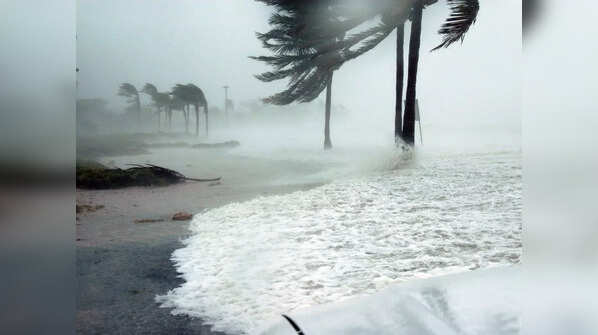
How likely is another 1861-1862 storm?
The likelihood of another 1861-1862 storm is very low, but not impossible. According to the US Geological Survey, the 1861-1862 storm was a 1000-year event, which means that there is a 0.1% chance of such a storm occurring in any given year. However, this does not mean that the storm will occur exactly every 1000 years, or that it cannot occur sooner or later. The 1000-year estimate is based on the historical and geological records of past storms, which are limited and uncertain. Moreover, the frequency and intensity of atmospheric rivers may change due to natural variability or human-induced climate change, which could affect the probability of future storms. Therefore, it is important to monitor and prepare for the potential impacts of atmospheric rivers, especially in a state that is highly vulnerable to droughts and floods.
Image: Canva
How can California residents prepare for and mitigate the impacts of atmospheric rivers?
There are several ways to prepare for and mitigate the impacts of atmospheric rivers, such as:
Improving the observation and prediction of atmospheric rivers, using satellites, radars, buoys, and models, to provide accurate and timely information and warnings to the public and decision-makers.
Enhancing the resilience and adaptation of the infrastructure, to cope with the increased runoff and flood risk from atmospheric rivers.
Implementing the best management practices and policies for water resources, such as water conservation, storage, recycling, and allocation, to balance the water supply and demand in a variable and changing climate.
Promoting the awareness and education of the public and stakeholders, about the benefits and risks of atmospheric rivers, and the actions and measures they can take to reduce their exposure and vulnerability.
Supporting the research and innovation of the science and technology of atmospheric rivers, such as the physical processes, the historical and future trends, the socioeconomic and environmental impacts, and the potential solutions and opportunities.
Image: Canva
Featured In etimes

