
- News
- etimes
- animals-pets
- Snakes with extraordinary survival tricks and defensive behaviours: From mimicry to playing dead
Snakes with extraordinary survival tricks and defensive behaviours: From mimicry to playing dead
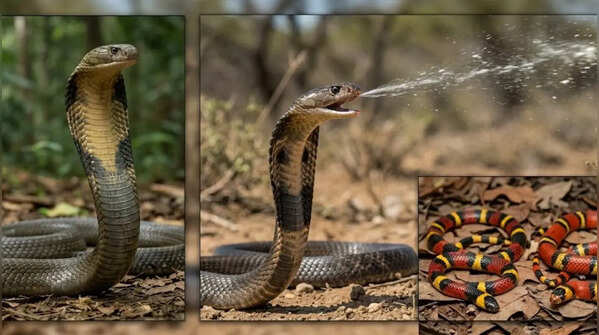
Snakes with extraordinary survival tricks and defensive behaviours: From mimicry to playing dead
Unlike many animals that simply overpower their predators with force or venom, snakes have evolved elaborate defensive strategies to survive their environment, like when a King Cobra stands up in the air to scare away a potential predator or when a non-venomous Hognose Snake feigns death to discourage an attack from a predator. The examples provided above serve as more than just reflex actions; rather, they illustrate that snakes are sophisticated survivalists who have spent thousands of years developing precise methods of avoiding predation. Creating biological bluffs using infrared thermal vision and constricting their prey to monitor heartbeats or pretending to be something that they are not through Batesian mimicry requires considerable amounts of creativity. These adaptive behaviors demonstrate a complex neurological capacity to assess threats and execute specialised decoys, ensuring survival in diverse ecosystems. Beyond these theatrical displays, such evolutionary mastery proves that serpents are not merely reactive, but are highly intelligent masters of deception. These cognitive adaptations underscore a strategic brilliance, elevating serpents from primitive hunters to nuanced architects of their own environmental security. Unlike many animals that simply overpower their predators with force or venom, snakes have evolved elaborate defensive strategies to survive their environment, like when a King Cobra stands up in the air to scare away a potential predator or when a non-venomous Hognose Snake feigns death to discourage an attack from a predator. The examples provided above serve as more than just reflex actions; rather, they illustrate that snakes are sophisticated survivalists who have spent thousands of years developing precise methods of avoiding predation. Creating biological bluffs using infrared thermal vision and constricting their prey to monitor heartbeats or pretending to be something that they are not through Batesian mimicry requires considerable amounts of creativity. These adaptive behaviors demonstrate a complex neurological capacity to assess threats and execute specialised decoys, ensuring survival in diverse ecosystems.
Beyond these theatrical displays, such evolutionary mastery proves that serpents are not merely reactive but are highly intelligent masters of deception. These cognitive adaptations underscore a strategic brilliance, elevating serpents from primitive hunters to nuanced architects of their own environmental security. In recognising these behaviours, we gain a deeper appreciation of snakes as dynamic and perceptive organisms, finely attuned to the subtle demands of survival. Such remarkable adaptability highlights the evolutionary ingenuity that allows snakes to thrive across a wide range of habitats worldwide.
This ongoing evolutionary success reflects the powerful role of natural selection in shaping complex behavioural and survival strategies across species.
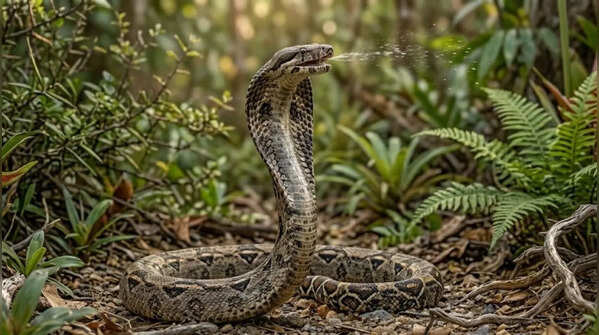
Boa Constrictor
According to research published in the Proceedings of the Royal Society B, boa constrictor snakes do not kill blindly; they utilise heart-monitoring techniques of their prey through their hyper-sensitive bodies. Upon determining whether to apply more or less physical pressure based on the heartbeats of their victims, the boa constrictor will continue exerting pressure until there are no more detected heartbeats from the victim's heart after several seconds.
PC: Google Gemini
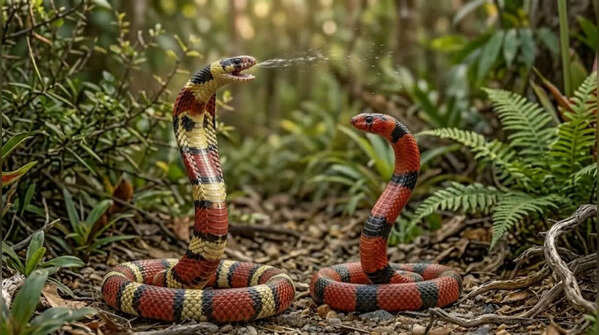
Coral Snake Mimics
The Scarlet Kingsnake is a member of a non-venomous species that demonstrates Batesian Mimicry behaviour. Scarlet kingsnakes (Lampropeltis elapsoides) mimic the aposematic (i.e., warning) colouration pattern of the Eastern Coral Snake (Micrurus fulvius). The predators residing within the geographical location of the eastern coral snake possess an instinctive avoidance towards those who exhibit the red-yellow colouration pattern, thus providing the scarlet kingsnake a greater chance of survivability in comparison to its venomous mimicking counterpart.
PC: Google Gemini
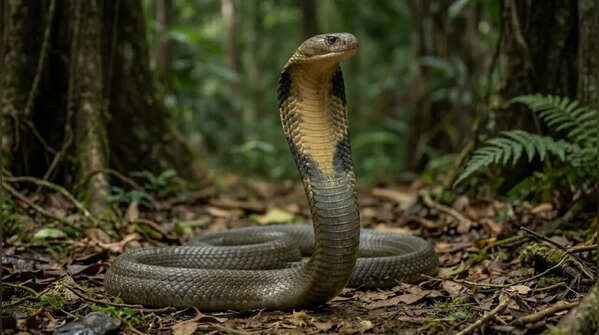
King Cobra
The King Cobra is the world's longest snake of all types, growing to lengths of 5.85 meters. Research from the Smithsonian’s National Zoo & Conservation Biology Institute shows that the King Cobra has a unique defence position: it can elevate the first one-third of its body off the ground and expand its elongated hood.
The venom from the King Cobra has post-synaptic neurotoxins that act on the central nervous systems of animals such as large mammals (including humans and Elephants), which in turn leads to both respiratory failure and subsequent death.
PC: Google Gemini
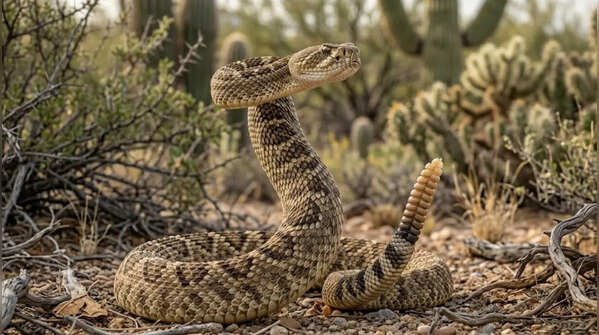
Rattlesnake
The rattlesnake has unique operational capacities owing to a special type of organ called a loreal pit; this specialised organ gives the rattlesnake the ability to detect infrared radiation. Research published by the National Institute of Biomedical Imaging and Bioengineering (NIBIB) suggests that rattlesnakes can detect temperatures as low as 0.003 degrees Celsius with these organs. This sensory ability (essentially ‘thermal vision’) is advantageous, as it allows for the detection of endothermic (warm-blooded) predators long before they are visually identifiable.
PC: Google Gemini
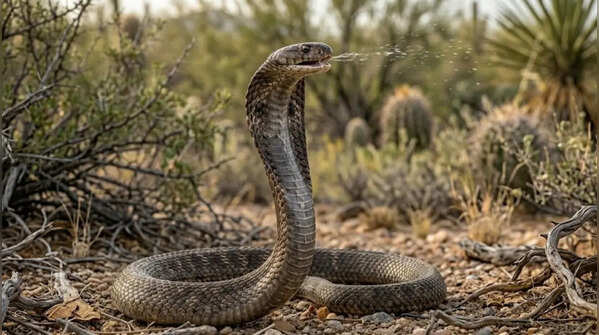
Spitting Cobra
Cobras that spit have unique fangs and specialised holes for delivering venom using forward-pointing fangs. Research published in the Journal of Experimental Biology has revealed that spitting cobras use their ability to track the eye movement of attacking predators and essentially ‘flick’ their heads to create the ideal spray/collision pattern for striking the attacker´s cornea. This unique form of ‘spitting’ by the cobra is designed to use toxins to deliver initial pain and temporary blindness due to how quickly they act to escape.
PC: Google Gemini
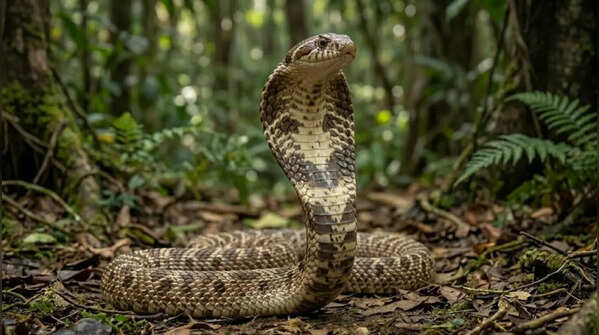
Hognose Snake
The Hognose snake is known to display thanatosis (the act of feigning death). Research published in the Journal of Herpetology indicates that thanatosis is broken down into several stages of defence mechanisms. The first stage is flattening of the head to mimic a cobra, followed by rolling onto its back with its mouth left open; if pressured further, the Hognose will even rupture its own capillaries, causing it to bleed from the lining in its mouth; thus causing itself to seem like a decaying carcass in an effort to maintain its defence.
PC: Google Gemini
Featured In etimes

