
- News
- etimes
- animals-pets
- Birds that change their feather colours for survival
Birds that change their feather colours for survival
Birds that change their feather colours for survival
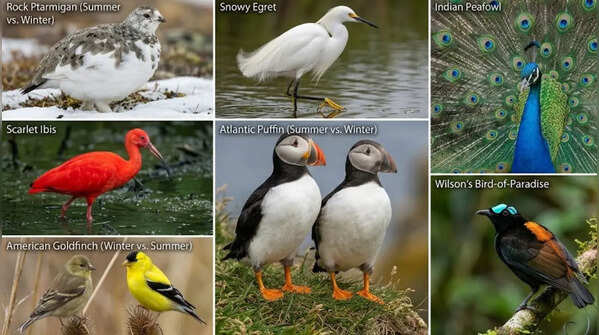
The fashion world, in nature, is constantly changing! Birds are undergoing phenotypic transformations each time they fly back to their nests, but feather replacement isn't only done during the breeding period. Many birds perform a wide range of feather replacements due to natural changes during the year. The first step in this process occurs when birds moult and shed their previous year's high-chroma breeding plumage into cryptic earthy tones to help them blend in with their surroundings. They are triggered by photoperiodic shifts and, therefore, hormones, to change colours from very bright to much softer. Birds observe a careful balance between being visible and visible to potential breeding mates while remaining invisible to predators. The following 7 species each exhibit that creating a new appearance is a way to improve their ability to thrive and survive at a given place and length. This evolutionary wardrobe change ensures that as seasons shift, these avian wonders remain perfectly adapted to both social and survival demands.
Scarlet Ibis
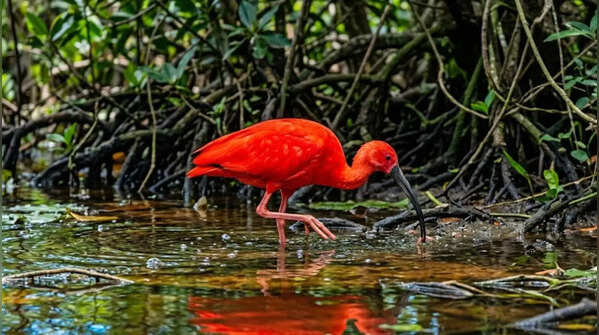
The Scarlet Ibis is dependent on dietary pigments to maintain the vivid red colour of its feathers. According to the National Zoo Smithsonian Institution, the ibis obtains the majority of its dietary carotenoids from the brine shrimp and crustacean portion of its diet, and without these specific carotenoids, the feathers of the ibis turn a light pink or white.
PC: Google Gemini
Indian Peafowl
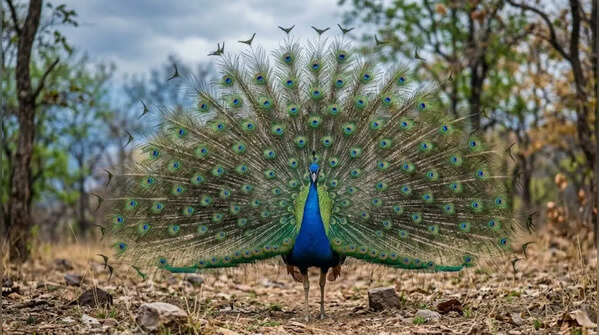
The tail feathers of the male bird form an evolutionary biophotonic structure, generated by an interaction of light with the feathers that utilises structural colouration. Research from The Royal Society indicates that the iridescence of the tail feathers is the result of the microscopic ‘photonic crystals’, where the combination of the angle of light being reflected and refracted creates brilliant colours of blue and green, and thus forms the elaborate courtship display of the male bird.
PC: Google Gemini
American Goldfinch
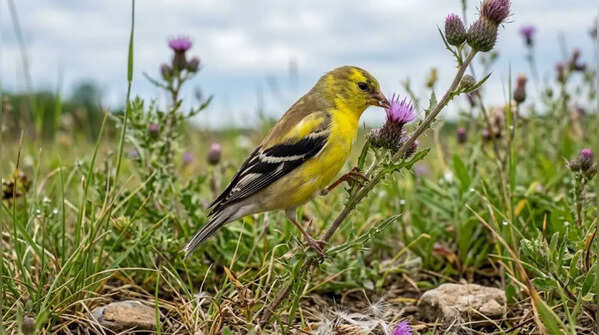
American Goldfinches also undergo a precursory moult (pre-alternate) during the spring months each year. They go from having dull olive brown feathers in the winter to having bright yellow feathers in the spring to signal their health and vitality, which will entice potential mates; then they revert to their camouflaged plumage in the fall months.
PC: Google Gemini
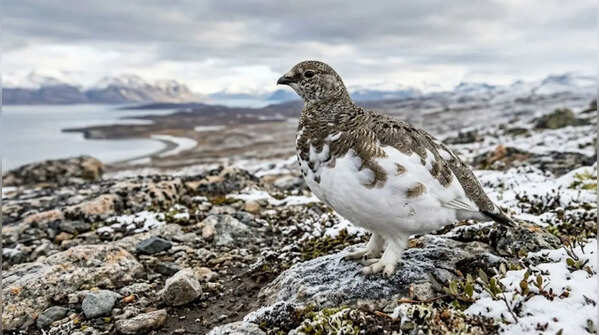
Rock Ptarmigan
The Rock Ptarmigan is an incredible example of adapting its morphology to blend in with the surrounding substrate. It undergoes three separate moults a year, with the most prominent two being the transition from a mottled brown during the summer to a completely white bird during the winter, so it can achieve virtually perfect crypsis against the snow of the Arctic tundra.
PC: Google Gemini
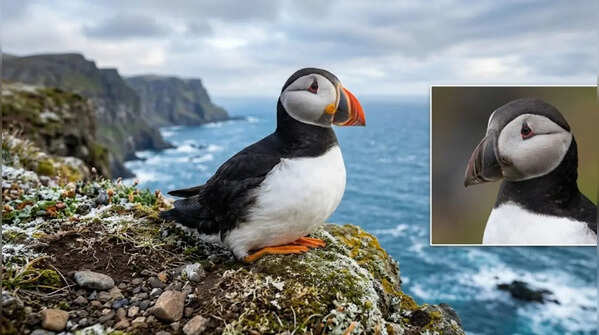
Atlantic Puffin
Puffins undergo a unique transformation known as a ‘sea parrot’ since they change from their bright orange beaks/face to a muted non-breeding plumage in the fall (after they have completed their breeding season).
PC: Google Gemini
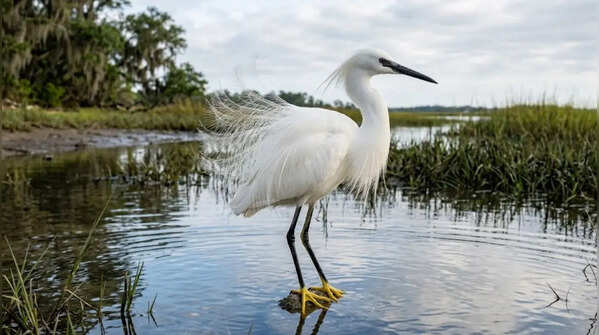
Snowy Egret
The Snowy Egret develops long and dainty ‘aigrette’ feathers on its back to attract mates in colonies located in wetlands. According to the National Audubon Society, the aigrette feather was historically used in the fashion industry but also serves as a signal of high status to females during the breeding season for males.
PC: Google Gemini
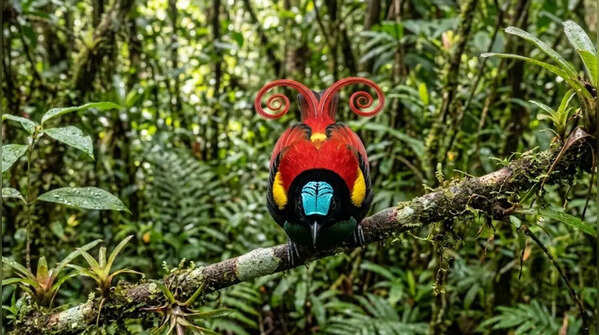
Wilson’s Bird-of-Paradise
The Crowned Pigeon has turquoise absorbent (not iridescent) skin on its upper head, which is part of a place for the pigeon to store its excess fluid while performing a courtship dance; and this bird's colourful markings and unique feather structure are designed to be viewed from above when being performed to make the courted individual appear to be more attractive.
PC: Google Gemini
Featured In etimes

