- News
- entertainment
- tamil
- music
- Arattai Kutcheri: Fun chat between music couple Kumaresh and Jayanthi
Trending
This story is from December 30, 2018
Arattai Kutcheri: Fun chat between music couple Kumaresh and Jayanthi
They have such amazing chemistry, and have goals that are both amazing and crazy.
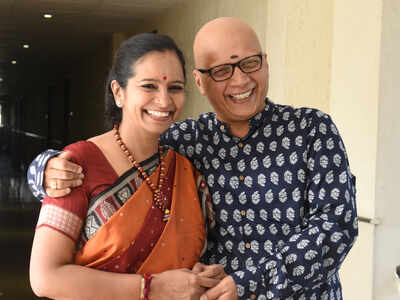
“I am a 2.0 version after getting married to Kumaresh. After my concerts, I usually go back home, take my veena to the sanidhanam and think over my concert. One day, he simply decided to take me to a Harry Potter movie after my concert.

And when caught up for Arattai Kutcheri, they had all the questions ready for each other. Excerpts:
Kumaresh: What according to you is the most comfortable and challenging zone in the veena?
Jayanthi: From childhood, I was surrounded by violinists — Lalgudi mama, amma, my sister, my cousins GJR Lalgudi Vijayalakshmi... so, everybody were violinists. When we started doing the Veena-Venu-Violin (trio) with myself on the veena and Lalgudi Vijayalakshmi on the violin and Sikkil Mala on the flute — I didn’t want anyone to say oh, idhu veenaila mudiyadha?’. When it comes to veena, my guru Balachandar mama used to say that the limitation is with the player and not with the instrument. I just wanted to ensure that everything is possible with it. I would work hard to make it easy. When I did my PhD, I never had a veena guide. At that time, all the giant legends were not there to do defense for my PhD. My guide Manjunath was a violinist, who had the same subject that I took in for the doctorate. Even for my defense, a violinist had come. And then I got married to you — a violinist (smiles). Since our childhood, we have always known Ganesh-Kumaresh to be someone who practiced a lot and who is very fast. So, when the first time when you wanted us to perform together, I was hesitant as I was used to a certain speed. But you wanted to make it happen. So, it was a challenge for me whenever you said you will slow it down for me. And then I would always retaliate saying that I could pick up the speed. Similarly, with jugalbandhis, I never wanted to be behind. What is beautiful about the veena is that you can straight away touch the heart in the twang. The music for the heart and soul is made
blissful.
Jayanthi: You started learning at the age of three and had your first performance at five. So, when we were learning music from a young age, we never had the distraction of cellphones or social media. But today, there are lot of distraction for kids and they are unable to concentrate and sing. How do you think they can cope up with that?
Kumaresh: What I have noticed in this journey as a musician is that everything is going in the fast forward mode. When I started out, all the jambavans were performing and were at their peak. Eventually, we had to wait to get opportunities. We had to practice a lot and that had helped us with the content, skill-wise and to advance ourselves. That patience is very important for an artiste. Visually, too, we were not distracted. Back then, if we hear something we could retain it in our minds. The attention span for a person has reduced to just two minutes or less. We could concentrate on single thought for hours. Today, we are becoming slaves to our mind. We should train the children, have competitions at home that helps one not to become slaves of our mind. If not, we need to take them away from all of this. Culturally, we were different, and now, we are becoming something else. Naduvula konjam pakkatha kanom maari, namma yaar-nu nammale therinjikkala. Parents should ensure that their children are not distracted. We never spoke about the word ‘stress’ in our lives. We never had the first-class travel and travelled by bus or by walk. Today, everybody is stressed out. Our body and mind are made to work. But children can overcome that. Discipline is very important in life and we should not treat it like a bad word.
Kumaresh: You are a woman, wife and a fantastic musician. Are you at peace performing duties being at these positions?
Jayanthi: Each of these are different sim cards. When you wear the wife cloak, you change your card and is completely in that mode... what’s for dinner? Who is coming home and so on. And immediately you come for a concert and completely switch off and think about what to play for a bhairavi and so on. One morning, I was alone at home and was talking to amma. Later, I was talking to an organiser, with a friend next, followed by our house help. So, I found myself doing five or six roles. Idhellame namma thaaney? If you ask which of this is me, I would say all of it is me. The success lies in how much you enjoy these roles. If I worry about practicing when I am cooking or thinking about switching off the gas when we are performing, it won’t make any sense. In fact, I don’t think you to be my husband when I perform with you. I am on stage with you just like my co-artiste (Kumaresh laughs). It is a beautiful thing that women can do so many things. And I am lucky to have a husband who supports me in all my endeavors.
Jayanthi: You have played and still playing with Ganesh anna as the Ganesh-Kumaresh duo for 45 years now. Your joinery as a musician started with typical Carnatic music and then you ventured into acting, doing commercial, tele-serials and then became the Fiddling Monks, created a fusion band, and created genres in instrumental music. How did all of this happen?
Kumaresh: I think these are a culmination of how you live in a society. They have put a boundary for Carnatic music, which I felt was limiting for instrumentalists. Back in the day, during my school days, my friends used to ask when what kutcheries were all about. I sent them to a concert and around six of them went to this senior vidwan’s performance. They came back to me saying that they didn’t understand a word of it. But they have managed to enjoy my performances in school. That was a revelation for me — in the sense that there was disconnect between that generation and the way music was being perceived. People say that you can listen to a concert only if you know the raga and song. Eventually, when critics started doing reviews, the voice became more prominent and they will hardly write a line or two about violinists. And that happened because they don’t know the sahithyam or the sound of the instrument. To us, every raagam is a language. Why should we bound lyrics? Music is sapthasawaram… even if we take the words in the song, there is a still ragam, la? The raagam and thalam are the pillars of music. So, we stretched the boundary and began using other instruments as well. Music is your personal expression, not somebody else’s philosophy. Tyagarajar avaroda keerthana mattum dhaan paadinar, not Dikshitar’s and vice versa. Music is a personal journey and every artiste has a personal journey to undertake in this. It depends on how we express and redefine ourselves. You need to work hard, have patience and not seek instant fame. Even if we earn a good name when we are 20-25 years of age, it must withstand till the age of 60, right?
Kumaresh: At this present moment, you are in a defining moment in your musical career — people see you as the voice of veena. You came back from a tour with Zakir Hussain, your Cup O’ Carnatic series is a hit and so on. Do you have your destination fixed or going with the flow?
Jayanthi: At one point in time, we decide what we do. But I am very much a follower of ‘I plan and God laughs’. So, I want to make a difference with this instrument and my entire life has been dedicated to the cause of this instrument — to teach, perform and try something. I come from a family of seven musicians, so this field will go on and after me, there will be so many more veena players. But to make my life meaningful, I just want to pursue playing veena and making a difference with it till my end. I used to have a big destination, but I think veena is guiding me. I am not guiding the veena.
Jayanthi: Everybody says Kumaresh is a fun-loving guy even before we go married. You have done some crazy things. Have you retained that side of you or become more serious now?
Kumaresh: You said ‘I play, God laughs’, no? I feel God is laughing at all of us and I am laughing at him back (smiles). I always like to laugh and make people laugh. That has been my mantra in my life. Even my music should make me happy and others happy, too. Of course, anybody will go through frustration and anger, but happiness is the prominent rasa in life. I have always lived for the moment.
End of Article
FOLLOW US ON SOCIAL MEDIA
Visual Stories







Photostories
entertainment videos
Featured In Movies

Popular Categories
Entertainment NewsBollywood NewsTollywood NewsKollywood NewsMollywood NewsMovie ReviewsLatest Hindi MoviesLatest Tamil MoviesMX PlayerParenting TipsHome RemediesWeight LossBeauty TipsParenting TipsHindi VideosHindi Video SongsBhojpuri Music VideosLatest Telugu MoviesBhojpuri Music VideoHindi TV News
Trending in Entertainment
Latest MoviesBollywood MoviesHollywood MoviesTamil Movies 2024Telugu Movies 2024Malayalam Movies 2024Kannada Movies 2024Marathi Movies 2024Bengali Movies 2024Top Rated Movies 2024Best Hindi MoviesBest English MoviesBest Telugu MoviesBest Tamil MoviesBest Malayalam MoviesBest Kannada MoviesBest Bengali MoviesUpcoming Hindi MoviesBest Movies Of All TimeBest Hindi Movies of All Time
Trending in Etimes
Trending in TV
Trending in Lifestyle
Trending in Regional
Movie Reviews
Binny And Family ReviewLove, Sitara ReviewWill & Harper ReviewWolfs ReviewYudhra ReviewJo Tera Hai Woh Mera Hai ReviewKahan Shuru Kahan Khatam ReviewHis Three Daughters ReviewNever Let Go ReviewDancing Village: The Curse Begins ReviewTransformers One ReviewFirst Love ReviewBerlin ReviewThe Buckingham Murders Review
Upcoming Hindi Movies
Upcoming Regional Movies
Latest News
CATS YouTube codes for October 9, 2024: Earn 500 CATS and know how to redeem the codesHurricane Milton: Why Tampa area is so vulnerable to stormsBeard Trimmer with Titanium Blades: Style Your Beard to Perfection with Unmatched SharpnessTHE World University Rankings 2025: IISc Leads India , Check the List of Top 10 Indian Institutes HereAre HDFC Bank, Axis, Kotak a value buy or value trap for investors?Triptii Dimri on emotional struggles following criticism for 'Animal’: Side effect of being in a mainstream filmDid the threat of ‘first Hindu CM’ help NC-Congress win J&K?Ethel Kennedy, widow of Senator Robert F Kennedy Sr suffers stroke in sleep, hospitalisedRanbir Kapoor's UNSEEN BTS pic from 'Shamshera' goes viralSum 41’s Deryck Whibley accuses former manager of sexual abuse in new memoirMudassar Aziz: A filmmaker needs to carefully study while pegging a film around the idea of stardomHyundai aims to raise up to $3.3 billion in record India IPOPrabhas starrer 'Kalki 2898 AD' gears up for its release in JapanMan declares income of Rs 9.6k, pays tax on Rs 43.5L after US earnings addedPatanjali Foods gets CCI nod for Rs 1,100-crore buyout of parent's home & personal care businessWho is Aniruddhacharya Maharaj? Know more about Pookie Baba’s life journey and net worthWill Allu Arjun be able to beat Prabhas in North America with Pushpa 2?OnePlus 12 is available for Rs 35,314 only on Amazon; check exchange deal and bank offers
Other Group Sites -
ETimes is an Entertainment, TV & Lifestyle industrys promotional website and carries advertorials and native advertising.