- News
- entertainment
- tamil
- music
- A jugal of a different kind
Trending
This story is from December 31, 2017
A jugal of a different kind
Divya Kasturi is a familiar face on the Chennai dance scene.
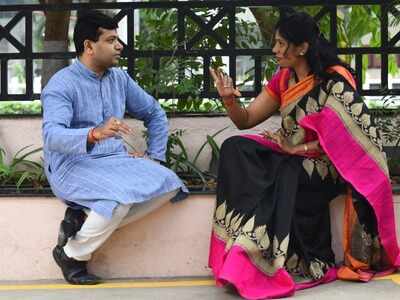
Divya Kasturi is a familiar face on the Chennai dance scene. And Chitravina Ganesh is well-known in the kutcheri circuit, both as a chitravina player and a vocalist (as part of the Carnatica Brothers). Tomorrow, on the first day of Brahma Gana Sabha’s dance festival, as part of the Margazhi concerts, Divya Kasturi and Chitravina Ganesh will be coming together to perform a one-of-a-kind Bharatanatyam concert, where the vocals will be replaced by the chitravina.
Divya, who learns Carnatic music from Ganesh, says that the idea just popped up during one of their discussions. “We were having a conversation on different things, and he just brought up this idea. We tried two-three sessions together and it was a pleasure dancing to the chitravina, as it is close to human voice. Since he is my guru, we found that we had a better connection while performing together. We did a performance in London, in September 2017, at the Indian High Commission, and thoroughly enjoyed it. We thought we should do this in Chennai as well, and what better time than during the Margazhi
season?” she asks.
She says that replacing vocals with an instrument has been attempted earlier, but this is probably the first time the chitravina is being used in a dance performance in Chennai.
Divya feels that there is a lot of freedom and liberty when dancing to an instrument. “I’m so used to focusing on the steps while dancing, so when I danced to the chitravina, I found that I could really concentrate on the music. Also, when I’m doing a regular Bharatanatyam recital, I rehearse with the orchestra so much, practising the jathis, the rhythmic aspects and all that. From our earlier performance, I found that there are a lot of surprise elements, as we are constantly taking off from each other, which helps us bring out our creative best,” she says.
She says that she realised the value of having learnt Carnatic music, and feels it is essential for dancers. “You need to be super-alert, otherwise you can’t move a muscle,” she says. She adds that they have taken the learnings from the previous performance and improved their act this time. “When we did the first time, we had rehearsed some compositions and hadn’t for a few others. Every performance is a learning experience for an artiste. We have taken the positives (ideas that worked then) and tried to refine the performance,” she says but adds that this one will still be different because lot of the execution is going to be impromptu. “Our creative instincts do not operate the same way every time we perform; it takes inspiration from the place where you are the, and the people who you are with, so it changes every time. The same kalpanai cannot get repeated in exactly the same way again, so every performance is going to be different. We have choosen certain compositions that would help the dance elements, which would also enable the audience to hear the dance and see the music!” she explains.
The way in which the accompanying artistes are going to be part of the performance is also something they have learnt from the previous performance. “There, they just landed up on stage on the day of the performance, this time, we decided to rehearse along with them just to give them an alert on what is going to happen. The two of us have a lot of sync, but the other artistes involved need a little bit of planning,” Divya says. This performance will have violinist Karaikal Venkatasubramaniam, mridangist CN Ramakrishnan, and kanjira player Nanda Masti as the accompanists. “The kanjira is a new inclusion, which we did not have it during the London performance,” adds Ganesh.
Divya admits that attempting a new production during the season is quite a challenge. “I tried to do a production that I had tried in London earlier, despite my friends telling me not to do that. Logistically, it was a problem because everyone is busy during this time, so I found it hard to get the lighting setups and all that,” she says. However, she feels that the audience has evolved now and is open to new attempts. “We think that the audience we get during the season are purists, but the times have changed, and so have people. They actually want to try something that is different,” she signs off.
Divya, who learns Carnatic music from Ganesh, says that the idea just popped up during one of their discussions.
season?” she asks.
She says that replacing vocals with an instrument has been attempted earlier, but this is probably the first time the chitravina is being used in a dance performance in Chennai.
Ganesh says that the chitravina, a 21-string, slided instrument, produces a sound that is close to human voice, and so, using it for a Bharatanatyam recital works very well. “Divya is a multi-faceted artiste; she is a dancer who also knows vocals. I just trust her completely and give her a lot of responsibilities, and play as I usually do in my concerts. She does abhinayams for ragams, swarams, everything… I even asked her to sing a few lines as she danced so that the audience will be surprised,” he says and adds, “During the London performance, we took some compositions from the Pancharatna Kritis, for which, when the swaram comes, she put thalam and for the sahityam part, she danced. And towards the climax of the performance, I did a rhythmic exercise for which she had to respond.”
Divya feels that there is a lot of freedom and liberty when dancing to an instrument. “I’m so used to focusing on the steps while dancing, so when I danced to the chitravina, I found that I could really concentrate on the music. Also, when I’m doing a regular Bharatanatyam recital, I rehearse with the orchestra so much, practising the jathis, the rhythmic aspects and all that. From our earlier performance, I found that there are a lot of surprise elements, as we are constantly taking off from each other, which helps us bring out our creative best,” she says.
She says that she realised the value of having learnt Carnatic music, and feels it is essential for dancers. “You need to be super-alert, otherwise you can’t move a muscle,” she says. She adds that they have taken the learnings from the previous performance and improved their act this time. “When we did the first time, we had rehearsed some compositions and hadn’t for a few others. Every performance is a learning experience for an artiste. We have taken the positives (ideas that worked then) and tried to refine the performance,” she says but adds that this one will still be different because lot of the execution is going to be impromptu. “Our creative instincts do not operate the same way every time we perform; it takes inspiration from the place where you are the, and the people who you are with, so it changes every time. The same kalpanai cannot get repeated in exactly the same way again, so every performance is going to be different. We have choosen certain compositions that would help the dance elements, which would also enable the audience to hear the dance and see the music!” she explains.
The way in which the accompanying artistes are going to be part of the performance is also something they have learnt from the previous performance. “There, they just landed up on stage on the day of the performance, this time, we decided to rehearse along with them just to give them an alert on what is going to happen. The two of us have a lot of sync, but the other artistes involved need a little bit of planning,” Divya says. This performance will have violinist Karaikal Venkatasubramaniam, mridangist CN Ramakrishnan, and kanjira player Nanda Masti as the accompanists. “The kanjira is a new inclusion, which we did not have it during the London performance,” adds Ganesh.
Divya admits that attempting a new production during the season is quite a challenge. “I tried to do a production that I had tried in London earlier, despite my friends telling me not to do that. Logistically, it was a problem because everyone is busy during this time, so I found it hard to get the lighting setups and all that,” she says. However, she feels that the audience has evolved now and is open to new attempts. “We think that the audience we get during the season are purists, but the times have changed, and so have people. They actually want to try something that is different,” she signs off.
End of Article
FOLLOW US ON SOCIAL MEDIA








Photostories
entertainment videos
Featured In Movies

Popular Categories
Entertainment NewsBollywood NewsTollywood NewsKollywood NewsMollywood NewsMovie ReviewsLatest Hindi MoviesLatest Tamil MoviesMX PlayerParenting TipsHome RemediesWeight LossBeauty TipsParenting TipsHindi VideosHindi Video SongsBhojpuri Music VideosLatest Telugu MoviesBhojpuri Music VideoHindi TV News
Trending in Entertainment
Latest MoviesBollywood MoviesHollywood MoviesTamil Movies 2024Telugu Movies 2024Malayalam Movies 2024Kannada Movies 2024Marathi Movies 2024Bengali Movies 2024Top Rated Movies 2024Best Hindi MoviesBest English MoviesBest Telugu MoviesBest Tamil MoviesBest Malayalam MoviesBest Kannada MoviesBest Bengali MoviesUpcoming Hindi MoviesBest Movies Of All TimeBest Hindi Movies of All Time
Trending in Etimes
PM Modi’s birthday through the years: From slicing 73-kg laddoo cake to Cheetah Project and Vishwakarma YojanaHoroscope TodayNumerology Predictions TodayElla EmhoffDonald Trump AssassinationKaren DunnJose LopezKristina JoksimovicJoe WilsonTrump Eating The Dogs SongGermany NewsKamala HarrisPrince HarryBelly Fat LossDiabetes RiskFull Moon in September 2024Relationship TipsSean DiddyMiley CyrusDave Bautista
Trending in TV
Trending in Lifestyle
Trending in Regional
Movie Reviews
Berlin ReviewThe Buckingham Murders ReviewSpeak No Evil ReviewVisfot ReviewThalapathy Is The G.O.A.T ReviewRebel Ridge ReviewDetective Conan vs. Kid the Phantom Thief ReviewBeetlejuice Beetlejuice ReviewPad Gaye Pange ReviewA Wedding Story ReviewThe Diary Of West Bengal ReviewTikdam ReviewKinds Of Kindness ReviewAfraid Review
Upcoming Hindi Movies
Upcoming Regional Movies
Latest News
Pankaj Kapur is proud of son Shahid Kapoor’s film choices, calls him ‘the finest actor in the country’Mukhtar Ansari died of heart attack, not poisoning: UP's Banda district magistrate's report4 types of tea to improve gut health and ease digestive issuesMemeFi daily codes for 17 September 2024: Boost your earnings with daily codes and know how to maximizeKhatron Ke Khiladi 14: Shalin Bhanot hosts a fun party for his co-contestants Krishna Shroff, Abhishek Kumar, KaranVeer Mehra and othersDecoding how log analytics systems are enabling brands to derive maximum value from dataSebi U-turn: Pulls note blaming 'external elements' for staff stirAnother Mpox suspected case in India: Man showing symptoms admitted to hospitalTaurus, Daily Horoscope Today, September 17, 2024: Anxiety and stress diminishLiza Colon becomes 1st Latina to win Best Supporting Emmy AwardSelena Gomez recreates practiced applause she learnt from TV show Friends after losing at Emmys 2024Former WWE superstar is no longer listed on their internal rostersBeyond Paychecks: Job satisfaction, work-life balance more important than salary for Gen Z workforceThrowback: When Sunita Ahuja showered love on husband Govinda, 'A superb son, brother, and a very good father...'‘You is sleep or you can sleep’: Students prank Benglauru’s ‘pookie professor’ in viral videoHow ‘Oxford returnee’ Atishi became chief minister of DelhiWhy more couples aged 50 or older are getting divorcedThese are the most toxic fresh produce of 2024
Other Group Sites -
ETimes is an Entertainment, TV & Lifestyle industrys promotional website and carries advertorials and native advertising.