- News
- entertainment
- malayalam
- movies
- Unni Mukundan puts social media in a bind over the bindi
Trending
This story is from June 28, 2021
Unni Mukundan puts social media in a bind over the bindi
Many on social media have been protesting by putting up photos sporting bindis, stating a choice of accessory shouldn’t be termed lack of empowerment
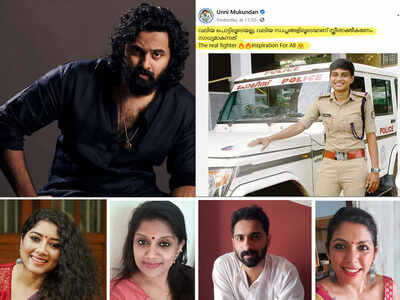
Unni Mukundan, too, reposted a story on her and captioned it, “Women’s empowerment comes from big dreams, not big bindis.” The actor could have been speaking metaphorically, but around the time when the Women’s Commission chairperson MC Josephine had to resign following for her careless words on TV to a distressed woman, many on social media have been protesting by putting up photos sporting bindis, stating a choice of accessory shouldn’t be termed lack of empowerment.

Sreeranjini Kodampally
Singer
I don’t think a bindi signifies anything more than an interest to use that accessory. Personally, I wear it if it suits my attire, or else, I do away with it. We can’t classify people based on their choice to sport it as empowered or not. And we don’t know whether Unni too meant to use the phrase thus, it is quite possible that it was used to make his words of compliment a bit catchy.
Sreejith Jeevan
Fashion designer
The struggle of being judged based on clothes is real, and it holds true to every gender. But we live in a society that has slowly evolved a sense of style. We have learnt what to wear, when and how. And in that sense a man or a woman can choose to wear what they want to a place, according to its appropriateness. A woman will easily have different styles from her yoga session to a school meeting, temple visit or a party. It is their expression. And it's practically impossible to identify a person's character by what they're wearing because they're wearing clothes for that time and space. It would be hence unfair to identify who that person is based on what they're wearing at that point of time. We need to create space for people to be made comfortable with what they choose to wear.
Anumol
Actress
I often wear bindi as I’m used to it since childhood, urged by my parents. But, I don’t think we can judge anyone as empowered or not based on their choice of clothes or accessories. At the same time, I don’t feel it’s right to judge Unni’s choice of words so quickly, either. It is possible that he just used such a phrase without thinking deeply about it or even intending to mean it like that. Times are such, that we should give our words a proper thought before speaking, without which they might get dissected to mean much more than what we meant. Basically, I believe we should all stop judging each other based on our clothes, accessories, words, and more.
Sreedevi Jayaprakash
Content writer
As I was going to bed on Sunday night, I saw several friends post pictures with bindis and wondered what it was about. It continued the next morning and though I didn’t manage to find out what it was about, I felt it was for a women’s issue and I promptly put on one myself. Because yes, women are always judged and I have felt that from my early days as a TV journalist, when I was asked why I didn’t dress in the typical kurti-jeans-jhoola combination. In fact, I also dressed up in that manner because I liked that as a fashionista, not to fit into the profession. We need to change the perception that only if one is dressed in a certain way, are they efficient and know their jobs. I have tattoos, coloured hair and multiple piercings and I am told in almost every conversation that I will not be taken seriously at the workplace.
Maybe Unni Mukundan did not mean to be judgemental when he said what he did, but also, you do not have to pull something down to appreciate a certain quality.
End of Article
FOLLOW US ON SOCIAL MEDIA




Photostories
entertainment videos
Featured In Movies

Popular Categories
Entertainment NewsBollywood NewsTollywood NewsKollywood NewsMollywood NewsMovie ReviewsLatest Hindi MoviesLatest Tamil MoviesMX PlayerParenting TipsHome RemediesWeight LossBeauty TipsParenting TipsHindi VideosHindi Video SongsBhojpuri Music VideosLatest Telugu MoviesBhojpuri Music VideoHindi TV News
Trending in Entertainment
Latest MoviesBollywood MoviesHollywood MoviesTamil Movies 2024Telugu Movies 2024Malayalam Movies 2024Kannada Movies 2024Marathi Movies 2024Bengali Movies 2024Top Rated Movies 2024Best Hindi MoviesBest English MoviesBest Telugu MoviesBest Tamil MoviesBest Malayalam MoviesBest Kannada MoviesBest Bengali MoviesUpcoming Hindi MoviesBest Movies Of All TimeBest Hindi Movies of All Time
Trending in Etimes
Horoscope TodayNumerology Predictions TodayKamala HarrisBrisk WalkingPrince HarryElon MuskDonald Trump DonationsSayuri DeathHaitian President SpeechElon Musk MotherJD Vance Vs Tim WalzEric AdamsKamala HarrisPeanut Butter Vs Almond ButterMagnesium DeficiencyRelationship TipsSean Diddy CombsAlzheimers DiseaseFunniest Wildlife Photos 2024
Trending in TV
Trending in Lifestyle
Trending in Regional
Movie Reviews
Binny And Family ReviewLove, Sitara ReviewWill & Harper ReviewWolfs ReviewYudhra ReviewJo Tera Hai Woh Mera Hai ReviewKahan Shuru Kahan Khatam ReviewHis Three Daughters ReviewNever Let Go ReviewDancing Village: The Curse Begins ReviewTransformers One ReviewFirst Love ReviewBerlin ReviewThe Buckingham Murders Review
Upcoming Hindi Movies
Upcoming Regional Movies
Latest News
TN: Sri Lankan Navy apprehends 17 fishermen off Rameswaram coast, seizes 2 boatsIndia vs Australia: Can Akash Deep make the difference Down Under?India shooter reports late for final, misses potential medal at Junior World ChampionshipsExclusive - A sneak peek into Zain Imam aka Teerth’s makeup room on the set of Suman IndoriTumbbad re-release box office: The Sohum Shah starrer mints Rs 95 lakhs on third SaturdayThree killed, four injured after bus collides with truck in Bihar's KaimurSivakarthikeyan imitates Kamal Haasan at the 'Amaran' promotional event, gets praises‘Devara’ stars Jr. NTR and Saif Ali Khan try their hand at Punjabi and BhojpuriAir Canada fined for breaching restricted Iraqi airspace"Is Taylor Swift Gonna Be in the Stands for the Chiefs vs. Chargers Showdown?"Stress could be your heart's worst enemyI Say ‘Khamosh’ to Sonakshi: Zaheer Iqbal - ExclusiveNFL Analyst Sparks Controversy with Deshaun Watson and Joe Flacco Comparison over $230 Million ContractHaryana polls: Explain the 'compelling' circumstances, CEO asks authorities on Dera Sacha Sauda chief Ram Rahim's plea for temporary releaseUnion minister Nitin Gadkari invites Sachin Tendulkar for coffee at newly inaugurated bird park in Maharashtra's JamthaDrake Hogestyn, beloved 'Days of Our Lives' star, passes away at 70Fire Country Season 3: Bode's road to freedom, new characters, and trouble ahead'IPL is getting stronger': Irfan Pathan supports ban on players opting out after auction
Other Group Sites -
ETimes is an Entertainment, TV & Lifestyle industrys promotional website and carries advertorials and native advertising.