- News
- entertainment
- kannada
- movies
- Finding that female voice in the Kannada film industry
Trending
This story is from March 9, 2022
Finding that female voice in the Kannada film industry
Producers do not trust women to make commercially viable films. They think women filmmakers will make arthouse or bridge cinema, says Filmmaker Vijayalakshmi Singh.

Trust is the biggest factor
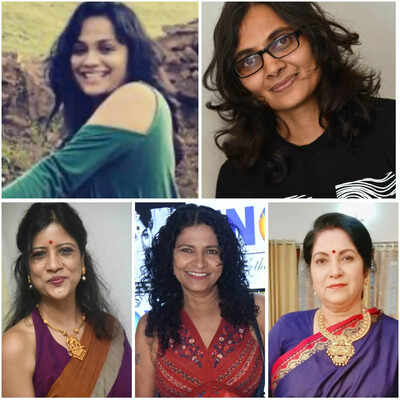
All the women unanimously agree that the trust factor is the biggest hurdle. “Producers do not trust women to make commercially viable films. They think women filmmakers will make arthouse or bridge cinema. Additionally, they also think that women might not get on well in all-male sets and there may be conflicts. This can be easily avoided if they choose a male filmmaker as they find it easier to discuss adjustments and improvisations in stories,” shares filmmaker Vijayalakshmi Singh.
Nanditha Yadav, who has dabbled with films, television and OTT, agrees and shares, “The trust factor is missing for women filmmakers, especially in Kannada cinema. The producers still wonder if women directors can make action films or other commercially viable genres. This is ridiculous, especially when we look at other Indian film industries, where women filmmakers have delivered big commercial blockbusters too.”
We need more women producers
One of the biggest problems is that while there are women filmmakers, the financial decisions lie with producers who are mostly men. “We need to have more women producers to enable more women directors. For this, we need to make women richer for them to think of films as a viable investment. The power lies with the moneyed people and most of them are men. It becomes hard to explain the woman’s gaze to these people. This is why we see lesser women-oriented films or even sensitively written women characters in other films,” shares filmmaker
Kavitha Lankesh, who has won several awards, including National and State Awards.
Vijayalakshmi agrees. “I was fortunate to make films that were commercial in nature with big stars of my choice because we produced them under my home banner. But, the biggest hurdle for other women directors, I would assume, would be when they try to pitch their films to producers and convince them. It becomes hard for them to think from a woman’s perspective.”
Filmmaker Roopa Rao says she too produces her own content for the same reason. “When I wanted to speak about teenage love, problems and baggage in Gantumoote, not many would have understood. It was easier for me to convey what I intended to say because I was the producer,” she adds.
We need to look beyond ‘who is the hero?’
Actor-turned-filmmaker Sheetal Shetty says that there needs to be a shift in thinking not just within the industry, but with the audience as well. “The first question that people still ask when someone is making a film is, ‘Who is the hero?’ This itself becomes a setback because the focus is all the male protagonist and not the story, its layers and the nuances of the characters. We need to go beyond this mindset to ensure we get those women’s voices heard,” she explains.
Need to get women scriptwriters
If one were to look beyond these hurdles, then the first step is to find women storytellers. “I have been in the industry for more than a couple of decades. My peers and contemporaries know that I write and direct my own films. Yet, not once have I been approached by others to write a script. They usually go for male writers. We need to get more women writers to find that female voice in films, even if it means a man directs that story. This should be one of the fundamental steps,” shares Nanditha.
Roopa too agrees that stories need to be told from a female perspective. “There is a big difference in the portrayal when you have a woman writer. If we look at some of the women-oriented films, most of them have been done from a male gaze and the women have attributes that are stereotypical and written by men,” she adds.
The filmmakers point out that some of the top female stars who have ruled the roost, like Malashree, were still seen doing heroics like men, rather than showing some of the more emotional attributes of women.
Sustainability is the key
Another attribute that the women filmmakers say is important is sustainability. Often, women filmmakers give up after their first film, following the problems and hurdles that they face. “I am here to stay and I would like to make more films,” says Sheetal, adding, “We need women filmmakers to not give up and continue making more films.”
Kavitha too adds, “We have had many filmmakers come in with ambitious plans, but the prejudices and stereotyping leads to them giving up on their dreams. I have survived because I want to tell stories and will continue to tell them the way I want to, without compromising on my thoughts and ideals. Though, it is another factor that producers do not see the fact that all these films of mine have recovered the business. But, when we don’t give up, we will find ways to share our stories.”
Women should stand up for each other
Sheetal also says that women need to stop looking for validation from men, who have their prejudices, and should find support among fellow women directors and technicians. “Women need to stand up for each other and support one another. I am building an ecosystem in my production house where I have women writers and directors working and I want to ensure they find their platform. I struggled, but eventually found a big name to present my film. I want to help others too,” says she.
Vijayalakshmi adds that women need to find support and encouragement from one another to get through hurdles. “The newer mediums are creating more acceptance for women filmmakers in other industries, so I think women will find the same soon here as well. The current generation is more hands-on and proactive and I see a change in the coming decade with these women finding their voice and supporting each other,” she elaborates.
Kannada films need an image makeover
“Women filmmakers have it hard in Kannada cinema anyway. But, when we look at the larger picture, in terms of business in the newer models, Kannada films are not seen with the respect that they had in the 1970s and 80s, when we made far superior films, compared to the rest. We need to ensure this image makeover for Kannada films first, following which we will find more acceptance for filmmakers, regardless of gender, from our industry on the national level,” says Nanditha.
Watch out for Some upcoming films being helmed by women filmmakers:
Saara Vajra: Arna Sadi
Window Seat: Sheetal Shetty
Naanu Ladies: Shailaja Padindala
Rajasthan Diaries: Nanditha Yadav
O Nanna Chetana: Apoorva
Chikkiya Mooguthi: Devika Janitri
End of Article
FOLLOW US ON SOCIAL MEDIA




Photostories
entertainment videos
Featured In Movies

Popular Categories
Entertainment NewsBollywood NewsTollywood NewsKollywood NewsMollywood NewsMovie ReviewsLatest Hindi MoviesLatest Tamil MoviesMX PlayerParenting TipsHome RemediesWeight LossBeauty TipsParenting TipsHindi VideosHindi Video SongsBhojpuri Music VideosLatest Telugu MoviesBhojpuri Music VideoHindi TV News
Trending in Entertainment
Latest MoviesBollywood MoviesHollywood MoviesTamil Movies 2024Telugu Movies 2024Malayalam Movies 2024Kannada Movies 2024Marathi Movies 2024Bengali Movies 2024Top Rated Movies 2024Best Hindi MoviesBest English MoviesBest Telugu MoviesBest Tamil MoviesBest Malayalam MoviesBest Kannada MoviesBest Bengali MoviesUpcoming Hindi MoviesBest Movies Of All TimeBest Hindi Movies of All Time
Trending in Etimes
Horoscope TodayNumerology Predictions TodayKamala HarrisBrisk WalkingPrince HarryElon MuskDonald Trump DonationsSayuri DeathHaitian President SpeechElon Musk MotherJD Vance Vs Tim WalzEric AdamsKamala HarrisPeanut Butter Vs Almond ButterMagnesium DeficiencyRelationship TipsSean Diddy CombsAlzheimers DiseaseFunniest Wildlife Photos 2024
Trending in TV
Trending in Lifestyle
Trending in Regional
Movie Reviews
Binny And Family ReviewLove, Sitara ReviewWill & Harper ReviewWolfs ReviewYudhra ReviewJo Tera Hai Woh Mera Hai ReviewKahan Shuru Kahan Khatam ReviewHis Three Daughters ReviewNever Let Go ReviewDancing Village: The Curse Begins ReviewTransformers One ReviewFirst Love ReviewBerlin ReviewThe Buckingham Murders Review
Upcoming Hindi Movies
Upcoming Regional Movies
Latest News
India vs Australia: Can Akash Deep make the difference Down Under?Historic North Carolina village submerged under water after Hurricane Helene brings heavy rainRs 40.87 crore cash, goods seized since inception of mode code: DGP KapoorThree killed, four injured after bus collides with truck in Bihar's KaimurSivakarthikeyan imitates Kamal Haasan at the 'Amaran' promotional event, gets praisesTulsi Gabbard calls Kamala Harris shameless as VP inspects US-Mexico border: 'No conscience'SC handbook lists terms to be avoided to refer to persons with disabilities, provides alternativesEx-WWE Writer Vince Russo Voices Frustration Over Triple H's Handling of LA KnightQueen Camilla does not want King Charles to meet Prince Harry because...Mapusa rain surges past 4,000mm markAnanya Panday calls new mom Deepika Padukone 'the most beautiful woman ever'RG Kar case: West Bengal junior doctors to resume 'cease work' following SC hearing on MondayGovernment unveils draft rules to take terminally ill off life supportIt’s ‘karma’ that Pakistan ills are consuming its own society: Jaishankar in UNGAMadhya Pradesh: 6 people killed, several injured as bus collides with parked dumper in MaiharShots in the air, wails and disbelief in Beirut after Hezbollah head killedWeekly Horoscope, September 29 to October 5, 2024: Read weekly astrological predictionsMS Dhoni to be 'uncapped' player as IPL retention rules announced ahead of mega auction
Other Group Sites -
ETimes is an Entertainment, TV & Lifestyle industrys promotional website and carries advertorials and native advertising.