- News
- entertainment
- hindi
- theatre
- Mumbai’s theatre actors get physical on stage
Trending
This story is from June 6, 2018
Mumbai’s theatre actors get physical on stage
Storytelling on the stage gets physical with a little help from martial arts and traditional art forms.

Actor-director Yuki Ellias’ 'Elephant In The Room' is a movement-based piece
‘It allows me to explore the space between the old and new forms’
One of the reasons directors are drifting to physical theatre is due to its unique use of movements, the roots of which can be traced to traditional Indian martial art forms and contemporary dance moves.

Theatre director Sujay Saple’s plays like This Is All There Is When There Is All This (TIATIWTIAT), Agent Provocateur, Moonfool and Unselfed don’t just have episodes of physicality, but are entirely movement-based. “I have nothing against realism, but I think this format is a lot more challenging. The stage is a place of imagination — it can be a lot more metaphorical, and not just literal. I got bored of furniture on stage, people talking, the beginning-middle-and-an-end narrative and simply, the sense of identifying with relatable characters. My actors operate as lexicons of metaphors and symbols. There are some portions of text but primarily, the moving body is the signifier,” he explains.
Actor-director Deepika Arwind, who plays multiple characters in No Rest In The Kingdom, says she opted for this format because she wants each character to inhabit a completely different body, breath, voice and vocabulary of gesture. “I worked a lot with my instinct of what may sit right in a particular character’s body,” she says.

A scene from Moonfool
‘If your body is trained, you will always have an advantage on stage’
Equating poetries to physical performance, where both are open to the audience’s interpretation, actor Arpit Singh, who has starred in Moonfool and Agent Provocateur, says, “Saying I love you and expressing it through your movements are two different things. Being a part of physical theatre has changed me both professionally as well as personally. In this format, there’s text as well as alignments of body. You move freely on stage and are more aware about the lighting, set, prop, music, audience and costumes.”
Actor Errol Rodrigues, who has been a part of physical theatre workshops, adds, “Even if we aren’t doing an out-and-out physical performance-based play, having done such a workshop certainly adds a dimension to existing content.” Yuki Ellias, who has acted and directed Elephant In The Room, states that any movement in the language of performance and form is a natural part of her theatre-making process. “Just standing on stage by itself is a physical act. You have to be aware, skilled and embody a physical presence always. There is no theatre without the body,” she says.
‘Theatre does not mean acrobatics’
Actors have to ensure that they are agile, since physical theatre requires flexibility. Shares Maithily Bhupatkar, an actress and contemporary dance, movements’ practitioner, “For any kind of work with the body, it is important to have physical discipline and training because you are going to generate material out of that.” Arpit has learnt plenty of rural forms of workouts like kushti, chhau (a semi-classical Indian dance with martial, tribal and folk origins from Orissa) and kalaripayattu in order to perform better. Deepika shares that though she isn’t trained in martial arts, she is making a concerted effort to learn kalaripayattu this year. However, Sujay advises that it’s not the only thing one should focus on. He says, “I feel all bodies can express. If you have an imagination, then your body will translate that. A lot of actors, when they hear physical performance, say, ‘Oh! I haven’t gone to the gym in months’ and I have to tell them that I am not going to make them do somersaults. Theatre doesn’t mean acrobatics; it’s articulating things in physical terms.”
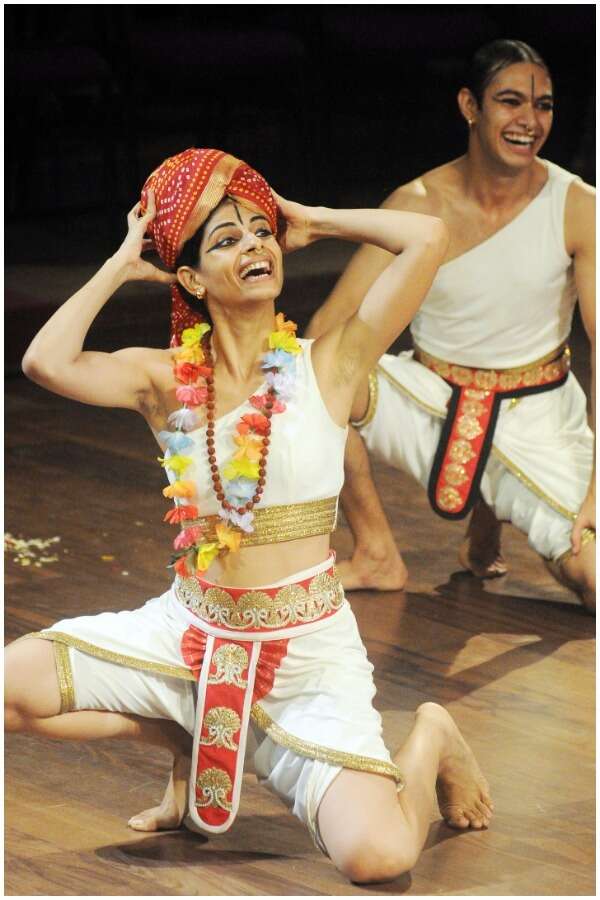
Shikhandi
‘Form and story must support each other’
At times, with a lot happening on stage, it could deter the point the play wants to put across. How does one consciously avoid it? Says Faezah, “At every point, you have to ask yourself: ‘Is this too much? Is this enough?’ And then, be honest to take out things that don’t fit.”Adds Yuki, “You have to choose a format that best fits the story. If clowning or mime works best for my narrative, then I will bring masks and stylised physical work into the process. If the form is dance-theatre, I will choreograph elaborate sequences to express the emotions of the characters. The form and story must support each other.”
Mumbai’s theatre actors get physical on stage

About the Author
Garvita SharmaEnd of Article
FOLLOW US ON SOCIAL MEDIA









Photostories
entertainment videos
Featured In Movies
Popular Categories
Entertainment NewsBollywood NewsTollywood NewsKollywood NewsMollywood NewsMovie ReviewsLatest Hindi MoviesLatest Tamil MoviesMX PlayerParenting TipsHome RemediesWeight LossBeauty TipsParenting TipsHindi VideosHindi Video SongsBhojpuri Music VideosLatest Telugu MoviesBhojpuri Music VideoHindi TV News
Trending in Entertainment
Latest MoviesBollywood MoviesHollywood MoviesTamil Movies 2024Telugu Movies 2024Malayalam Movies 2024Kannada Movies 2024Marathi Movies 2024Bengali Movies 2024Top Rated Movies 2024Best Hindi MoviesBest English MoviesBest Telugu MoviesBest Tamil MoviesBest Malayalam MoviesBest Kannada MoviesBest Bengali MoviesUpcoming Hindi MoviesBest Movies Of All TimeBest Hindi Movies of All Time
Trending in Etimes
Horoscope TodayNumerology Predictions TodayWalking BenefitsBreast Cancer DiagnosisYung Filly Rape CaseTaylor Rousseau GriggBelly FatSean Diddy CombsOzempic PersonalityDepression RiskBelly Fat LossDurga Visarjan 2024Toxic FriendshipDonald TrumpElon MuskDussehra 2024Durga Ashtami 2024Multitasking TipsSaraswati Visarjan 2024
Trending in TV
Trending in Lifestyle
Trending in Regional
Movie Reviews
Binny And Family ReviewLove, Sitara ReviewWill & Harper ReviewWolfs ReviewYudhra ReviewJo Tera Hai Woh Mera Hai ReviewKahan Shuru Kahan Khatam ReviewHis Three Daughters ReviewNever Let Go ReviewDancing Village: The Curse Begins ReviewTransformers One ReviewFirst Love ReviewBerlin ReviewThe Buckingham Murders Review
Upcoming Hindi Movies
Upcoming Regional Movies
Latest News
Navratri 2024: Jaya Bachchan and Shweta Bachchan join Rani Mukerji at the Durga puja pandalOff Argentina's Patagonian coast, whales and their calves dive deep for foodHappy Dussehra 2024: Images, Quotes, Wishes, Messages, Pictures and GreetingsJaggery vs honey: Which one is better for weight loss?My mother would love to have a swayamwar for me: Raj AnadkatHappy Dussehra 2024: Top 50+ Wishes, Messages, and Quotes to Share with Your Loved OnesBigg Boss 18: Karan Veer Mehra's comment on Arfeen Khan converting his wife's religion sparks anger; Arfeen says, "Agar ye ghar mein nahi hota main iski band baja deta"Happy Dussehra 202: Top 50 Wishes, Messages and Quotes to share with your loved onesAmitabh Bachchan turns 82: Priyanka Chopra, Prabhas, Kajol, and other celebs extend heartfelt birthday wishes to the legendary starPutin won't discuss Ukraine peace with Germany's Scholz, Berlin saysIndia's Steel City (Jamshedpur) mourns loss of iconic steel tycoon Ratan Tata“A fresh approach”: New York Jets' Interim Head Coach Jeff Ulbrich Replaced Nathaniel Hackett as Offensive Play Caller With Todd DowningKarnataka Congress faces backlash over case withdrawals linked to Hubballi riots'Jigra' box office collection day 1 early estimate: The Alia Bhatt starrer faces tough competition with Rajinikanth's starrer 'Vettitan' and Rajkummar Rao's Vicky Vidya Ka Woh Wala Video'Axe the tainted & non-performers, PM Modi tells Union secretariesLead with AI and transform challenges into opportunities with GrowFast's AI and Analytics based Business Strategy online courseZodiac signs known for being cold-hearted and emotionally detachedAI is having its Nobel moment. Do scientists need the tech industry to sustain it?
Other Group Sites -
ETimes is an Entertainment, TV & Lifestyle industrys promotional website and carries advertorials and native advertising.