- News
- entertainment
- hindi
- music
- Rafi listened only to Manna Dey songs
Trending
This story is from October 24, 2013
Rafi listened only to Manna Dey songs
His voice shone like a belowari jhaad.
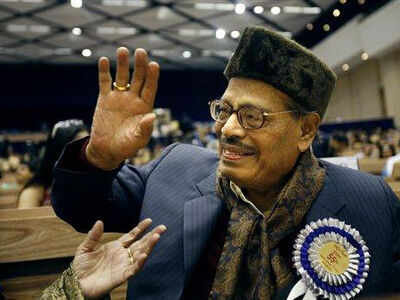
“Mana, please get me a cup of tea!” the blind singing star Krishna Chandra Dey would tell his nephew Prabodh Chandra, barely past 10. Sometimes, KC De would admonish: “That’s not the way to sing this Mana!” Through all such endearment, and before he was 13, was born a singer named Manna Dey. And on October 24, 2013, when the lights went out of his life, music lovers realised once more that Manna Dey is for all times, all ages.

Music has, since the early years of cinema, been an important pillar of Indian film’s popularity. And ever since playback singing was introduced by New Theatre, certain voices have tended to become the soul of characterisation by particular actors. So, if it was Dilip Kumar on screen, the off-screen rendition would be Rafi’s, and if Raj Kapoor was emoting, Mukesh would be pouring out the notes. But Manna Dey defied the rule to become the voice for every notable face in the pantheon of Indian cinema - from Balraj Sahni to Mehmood, Raj Kapoor to Rajesh Khanna, Raj Kumar to Dharmendra and Uttam Kumar to Soumitra Chatterjee.
Indeed one cannot think of Raj Kapoor without Yeh raat bheegi bheegi, Pyar hua iqrar hua, Dil ka haal sune dilwala, Ae bhai zara dekh ke chalo, Jeena yahan marna yahan. Balraj Sahni is immortalised by Dharti kahe pukar ke, O mere zohra zabeen, Tu pyar ka sagar hai. Raj Kumar by Jhanak jhanak tori baje payaliya. Rajesh Khanna serenaded life with Zindagi kaisi hai paheli. Mehmood stole hearts with Manna’s Chatur naar. Dharmendra vowed friendship unto death with
Yeh dosti. Uttam Kumar was Antony Firingee courtesy Manna while Soumitra Chatterjee became Sri Sri Bhajahari Manna…
He broke so many Dos and Don’ts of playback singing, Shantanu Moitra once pointed out. Don’t show off your vocal dexterity lest the actors look stupid, they tell Bollywood singers. Surely a classical singer can’t sing for a silly comedian, they’d say. How dare a playback artiste team up with a maestro like Bhimsen Joshi, to sing Ketaki Gulab Juhi? And then devalue his training by singing duets with the quirky Kishore! How can you infuse the melody of Hindustani ragas into the framework of pop music? Manna Dey did all this, and with so much verve that every singer that aspired for the popularity of Lata Rafi Asha Kishore had only one model when doing their riyaaz – Manna Dey.
He did more. He rendered the Kabuliwala song, or Jeevan se lambe in Ashirwad, or Kaal ka pahiya in Chanda Aur Bijlee that were essentially the director’s comment replacing a voice-over or lip-synch. That gave him scope to fill the words with mellifluous filigree. Yet, such was his dexterity that it never distracted the viewers – they were completely overpowered by the emotion of the lyrics. The vocalist who could, and did, wrestle in a ring, never had to compromise on lyrics, style or professionalism, Kavita Krishnamurti once said. In doing so he raised the standard of music in Indian films. And when the music industry was flooded by Wannabe Kishores and sound-alike Rafis, there were no cover versions of Manna Dey.
End of Article
FOLLOW US ON SOCIAL MEDIA
Visual Stories









Photostories
entertainment videos
Featured In Movies

Popular Categories
Entertainment NewsBollywood NewsTollywood NewsKollywood NewsMollywood NewsMovie ReviewsLatest Hindi MoviesLatest Tamil MoviesMX PlayerParenting TipsHome RemediesWeight LossBeauty TipsParenting TipsHindi VideosHindi Video SongsBhojpuri Music VideosLatest Telugu MoviesBhojpuri Music VideoHindi TV News
Trending in Entertainment
Latest MoviesBollywood MoviesHollywood MoviesTamil Movies 2024Telugu Movies 2024Malayalam Movies 2024Kannada Movies 2024Marathi Movies 2024Bengali Movies 2024Top Rated Movies 2024Best Hindi MoviesBest English MoviesBest Telugu MoviesBest Tamil MoviesBest Malayalam MoviesBest Kannada MoviesBest Bengali MoviesUpcoming Hindi MoviesBest Movies Of All TimeBest Hindi Movies of All Time
Trending in Etimes
Horoscope TodayNumerology Predictions TodayMoon DengHelicopter Crash NewsKamala HarrisJimmy KimmelBelly FatSean Diddy CombsSunita WilliamsDepression RiskBelly Fat LossMexican Mayor MurderToxic FriendshipDonald TrumpElon MuskOzempic SubstituteLake Michigan DiscoveryWeight Loss WalkCovid XEC Variant Symptoms
Trending in TV
Trending in Lifestyle
Trending in Regional
Movie Reviews
Binny And Family ReviewLove, Sitara ReviewWill & Harper ReviewWolfs ReviewYudhra ReviewJo Tera Hai Woh Mera Hai ReviewKahan Shuru Kahan Khatam ReviewHis Three Daughters ReviewNever Let Go ReviewDancing Village: The Curse Begins ReviewTransformers One ReviewFirst Love ReviewBerlin ReviewThe Buckingham Murders Review
Upcoming Hindi Movies
Upcoming Regional Movies
Latest News
Ambala Cantt Assembly Election Result 2024: BJP's big gun Anil Vij defeats Chitra Sarwara by over 7000 votes5 must follow rules of Ayurveda to lose 5kg in 30 daysUniversity of East Anglia Introduces £4,000 Scholarship for Indian Students: Explore Courses, Eligibility, and BenefitsTodd Phillips explains SHOCKING CLIMAX of 'Joker: Folie à Deux', reveals Arthur Fleck acceptance of his true identityThe Power of Navratri: Honoring Goddess Durga and Manifesting DesiresAlia Bhatt just cannot keep calm on watching 'Singham Again' trailer, says 'all the dynamite in one frame' for the big multi-starrer led by Ajay Devgn3 reasons why Jimmy Uso can betray Roman Reigns and join forces with Solo SikoaThis is the stock trading app linked to Rs 500 crore investment fraud; YouTubers Elvish Yadav, Bharti Singh among 5 summonedMonetary policy committee meet: RBI moving closer to rate cutIndian branded pharma sector to see a decline in growth: ReportFrom spending habits to hiding reality: What each zodiac sign is likely to lie about2024 Haryana assembly election result: 5 reasons why BJP's victory is significantKathua (SC) Assembly Election Result 2024: BJP's Dr Bharat Bhushan wins by 12,177 votesTaylor Swift surpasses Rihanna in Music Rich list: A look at her impressive net worthAlexander Zverev scrapes through, set to face David Goffin at Shanghai Masters pre-quarters3 killed after an Air Evacuation helicopter crashes in Owen County"We do it every day in practice”: Kansas City Chiefs Head Coach Andy Reid Confirms Travis Kelce’s 3rd And 22 Lateral Play Was PlannedBest TVs Of 2024 In India: Top Picks For Every Budget
Other Group Sites -
ETimes is an Entertainment, TV & Lifestyle industrys promotional website and carries advertorials and native advertising.