- News
- entertainment
- hindi
- music
- A new-age ala’app’
Trending
This story is from March 7, 2013
A new-age ala’app’
With Indian classical musicians warming up to iTanpuras and iTablas, a jugalbandi between music and technology has taken centrestage
At a recent music festival in Delhi, when Indian classical vocalist Vidya Shah performed with an iPad by her side, it drew several wide-eyed stares from members in the audience. Apparently, the jugalbandi of Indian classical and modern technology seemed blasphemous to many. The mismatch of wavelengths, however, hasn’t been a deterrent for musicians who are marrying mobile apps with ragas and their alaaps to create rhythm divine.
Besides the 500 metronome and 650 tuner apps available on iTunes, musicians are choosing from over 600 apps which are easily accessible on smart gadgets. Sitarist and music geek Purbayan Chatterjee, who swears by apps like the GarageBand, MIDI Trigger and beat machines, says, “These apps are very convenient. I could be waiting at Frankfurt’s airport lounge, but when a tune comes to my mind, I can make the basic layout on my iPad with the iTanpura. Consequently, I can import the tune to a normal mac and work on the song.”
Percussionist Bickram Ghosh, a fan of the iTanpura and iTabla, echoes similar views as he says, “These apps are way better than the battery operated tanpuras. They offer a steady tone and there’s hardly any fluctuation.” Bickram adds that he has also been scoring film music using the apps!
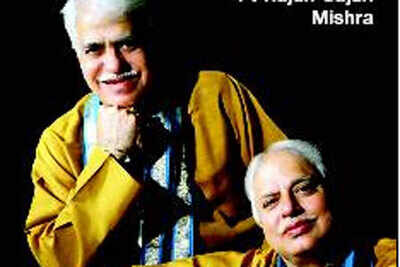
Even traditional classical musicians are promoting these apps saying these save them the trouble of lugging along heavy instruments across continents for their shows. Says vocalist Ritesh Mishra, “We frequently use music apps on our smartphones — even during our performances.” He shares that his father and uncle, renowned vo c a l i s t duo Rajan-S a j a n M i s h r a , also use m o b i l e apps, but strictly for riyaaz. On a similar note, sarod exponent Ayaan Ali Khan says, “We use the iTanpura frequently, but only for rehearsals. We don’t use it on stage.”
Quality and tradition cannot be compromised,” he says vehemently, adding, “Technology can be useful when it comes to fusion music, but nothing compares to the sound produced by original instruments.” So, inspite of using the fretless bass sarod for a full fledged alaap recently, Pt Tejendranarayan is unwilling to let further experimentation get in the way of traditional compositions.
Purbayan, however, feels that such new-age technologies can prove to be ‘instrumental’ in preserving India’s musical culture. He says, “A word for naysayers, ensuring that music remains ‘pure’ doesn’t mean one has to ignore technology. Apps use the same principles as musical instruments. So, the content is always pure, the context can be changed. I feel, it’s an individual choice and has nothing to do with generation gap. In fact, I’m aware of maestros like Zakir Hussain who are open to these apps.”
Incidentally, the practical advantages of these apps — no noise factor, easy notes reading and error-free page turning programme, accessibility and mobility and the availablity of backup, recording and rehearsal options — have been wooing musicians across the globe. Shares Susan Chu whose son, Bryan, plays cello for the North Carolina State Orchestra, USA, “My son’s music teacher uses a horde of apps to teach the kids. I have downloaded quite a few to help him practice at home.”
But as Purbayan puts it, just like a computer can do a spell check and not write an article, an app can offer support, but can’t substitute for a musician.
Besides the 500 metronome and 650 tuner apps available on iTunes, musicians are choosing from over 600 apps which are easily accessible on smart gadgets. Sitarist and music geek Purbayan Chatterjee, who swears by apps like the GarageBand, MIDI Trigger and beat machines, says, “These apps are very convenient. I could be waiting at Frankfurt’s airport lounge, but when a tune comes to my mind, I can make the basic layout on my iPad with the iTanpura. Consequently, I can import the tune to a normal mac and work on the song.”
Percussionist Bickram Ghosh, a fan of the iTanpura and iTabla, echoes similar views as he says, “These apps are way better than the battery operated tanpuras. They offer a steady tone and there’s hardly any fluctuation.” Bickram adds that he has also been scoring film music using the apps!
Even traditional classical musicians are promoting these apps saying these save them the trouble of lugging along heavy instruments across continents for their shows. Says vocalist Ritesh Mishra, “We frequently use music apps on our smartphones — even during our performances.” He shares that his father and uncle, renowned vo c a l i s t duo Rajan-S a j a n M i s h r a , also use m o b i l e apps, but strictly for riyaaz. On a similar note, sarod exponent Ayaan Ali Khan says, “We use the iTanpura frequently, but only for rehearsals. We don’t use it on stage.”
Sarod maestro Tejendra Narayan Majumdar, who has been using iTanpura and chromatic tuner on his android device, is also unwilling to let synthetic sounds interfere with his performance.
Quality and tradition cannot be compromised,” he says vehemently, adding, “Technology can be useful when it comes to fusion music, but nothing compares to the sound produced by original instruments.” So, inspite of using the fretless bass sarod for a full fledged alaap recently, Pt Tejendranarayan is unwilling to let further experimentation get in the way of traditional compositions.
Purbayan, however, feels that such new-age technologies can prove to be ‘instrumental’ in preserving India’s musical culture. He says, “A word for naysayers, ensuring that music remains ‘pure’ doesn’t mean one has to ignore technology. Apps use the same principles as musical instruments. So, the content is always pure, the context can be changed. I feel, it’s an individual choice and has nothing to do with generation gap. In fact, I’m aware of maestros like Zakir Hussain who are open to these apps.”
Incidentally, the practical advantages of these apps — no noise factor, easy notes reading and error-free page turning programme, accessibility and mobility and the availablity of backup, recording and rehearsal options — have been wooing musicians across the globe. Shares Susan Chu whose son, Bryan, plays cello for the North Carolina State Orchestra, USA, “My son’s music teacher uses a horde of apps to teach the kids. I have downloaded quite a few to help him practice at home.”
But as Purbayan puts it, just like a computer can do a spell check and not write an article, an app can offer support, but can’t substitute for a musician.
End of Article
FOLLOW US ON SOCIAL MEDIA









Photostories
entertainment videos

Featured In Movies
Popular Categories
Entertainment NewsBollywood NewsTollywood NewsKollywood NewsMollywood NewsMovie ReviewsLatest Hindi MoviesLatest Tamil MoviesMX PlayerParenting TipsHome RemediesWeight LossBeauty TipsParenting TipsHindi VideosHindi Video SongsBhojpuri Music VideosLatest Telugu MoviesBhojpuri Music VideoHindi TV News
Trending in Entertainment
Latest MoviesBollywood MoviesHollywood MoviesTamil Movies 2024Telugu Movies 2024Malayalam Movies 2024Kannada Movies 2024Marathi Movies 2024Bengali Movies 2024Top Rated Movies 2024Best Hindi MoviesBest English MoviesBest Telugu MoviesBest Tamil MoviesBest Malayalam MoviesBest Kannada MoviesBest Bengali MoviesUpcoming Hindi MoviesBest Movies Of All TimeBest Hindi Movies of All Time
Trending in Etimes
Horoscope TodayNumerology Predictions TodayElla EmhoffDonald Trump AssassinationIvanka TrumpJose LopezKristina JoksimovicJoe WilsonTrump Eating The Dogs SongGermany NewsKamala HarrisPrince HarryBelly Fat LossDiabetes RiskFull Moon in September 2024Trump Vs HarrisJoe JonasTito Jackson DeathDave Bautista
Trending in TV
Trending in Lifestyle
Trending in Regional
Movie Reviews
Berlin ReviewThe Buckingham Murders ReviewSpeak No Evil ReviewVisfot ReviewThalapathy Is The G.O.A.T ReviewRebel Ridge ReviewDetective Conan vs. Kid the Phantom Thief ReviewBeetlejuice Beetlejuice ReviewPad Gaye Pange ReviewA Wedding Story ReviewThe Diary Of West Bengal ReviewTikdam ReviewKinds Of Kindness ReviewAfraid Review
Upcoming Hindi Movies
Upcoming Regional Movies
Latest News
Who’s next for national capital? All eyes on AAP's meeting as Arvind Kejriwal is set to resign todayShooting after NFL game leaves 2 dead; suspect remains in custodyGovt launches programme to tackle glacial lake outburst flood threat in Himalayas, all 190 high-risk lakes to be monitoredKhatron Ke Khiladi 14: Shalin Bhanot hosts a fun party for his co-contestants Krishna Shroff, Abhishek Kumar, KaranVeer Mehra and othersSebi U-turn: Pulls note blaming 'external elements' for staff stirTaurus, Daily Horoscope Today, September 17, 2024: Anxiety and stress diminishThrowback: When Sunita Ahuja showered love on husband Govinda, 'A superb son, brother, and a very good father...'“Words really fall short”- Lyra Valkyria confesses love for her fiancé in a social media postTaylor Swift's mom steals the show with a heartfelt hug for Donna Kelce at Chiefs GamePitra Paksha 2024: Significance of Urad Dal and Rice in Shraadh ritualsSohum Shah says 'Tumbbad 2' will be different from 'Munjya' and 'Stree 2': 'They are not making dadi-nani ki kahaniyaan'1031 candidates to contest Haryana Assembly Elections to be held on October 5: CEO J AgarwalKevin Jonas’ post for the birthday boy Nick Jonas ft. Malti Marie is all things adorable, but we do miss Priyanka Chopra in the frameSathiyan set to partner Sreeja in mixed doublesHere's why multiple WWE Hall of Famers refused to team up with Kevin Owens on SmackDownThings to do before, during and after Lunar EclipseDirector Shailesh Patel and Atul Soni start shooting for an untitled project with Muhurat pujaA leg lost in accident, cow moos on slow and steady with prosthetic limb
Other Group Sites -
ETimes is an Entertainment, TV & Lifestyle industrys promotional website and carries advertorials and native advertising.