- News
- entertainment
- hindi
- music
- music-events
- Celebrating the beats of India on Mumbai Drum Day
Trending
Celebrating the beats of India on Mumbai Drum Day
Mumbai Drum Day 2025 celebrated its seventh edition at St. Andrews Auditorium with an electrifying lineup of India's finest drummers. Curated by Gino Banks, the event featured performances by Trilok Gurtu, Joshua Vaz, and others, with Sangeet Haldipur on keyboard. The festival honored the versatility of the drum set and the influence of Trilok Gurtu's unique sound.
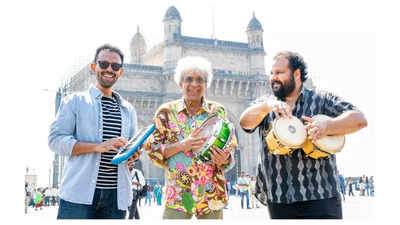
Ahead of the festival, we met the legendary percussionist Trilok Gurtu, drummer Gino Banks, and keyboardist Sangeet Haldipur for an exclusive shoot and chat at the iconic Gateway Of India.
Curated by drummer Gino Banks, MDD was dedicated to celebrating the versatility and dynamism of the drum set. This year’s theme, India Unlimited, showcased an eclectic mix of some of India’s finest drummers and percussionists, including Gino, Joshua Vaz, David Joseph, Suyash Gabriel, Jivraj Singh, and Manjunath Sattyasheel. Adding a melodic dimension to the high-energy performances was keyboardist Sangeet Haldipur. Leading the stage was Trilok Gurtu, a pioneer in percussion who has influenced generations with his fusion of global rhythms.
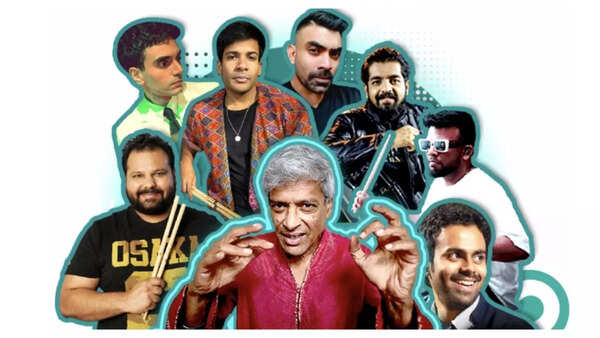
Performing at MDD for the first time, Sangeet said, “It’s great to celebrate drums in a big way like this because it is generally known to be a supporting instrument. I feel drums can be heard on their own for hours.”
For Trilok Gurtu, MDD was about more than just percussion. Speaking passionately about music’s role in India, he shared, “Music is an incredibly powerful medium, a vehicle to reach the divine. You can’t stop music, it is Chaitanya. It’s very hard to explain how it is so powerful.”
Recounting his early struggles, he recalled being dismissed as an outlier when he first experimented with unconventional techniques. “I was a teenager when I used to play here—Slip Disk, a disco in Colaba, in the ’60s. Later, I played tabla when it had little respect. Thanks to Zakir Bhai, tabla eventually zoomed ahead. What he did for tabla was extraordinary. My music was not understood here. People called me ‘ghati’ because I was the only Maharashtrian playing unusual drums. But criticism only cleanses the ego, and now those same critics, praise me!”
He also reflected on his time working with Bollywood legends RD Burman and Asha Bhosle, sharing how a tour to the US and Canada helped him finance his education at Berklee College of Music—an institution that initially rejected him. “They threw me out! I vowed I’d be back. Years later, they invited me for a workshop as they were using my music. I told the audience, ‘Someone like you kicked me out years ago. Thank you for that, otherwise, I would have been like one of you. Tocha borobar!’”

About the Author
Debarati S SenEnd of Article
FOLLOW US ON SOCIAL MEDIA








Photostories
Tired of too many ads?go ad free now
entertainment videos
Featured In Movies
Tired of too many ads?go ad free now
Hot on the Web
Heart Blockage SymptomsChia Seeds BenefitsKrushna AbhishekTaarak Mehta Ka Ooltah ChashmahIbuprofen GuidePeppermint Oil For HairMagnesium Oil BenefitsKomodo Dragon vs King CobraWater Weight Loss TipsTanmay BhatGovindaElon MuskRanveer AllahbadiaOptical IllusionWall Sits BenefitsDoomsday FishRajinikanthMere Husband Ki Biwi CollectionChhaava Box Office CollectionChhaava Movie ReviewSadhguru Diet HabitsAshwagandha for Hair GrowthMorning Brain ExercisesUS National ParksUnique AnimalsBig Cat Safari DestinationFatty Liver Reducing FoodsBig Cats IndiaBaby Girl NamesDates Benefits
Trending Topics
Latest MoviesBollywood MoviesHollywood MoviesTamil Movies 2024Telugu Movies 2024Malayalam Movies 2024Kannada Movies 2024Marathi Movies 2024Bengali Movies 2024Top Rated Movies 2024Best Hindi MoviesBest English MoviesBest Telugu MoviesBest Tamil MoviesBest Malayalam MoviesBest Kannada MoviesBest Bengali MoviesUpcoming Hindi MoviesBest Movies Of All TimeBest Hindi Movies of All Time
Popular Categories
Aquarius Monthly Horoscope March 2025Capricorn Monthly Horoscope March 2025Sagittarius Monthly Horoscope March 2025Scorpio Monthly Horoscope March 2025Libra Monthly Horoscope March 2025Virgo Monthly Horoscope March 2025Leo Monthly Horoscope March 2025Cancer Monthly Horoscope March 2025Gemini Monthly Horoscope March 2025Taurus Monthly Horoscope March 2025Aries Monthly Horoscope March 2025Entertainment NewsBollywood NewsTollywood NewsKollywood NewsMollywood NewsMovie ReviewsLatest Hindi MoviesLatest Tamil MoviesParenting TipsHome RemediesWeight LossBeauty TipsParenting TipsHindi VideosHindi Video SongsBhojpuri Music VideosLatest Telugu MoviesBhojpuri Music VideoHindi TV News
Latest News
Piyush Goyal's US visit for FTA starts today'Don't worry, this may be time to engage in stocks': MD at Morgan Stanley IndiaAdani revives US investment plans: ReportCBI summons 11 cops in RG Kar rape-murder caseHealthcare heroes unpaid, babus rewardedWildfire engulfs Carolinas: Fires double in size overnight, evacuations expandElon Musk’s bold allegation: ‘Billionaire enemies like Gates, Clinton, Hoffman hiding Epstein’s secrets, targeting Trump’State polls set to pit INDIA allies against each other, hit unity2 months, 29 convictions: NCB starts 2025 with blows to cartelsTulsi Gabbard rips Europe’s ‘double standard’ after explosive Trump-Zelenskyy meeting: ‘They don’t stand for freedom’Protest against three-language policy in Tamil Nadu reaches DallasNBA Offseason Rumors: Golden State Warriors might sign Los Angeles Lakers center to bolster front-court with Stephen Curry and Jimmy Butler'People have developed habit of begging from government,' says MP mantri, triggers rowElon Musk’s daughter Vivian Wilson learns about another half-sibling online — AgainPocso case against 7 for stalking Union minister's daughter & friends at Maharashtra fairTaylor Swift to finally address Blake Lively "dragging" her into the Justin Baldoni drama but in her own wayNBA Offseason Rumors: Los Angeles Lakers might sign 8x All-Star and NBA Champion; possible reunion with Luka Doncic?Imran Khan reveals how he met his girlfriend Lekha Washington: 'Her then-partner actually was an old, old school friend of mine'