- News
- entertainment
- hindi
- bollywood
- Why cricket-crazy and movie-crazy India yawns when the two come together
Trending
This story is from April 30, 2016
Why cricket-crazy and movie-crazy India yawns when the two come together
We fill up cricket stadiums to watch matches, but not theatre seats to watch movies on cricket. As cricket still has us glued to the TV, and with multiple cricket-centric movies coming up, Delhi Times explores the contradiction
We fill up cricket stadiums to watch matches, but not theatre seats to watch movies on cricket. As cricket still has us glued to the TV, and with multiple cricket-centric movies coming up, Delhi Times explores the contradiction
If a scriptwriter went to Karan Johar and pitched a scene where an underdog team that landed in a tournament in daily conflict with its Board, without having uniforms stitched, gets to the final of the tournament, a World Cup at that, ends up looking at a massive target in the last over, and then wins the Cup by hitting a six off each of the first four balls of the last over being bowled in that tournament ' well, chances are that the writer would get a raised eyebrow and told to keep things less filmi and more realistic.
That, perhaps, is the underlying factor behind the fact that India, for decades and decades, crowds the stadiums where cricketing stars display their skills but conspicuously avoids an encore when it comes to large screens telling a cricketing story. It is the sports where you find the actual stadiums empty that fill up the theatre seats. More Delhiites have probably seen Dhyan Chand Stadium through 'Chak De! India' than they have by buying a ticket to watch a women's hockey match. We don't really crowd to watch women's boxing but Mary Kom engages us; world class athletes don't really make half the money a rookie IPL cricketer does, but 'Bhaag Milkha Bhaag' does have people sprinting to the halls.
But cricket? Nah.
READ ALSO:
Most eagerly awaiting Tendulkar's biopic: Virat Kohli
When it is a 'smaller' sport, it is the actor's face that becomes what we recall of the actual sportsperson, unless of course it is a face as familiar as a Milkha Singh or a Mary Kom. In reverse, in the movies that have been made, or are being made, on cricket, the actors playing the cricketers are going to have to struggle a bit to match the brand equity of the players themselves ' a Sushant, Emraan or XYZ aren't going to upstage the originals by a wide margin.
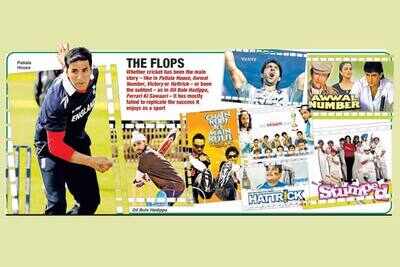
Though three of the five big-budget sports films set to release one after the other this year are on cricket ' 'Azhar', 'MS Dhoni: The Untold Story' and 'Sachin: A Billion Dreams' ' most cricket-based films made post-Lagaan failed miserably at the box office, be it 'Say Salaam India', 'Hattrick', 'Victory', 'Stumped' or 'Chain Kulii Ki Main Kulii'. The scorecard of cricketing movies in India is nothing short of abysmal, if pitched against our obsession with consuming everything about the game.
Dev Anand ventured into a cricket-based movie with his 1993 cricket drama Awwal Number. It had everything going for it on paper ' a successful director, the country's most popular young actor in Aamir Khan, and the theme of cricket rivalry. The film crashed at the box office and the critics' consensus was that it lacked realism. Harry Baweja clearly took the 'lack of realism' possibility seriously when he made Victory, starring his son Harman, in 2009. The film featured over 50 international cricketers in cameos and was filmed at some of the most iconic grounds around the world. According to trade analysts, Victory suffered a massive Defeat, not even recovering its investment. Films like 'Say Salaam India', 'Hattrick', 'Stumped' and 'Chain Kulii Ki Main Kulii' couldn't even manage a decent opening. And for those who say we need a star to make a film run, perhaps the most telling example of cricket films' inability to heat up the box office is the Akshay Kumar-starrer 'Patiala House'. The 2011 release had one of India's most bankable stars in a classic underdog tale of an Indian cricketer in the UK, but the film barely recovered its budget, which was Rs75 crore.
The one exception among realistic cricket movies ' as opposed to the 'Lagaan' format ' has been Nagesh Kukunoor's 'Iqbal'. This small-budget, no-star tale of a deaf-mute cricketer not only earned praise from critics, but earned Rs45 crore at the box office.
Filmmakers haven't also been able to use cricket to their advantage when it is not central to the story, but a subtext. Rani Mukerji's portrayal of a girl who pretends to be a boy to get into a cricket team in 'Dil Bole Hadippa' earned a mere Rs23 crore. The Sharman Joshi-starrer 'Ferrari Ki Sawaari' had cricket and even the country's best-known car ' Sachin's customs-duty-waived Ferrari ' but Sachin fans refused to come along for the ride. The only exception where a cricketing undercurrent managed to bring fans to the theatres has been Aamir Khan's 'Lagaan'. The film was once India's highest-grossing film, and the official entry to the Oscars that year, thanks to the uniqueness of its theme of cricket in 19th century rural India that perfectly pitched the underdog team's improbable victory against odds. Almost as improbable as the West Indies winning the T20 World Cup, come to think of it.
And it's been just, what, some 33 years since we first won the World Cup? Very slow over rate, Bollywood.

Onscreen cricket looks fake
Cricket on the screen looks fake. I don't know how the upcoming biopics will do. Mary Kom had a story of her struggle, and so it did well. 'Chak De! India' had an incredible story. So in cricket films too, you need a story.
- Salman Khan
Cricketers are stars, but the top B-wood stars aren't playing them
Cricketers are some of the biggest stars in the country, but they can't get Bollywood's biggies to play them in films. Sushant Singh Rajput stars as Dhoni in his biopic, and Emraan in and as Azhar. None of the Khans ' or even other A-listers ' have so far starred in contemporary cricketing stories.
The exception
Aamir Khan's Lagaan remains the only cricket film to have scored big at the box office, possibly because it wasn't just about cricket ' at least not in the form we know it now ' but was primarily an anti-colonial period drama. Iqbal (right), which won praise and did decent business, is the one film solely about cricket that did well.
Cricketers have flopped on-screen too
Former pace bowler S Sreesanth is reportedly playing the lead in a big budget trilingual film on his own life. The cricketer, who has recently ventured into politics, is also playing a negative role in Pooja Bhatt's 'Cabaret'. If Cabaret does well or if Sree's acting is any good, it will be one of those rare times when a sportsperson's acting stint is successful.
Many cricketers have tried their luck in Bollywood with little to no success. Ajay Jadeja was a mainstay of Team India's middle order till a match-fixing scandal ended his career. He was banned for five years and by the time ban was revoked, he had set his sights on a different pitch. He debuted in Bollywood with 'Khel' (2003), but proved that he should have stuck to cricket. His next was another forgettable outing, 'Pal Pal Dil Ke Ssaat' (2009). Vinod Kambli too, made his entry in Bollywood with 'Annarth' (2002) and featured in 'Pal Pal...', but neither film did any wonders for him.
Salil Ankola, not as popular as Jadeja or Kambli, bagged more roles than any other cricketer. He debuted with 'Kurukshetra' (2000), and also did 'Pitaah' (2002) and 'Chura Liyaa Hai Tumne' (2003), among others, and also starred in several TV shows.
Salim Durrani was perhaps the first major cricketer to get a Bollywood break. He was signed on for BR Ishara's 'Charitra' (1973) opposite Parveen Babi. Sandeep Patil followed suit with 'Kabhi Ajnabi The' (1985) towards the end of his career. In the same film, wicket-keeper Syed Kirmani played the villain.
-' Inputs from Niharika Lal, Abhimanyu Mathur and Pratyush Patra
If a scriptwriter went to Karan Johar and pitched a scene where an underdog team that landed in a tournament in daily conflict with its Board, without having uniforms stitched, gets to the final of the tournament, a World Cup at that, ends up looking at a massive target in the last over, and then wins the Cup by hitting a six off each of the first four balls of the last over being bowled in that tournament ' well, chances are that the writer would get a raised eyebrow and told to keep things less filmi and more realistic.
That, perhaps, is the underlying factor behind the fact that India, for decades and decades, crowds the stadiums where cricketing stars display their skills but conspicuously avoids an encore when it comes to large screens telling a cricketing story. It is the sports where you find the actual stadiums empty that fill up the theatre seats. More Delhiites have probably seen Dhyan Chand Stadium through 'Chak De! India' than they have by buying a ticket to watch a women's hockey match. We don't really crowd to watch women's boxing but Mary Kom engages us; world class athletes don't really make half the money a rookie IPL cricketer does, but 'Bhaag Milkha Bhaag' does have people sprinting to the halls.
But cricket? Nah.
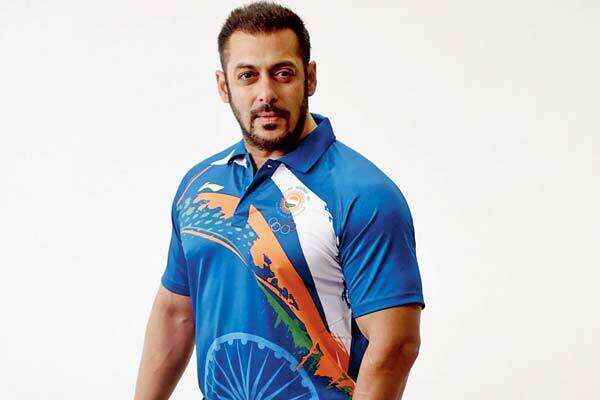
Salman Khan pretty much hit the sweet spot when he said that cricket on the big screen 'looks fake', at least in the movies on it made so far. There is perhaps so much drama that we consume about cricket on live television and through the media that cinema struggles to capture it all in all its intensity. The dramatic matches with last-ball results ' far too frequent now that the T20 format compresses everything into tighter timelines ' the police probes into match-fixing, the actors dating
Bollywood stars, IPL commissioners and team owners staying gleefully out of the reach of Indian law in London, star battles with cancer, a Preity team vs an SRK team, and what not. Most theatres are likely to have a higher seat occupancy by screening live a knockout match of a key tournament than they would by screening a movie on a cricketing story. Perhaps the stories haven't been told well. Perhaps the filmmakers have simply failed to bring the drama onto the screen. But we just don't have a single film that defines cricket and the spirit of winning the way 'Chak De!' defines hockey. Indian cricket fans sing a theme from a movie on the Indian women's hockey team at cricket matches ' a movie which famously had a cricketing prince dumped by the hockey player he expected to return to his embrace after the title victory, a movie which has the classic 'hockey mein chhakke nahi hote' barb at the country's first sporting love.
READ ALSO:
Most eagerly awaiting Tendulkar's biopic: Virat Kohli
When it is a 'smaller' sport, it is the actor's face that becomes what we recall of the actual sportsperson, unless of course it is a face as familiar as a Milkha Singh or a Mary Kom. In reverse, in the movies that have been made, or are being made, on cricket, the actors playing the cricketers are going to have to struggle a bit to match the brand equity of the players themselves ' a Sushant, Emraan or XYZ aren't going to upstage the originals by a wide margin.
Though three of the five big-budget sports films set to release one after the other this year are on cricket ' 'Azhar', 'MS Dhoni: The Untold Story' and 'Sachin: A Billion Dreams' ' most cricket-based films made post-Lagaan failed miserably at the box office, be it 'Say Salaam India', 'Hattrick', 'Victory', 'Stumped' or 'Chain Kulii Ki Main Kulii'. The scorecard of cricketing movies in India is nothing short of abysmal, if pitched against our obsession with consuming everything about the game.
Dev Anand ventured into a cricket-based movie with his 1993 cricket drama Awwal Number. It had everything going for it on paper ' a successful director, the country's most popular young actor in Aamir Khan, and the theme of cricket rivalry. The film crashed at the box office and the critics' consensus was that it lacked realism. Harry Baweja clearly took the 'lack of realism' possibility seriously when he made Victory, starring his son Harman, in 2009. The film featured over 50 international cricketers in cameos and was filmed at some of the most iconic grounds around the world. According to trade analysts, Victory suffered a massive Defeat, not even recovering its investment. Films like 'Say Salaam India', 'Hattrick', 'Stumped' and 'Chain Kulii Ki Main Kulii' couldn't even manage a decent opening. And for those who say we need a star to make a film run, perhaps the most telling example of cricket films' inability to heat up the box office is the Akshay Kumar-starrer 'Patiala House'. The 2011 release had one of India's most bankable stars in a classic underdog tale of an Indian cricketer in the UK, but the film barely recovered its budget, which was Rs75 crore.
The one exception among realistic cricket movies ' as opposed to the 'Lagaan' format ' has been Nagesh Kukunoor's 'Iqbal'. This small-budget, no-star tale of a deaf-mute cricketer not only earned praise from critics, but earned Rs45 crore at the box office.
Filmmakers haven't also been able to use cricket to their advantage when it is not central to the story, but a subtext. Rani Mukerji's portrayal of a girl who pretends to be a boy to get into a cricket team in 'Dil Bole Hadippa' earned a mere Rs23 crore. The Sharman Joshi-starrer 'Ferrari Ki Sawaari' had cricket and even the country's best-known car ' Sachin's customs-duty-waived Ferrari ' but Sachin fans refused to come along for the ride. The only exception where a cricketing undercurrent managed to bring fans to the theatres has been Aamir Khan's 'Lagaan'. The film was once India's highest-grossing film, and the official entry to the Oscars that year, thanks to the uniqueness of its theme of cricket in 19th century rural India that perfectly pitched the underdog team's improbable victory against odds. Almost as improbable as the West Indies winning the T20 World Cup, come to think of it.
And it's been just, what, some 33 years since we first won the World Cup? Very slow over rate, Bollywood.
Onscreen cricket looks fake
Cricket on the screen looks fake. I don't know how the upcoming biopics will do. Mary Kom had a story of her struggle, and so it did well. 'Chak De! India' had an incredible story. So in cricket films too, you need a story.
- Salman Khan
Cricketers are stars, but the top B-wood stars aren't playing them
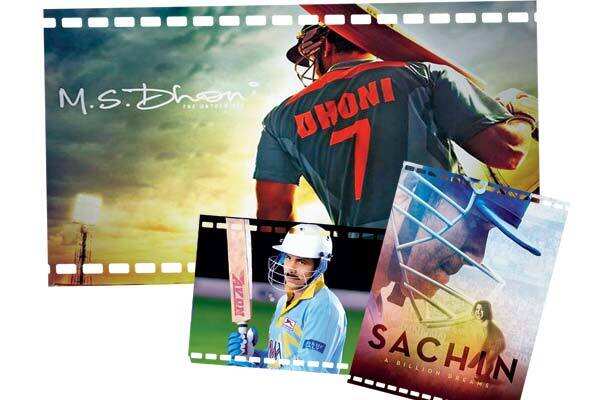
Cricketers are some of the biggest stars in the country, but they can't get Bollywood's biggies to play them in films. Sushant Singh Rajput stars as Dhoni in his biopic, and Emraan in and as Azhar. None of the Khans ' or even other A-listers ' have so far starred in contemporary cricketing stories.

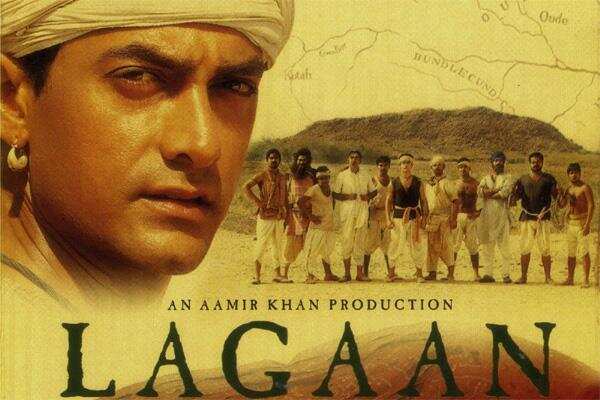
Written and directed by Ashutosh Gowariker, Once Upon A Time In India, was the most volatile combo of the two things that make Indians tick - cricket and Bollywood! The result, no doubt, was exhilarating. The film had a running time of three hours, but it passed in a jiffy, each ball being cheered, each shot being egged on. It's a complete entertainer with songs that became instant hits. A period drama set in the 19th century British-ruled India, the film featured a small village called Champaner. It narrated the story of the simple village-folk struggling to pay off the annual debts (Lagaan) to the British. The film went on to be nominated as one of the five entries at the Oscars, the only film after Mother India and Salaam Bombay. It won eight Filmfare awards in all the major categories.
The exception
Aamir Khan's Lagaan remains the only cricket film to have scored big at the box office, possibly because it wasn't just about cricket ' at least not in the form we know it now ' but was primarily an anti-colonial period drama. Iqbal (right), which won praise and did decent business, is the one film solely about cricket that did well.

Cricketers have flopped on-screen too
Former pace bowler S Sreesanth is reportedly playing the lead in a big budget trilingual film on his own life. The cricketer, who has recently ventured into politics, is also playing a negative role in Pooja Bhatt's 'Cabaret'. If Cabaret does well or if Sree's acting is any good, it will be one of those rare times when a sportsperson's acting stint is successful.
Many cricketers have tried their luck in Bollywood with little to no success. Ajay Jadeja was a mainstay of Team India's middle order till a match-fixing scandal ended his career. He was banned for five years and by the time ban was revoked, he had set his sights on a different pitch. He debuted in Bollywood with 'Khel' (2003), but proved that he should have stuck to cricket. His next was another forgettable outing, 'Pal Pal Dil Ke Ssaat' (2009). Vinod Kambli too, made his entry in Bollywood with 'Annarth' (2002) and featured in 'Pal Pal...', but neither film did any wonders for him.
Salil Ankola, not as popular as Jadeja or Kambli, bagged more roles than any other cricketer. He debuted with 'Kurukshetra' (2000), and also did 'Pitaah' (2002) and 'Chura Liyaa Hai Tumne' (2003), among others, and also starred in several TV shows.
Salim Durrani was perhaps the first major cricketer to get a Bollywood break. He was signed on for BR Ishara's 'Charitra' (1973) opposite Parveen Babi. Sandeep Patil followed suit with 'Kabhi Ajnabi The' (1985) towards the end of his career. In the same film, wicket-keeper Syed Kirmani played the villain.
-' Inputs from Niharika Lal, Abhimanyu Mathur and Pratyush Patra
End of Article
FOLLOW US ON SOCIAL MEDIA







Photostories
entertainment videos
Featured In Movies
Popular Categories
Entertainment NewsBollywood NewsTollywood NewsKollywood NewsMollywood NewsMovie ReviewsLatest Hindi MoviesLatest Tamil MoviesMX PlayerParenting TipsHome RemediesWeight LossBeauty TipsParenting TipsHindi VideosHindi Video SongsBhojpuri Music VideosLatest Telugu MoviesBhojpuri Music VideoHindi TV News
Trending in Entertainment
Latest MoviesBollywood MoviesHollywood MoviesTamil Movies 2024Telugu Movies 2024Malayalam Movies 2024Kannada Movies 2024Marathi Movies 2024Bengali Movies 2024Top Rated Movies 2024Best Hindi MoviesBest English MoviesBest Telugu MoviesBest Tamil MoviesBest Malayalam MoviesBest Kannada MoviesBest Bengali MoviesUpcoming Hindi MoviesBest Movies Of All TimeBest Hindi Movies of All Time
Trending in Etimes
PM Modi’s birthday through the years: From slicing 73-kg laddoo cake to Cheetah Project and Vishwakarma YojanaHoroscope TodayNumerology Predictions TodayElla EmhoffDonald Trump AssassinationKaren DunnJose LopezKristina JoksimovicJoe WilsonTrump Eating The Dogs SongGermany NewsKamala HarrisPrince HarryBelly Fat LossDiabetes RiskFull Moon in September 2024Relationship TipsSean DiddyMiley CyrusDave Bautista
Trending in TV
Trending in Lifestyle
Trending in Regional
Movie Reviews
Berlin ReviewThe Buckingham Murders ReviewSpeak No Evil ReviewVisfot ReviewThalapathy Is The G.O.A.T ReviewRebel Ridge ReviewDetective Conan vs. Kid the Phantom Thief ReviewBeetlejuice Beetlejuice ReviewPad Gaye Pange ReviewA Wedding Story ReviewThe Diary Of West Bengal ReviewTikdam ReviewKinds Of Kindness ReviewAfraid Review
Upcoming Hindi Movies
Upcoming Regional Movies
Latest News
Pankaj Kapur is proud of son Shahid Kapoor’s film choices, calls him ‘the finest actor in the country’Mukhtar Ansari died of heart attack, not poisoning: UP's Banda district magistrate's report4 types of tea to improve gut health and ease digestive issuesMemeFi daily codes for 17 September 2024: Boost your earnings with daily codes and know how to maximizeKhatron Ke Khiladi 14: Shalin Bhanot hosts a fun party for his co-contestants Krishna Shroff, Abhishek Kumar, KaranVeer Mehra and othersDecoding how log analytics systems are enabling brands to derive maximum value from dataAnother Mpox suspected case in India: Man showing symptoms admitted to hospitalTaurus, Daily Horoscope Today, September 17, 2024: Anxiety and stress diminishLiza Colon becomes 1st Latina to win Best Supporting Emmy AwardSelena Gomez recreates practiced applause she learnt from TV show Friends after losing at Emmys 2024Former WWE superstar is no longer listed on their internal rostersBeyond Paychecks: Job satisfaction, work-life balance more important than salary for Gen Z workforce‘You is sleep or you can sleep’: Students prank Benglauru’s ‘pookie professor’ in viral videoHow ‘Oxford returnee’ Atishi became chief minister of DelhiWhy more couples aged 50 or older are getting divorcedThese are the most toxic fresh produce of 2024Congress condemns Shiv Sena MLA's 'Rs 11 lakh reward to cut Rahul Gandhi's tongue' remarkThe 3 Strongest Zodiac Signs: Powerhouses of the Zodiac Wheel
Other Group Sites -
ETimes is an Entertainment, TV & Lifestyle industrys promotional website and carries advertorials and native advertising.