- News
- entertainment
- hindi
- bollywood
- We have to be free of biases: Javed Akhtar
Trending
This story is from August 14, 2011
We have to be free of biases: Javed Akhtar
On the eve of sixty-fifth year of India’s Independence, eminent scriptwriters Salim Khan and Javed Akhtar voice their thoughts on freedom, how much of that has been achieved and how far we still have to go…
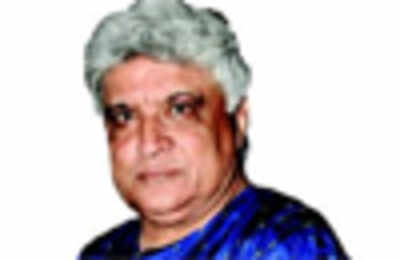
On the eve of sixty-fifth year of India’s Independence, eminent scriptwriters Salim Khan and Javed Akhtar voice their thoughts on freedom, how much of that has been achieved and how far we still have to go...
‘Honesty starts from our conscience’ - Salim Khan
We have only got the freedom to breathe. We can’t talk, we can’t demand. It is a very selective democracy.
It was after so many sacrifices, so many lives laid down and so many tragedies that India got its freedom. The individuals who sacrificed selflessly for India had a vision for post-independence India. But what happened? Did we get freedom from poverty? Did we get freedom from hatred? Can all the people of India manage to get at least two square meals a day?
Honesty starts from our conscience. It is our mother who tells us ‘don’t pick it up, give it back’. But mothers these days are seen only on the silver-screen not at home. Mothers are busy at work or found in clubs. The family is the first school and a mother is the first teacher. But that doesn’t happen today. Freedom doesn’t merely mean driving the British out and hoisting our flag. Law and order, governance, administration was much better in the British period. I was 12-years - old when we got our freedom and I have exper i e n c e d those days. Today, people have the freedom to announce Bharat bandh, they have the freedom to burn buses, freedom to block roads.
‘We have to be free of biases’ - Javed Akhtar
Are we really free? I am afraid it can’t be answered in a yes or a no, because we as a society, as a nation, are rather paradoxical.
There are countries where there is no freedom, you cannot write anything, you cannot say anything, you cannot protest against the establishment. We are somewhere in between. I can write articles against the establishment, I can write about various cultures, sub-cultures, communities. I can dissent on the most sensitive topic, but I can’t do the same in a movie. That will be banned. That will be censored. The people who matter are willing to give the common man freedom up to a point where it does not challenge the status quo. And when it comes to that, there is no freedom.
But we should not be pessimistic. Since we have accepted the basic norm of freedom, we have got our basic morality right. In practice, we have to struggle and get complete and real freedom. However, this ideal form of freedom is not possible without some kind of economic justice in the society.
What is freedom to me? That I be allowed to live with all my identities. I don’t believe in a singular identity as it can be dangerous.
Everybody should be free to protect his or her dignity. I should be free to make choices — the kind of job I want, where I live, who I marry...Our law allows us but society is not very liberal, to put it mildly.
A lot of freedom is taken away from an individual not from law enforcement agencies but from the civil society, which itself cries for freedom. It’s a contradiction.
We as individuals have to be free of biases, prejudices, opportunism, corruption and only then we can have a completely free society. ‘You cannot change the way people think’ - Pritish Nandy, filmmaker & columnist I was born into freedom and grew up with it. For me, and for millions of Indians, freedom means everything. It is only recently that I find it under assault. No, not only from the State, which has chosen to believe that the only way to ensure greater security for the nation is by trampling on the freedom of its individual citizens.
So you have indiscriminate phone taps, unexplained encounters, custodial deaths, banned Internet sites and attempts to tap into private chats and emails. These would have been unthinkable some years ago. But far worse than that it are the new incursions into personal freedom by radical fringe groups who want to tell us how to dress, what to eat and drink, how to pray to our different Gods, w h a t books to read, what movies to watch, who to marry. This is what worries me most. You can change governments that intrude upon your personal freedoms. But you cannot change the way some people think.
The burning of books, the vandalising of libraries and art galleries, the outlawing of beer bars, beating up college girls who dress in jeans, prohibiting people below 25 from drinking, honour killings, and of course these stupid, meaningless bomb blasts meant to hurt and intimidate the common citizen are all signs of intolerance and erosion of our personal freedoms. The magic of India has always been its celebration of freedom. If we allow that to be eroded, we will erode the greatness of this nation. India is its many cultural and religious narratives that run concurrently. That is what makes us, us.
‘How free are our tribals?’ - Rahul Bose, actor & social activist
While India can certainly boast of a democracy that holds, largely, free and fair elections, a judicial system that, in fits and starts, upholds constitutional liberties and a s e em - inglylive ly and vocal press, it would be worth examining what democracy has translated into in our everyday lives. How free are our women? Like the men, can they walk out at night without fear in our cities and villages?
How free are India’s Muslims? Can they step forward and name and shame Hindu-born terrorists like Hindus do in the reverse? Can young Muslims go to the press and speak out when they are rounded up after a terror attack as a matter of routine? How free are our Dalits? Can they say they are not discriminated against in private sector jobs in the country? How free are our tribals? Can they contentedly claim they have the same rights as our farmers? How free are our urban poor? Can they lay equal claim to the government services that their middleclass counterparts enjoy? How free are our linguistic minorities? Can Biharis claim they enjoy Mumbai’s comforts with the same fearlessness as their Maharashtrian counterparts?
How free are our politicians? Can they effect systemic change without a nod from the mining lobby/the real estate lobby/the industrial family house lobby/the ‘trade interests’ lobby? How free is the press? Which articles do they carry that are bought by people with the reader having no clue? Finally, how free are you? Free to, within the bounds of the Constitution, wear jeans to college, celebrate Valentine’s Day, whistleblow on a powerful lobby, have a drink in a pub, choose a person of your choice to marry, speak out against the uncle who raped you. You tell me.
‘Freedom is being free of fear’ - Rina Dhaka, designer
Sixty-five years of Independence, but are we really free? Am I free to do a Hare Rama, Hare Krishna T-shirt with a logo of Lord Ram or Krishna to express my creativity? To be honest, I’d be scared. I’m not free, even after years of Indian Independence.
When we’re not free, we live in fear that doesn’t allow us to grow. As a nation, we doubt everyone; we have no faith or trust in the goodness of the other. Truth is, we’re paranoid of the powerful in this country, and they disempower us. When we are living in fear, can we ever be free? Can I safely walk on the road without the fear of being killed by a terrorist? This is a new fear. People want to be free, people want liberty and people love democracy, yet do they really realise what freedom actually is? Is there space in our country to live freely, to do what our heart desires?
I define freedom by being free of fear, being liberated. It’s freedom from anger. In our country, we’re not even free to protest; look at Anna Hazare. Is he free to demonstrate for his people? True freedom comes from inner freedom; we need to move ahead with a new confidence. Personally, we all need to free our minds from stereotypes and fear. A celebration of freedom is incomplete if we live in fear and are not allowed to fulfil our creative pursuits. Being free in these times is also about being tough, e n t e r - prising, and genuine. This free spirit will take our nation ahead. Express your freedom for only then can you enjoy and live life to its best. Simply put, be free to think simply, naturally and spontaneously. ‘Soon, we’ll be a truly free country!’ - Mary Kom, five-time world boxing champion
This question is actually as complicated to answer as it sounds simple! I do believe that India has taken very large strides in becoming a truly free country, though there is still some way to go before we can be completely ‘free’.
The increasing freedom in India is manifest in so many ways — options on occupations, including in sports being a viable career (thank God!); options on goods, technologies, entertainment options, travel, etc; options and increasing access to education; access to the best Indian and International cinema, which while still censored, is obviously being censored less and less and is reflecting the maturity and freedom of choice of the Indian audience — even the option to select one’s own life partner, which would have been well near impossible only a few years ago!
My personal experience in becoming a boxer does perhaps tell the story of the increasing freedom in India. From the time I was laughed at when I made the decision to become a boxer to now, when I am respected for what I am and what I have achieved — everything suggests a transition in attitudes.
That said, there are a lot of ways in which we still aren’t free. We still struggle to control our population, to ensure the safety of women, to fight violence on various fronts, to control corruption, to increase education and literacy and to improve health. Yet, positive steps have been taken and I have no doubt that in the coming years, we will be a truly free country! It is important to remember that almost all countries, including free societies such as America or Europe, have in their past or are now undergoing a phase of transformation, where they have fought or are fighting against restrictions on their freedom and have moved or are moving towards a free society.
‘Honesty starts from our conscience’ - Salim Khan
We have only got the freedom to breathe. We can’t talk, we can’t demand. It is a very selective democracy.
It was after so many sacrifices, so many lives laid down and so many tragedies that India got its freedom.
Forget communal harmony between two religions, today there are caste wars and daughters are killed by their parents. No political party says what they will do for the country, instead they expose scams of the other party during elections for their own gain. Will corruption stop when the Lokpal bill comes into existence? Will that police c o n s t ab l e, who stands at the other end of the ‘No Entry’ sign give up his chance of taking home 2,500 to 3,000 in bribes every day? We give bribes even to get our legal and legitimate work done. Even I have succumbed to that.
Honesty starts from our conscience. It is our mother who tells us ‘don’t pick it up, give it back’. But mothers these days are seen only on the silver-screen not at home. Mothers are busy at work or found in clubs. The family is the first school and a mother is the first teacher. But that doesn’t happen today. Freedom doesn’t merely mean driving the British out and hoisting our flag. Law and order, governance, administration was much better in the British period. I was 12-years - old when we got our freedom and I have exper i e n c e d those days. Today, people have the freedom to announce Bharat bandh, they have the freedom to burn buses, freedom to block roads.
‘We have to be free of biases’ - Javed Akhtar
Are we really free? I am afraid it can’t be answered in a yes or a no, because we as a society, as a nation, are rather paradoxical.
There are countries where there is no freedom, you cannot write anything, you cannot say anything, you cannot protest against the establishment. We are somewhere in between. I can write articles against the establishment, I can write about various cultures, sub-cultures, communities. I can dissent on the most sensitive topic, but I can’t do the same in a movie. That will be banned. That will be censored. The people who matter are willing to give the common man freedom up to a point where it does not challenge the status quo. And when it comes to that, there is no freedom.
But we should not be pessimistic. Since we have accepted the basic norm of freedom, we have got our basic morality right. In practice, we have to struggle and get complete and real freedom. However, this ideal form of freedom is not possible without some kind of economic justice in the society.
What is freedom to me? That I be allowed to live with all my identities. I don’t believe in a singular identity as it can be dangerous.
Everybody should be free to protect his or her dignity. I should be free to make choices — the kind of job I want, where I live, who I marry...Our law allows us but society is not very liberal, to put it mildly.
A lot of freedom is taken away from an individual not from law enforcement agencies but from the civil society, which itself cries for freedom. It’s a contradiction.
We as individuals have to be free of biases, prejudices, opportunism, corruption and only then we can have a completely free society. ‘You cannot change the way people think’ - Pritish Nandy, filmmaker & columnist I was born into freedom and grew up with it. For me, and for millions of Indians, freedom means everything. It is only recently that I find it under assault. No, not only from the State, which has chosen to believe that the only way to ensure greater security for the nation is by trampling on the freedom of its individual citizens.
So you have indiscriminate phone taps, unexplained encounters, custodial deaths, banned Internet sites and attempts to tap into private chats and emails. These would have been unthinkable some years ago. But far worse than that it are the new incursions into personal freedom by radical fringe groups who want to tell us how to dress, what to eat and drink, how to pray to our different Gods, w h a t books to read, what movies to watch, who to marry. This is what worries me most. You can change governments that intrude upon your personal freedoms. But you cannot change the way some people think.
The burning of books, the vandalising of libraries and art galleries, the outlawing of beer bars, beating up college girls who dress in jeans, prohibiting people below 25 from drinking, honour killings, and of course these stupid, meaningless bomb blasts meant to hurt and intimidate the common citizen are all signs of intolerance and erosion of our personal freedoms. The magic of India has always been its celebration of freedom. If we allow that to be eroded, we will erode the greatness of this nation. India is its many cultural and religious narratives that run concurrently. That is what makes us, us.
‘How free are our tribals?’ - Rahul Bose, actor & social activist
While India can certainly boast of a democracy that holds, largely, free and fair elections, a judicial system that, in fits and starts, upholds constitutional liberties and a s e em - inglylive ly and vocal press, it would be worth examining what democracy has translated into in our everyday lives. How free are our women? Like the men, can they walk out at night without fear in our cities and villages?
How free are India’s Muslims? Can they step forward and name and shame Hindu-born terrorists like Hindus do in the reverse? Can young Muslims go to the press and speak out when they are rounded up after a terror attack as a matter of routine? How free are our Dalits? Can they say they are not discriminated against in private sector jobs in the country? How free are our tribals? Can they contentedly claim they have the same rights as our farmers? How free are our urban poor? Can they lay equal claim to the government services that their middleclass counterparts enjoy? How free are our linguistic minorities? Can Biharis claim they enjoy Mumbai’s comforts with the same fearlessness as their Maharashtrian counterparts?
How free are our politicians? Can they effect systemic change without a nod from the mining lobby/the real estate lobby/the industrial family house lobby/the ‘trade interests’ lobby? How free is the press? Which articles do they carry that are bought by people with the reader having no clue? Finally, how free are you? Free to, within the bounds of the Constitution, wear jeans to college, celebrate Valentine’s Day, whistleblow on a powerful lobby, have a drink in a pub, choose a person of your choice to marry, speak out against the uncle who raped you. You tell me.
‘Freedom is being free of fear’ - Rina Dhaka, designer
Sixty-five years of Independence, but are we really free? Am I free to do a Hare Rama, Hare Krishna T-shirt with a logo of Lord Ram or Krishna to express my creativity? To be honest, I’d be scared. I’m not free, even after years of Indian Independence.
When we’re not free, we live in fear that doesn’t allow us to grow. As a nation, we doubt everyone; we have no faith or trust in the goodness of the other. Truth is, we’re paranoid of the powerful in this country, and they disempower us. When we are living in fear, can we ever be free? Can I safely walk on the road without the fear of being killed by a terrorist? This is a new fear. People want to be free, people want liberty and people love democracy, yet do they really realise what freedom actually is? Is there space in our country to live freely, to do what our heart desires?
I define freedom by being free of fear, being liberated. It’s freedom from anger. In our country, we’re not even free to protest; look at Anna Hazare. Is he free to demonstrate for his people? True freedom comes from inner freedom; we need to move ahead with a new confidence. Personally, we all need to free our minds from stereotypes and fear. A celebration of freedom is incomplete if we live in fear and are not allowed to fulfil our creative pursuits. Being free in these times is also about being tough, e n t e r - prising, and genuine. This free spirit will take our nation ahead. Express your freedom for only then can you enjoy and live life to its best. Simply put, be free to think simply, naturally and spontaneously. ‘Soon, we’ll be a truly free country!’ - Mary Kom, five-time world boxing champion
This question is actually as complicated to answer as it sounds simple! I do believe that India has taken very large strides in becoming a truly free country, though there is still some way to go before we can be completely ‘free’.
The increasing freedom in India is manifest in so many ways — options on occupations, including in sports being a viable career (thank God!); options on goods, technologies, entertainment options, travel, etc; options and increasing access to education; access to the best Indian and International cinema, which while still censored, is obviously being censored less and less and is reflecting the maturity and freedom of choice of the Indian audience — even the option to select one’s own life partner, which would have been well near impossible only a few years ago!
My personal experience in becoming a boxer does perhaps tell the story of the increasing freedom in India. From the time I was laughed at when I made the decision to become a boxer to now, when I am respected for what I am and what I have achieved — everything suggests a transition in attitudes.
That said, there are a lot of ways in which we still aren’t free. We still struggle to control our population, to ensure the safety of women, to fight violence on various fronts, to control corruption, to increase education and literacy and to improve health. Yet, positive steps have been taken and I have no doubt that in the coming years, we will be a truly free country! It is important to remember that almost all countries, including free societies such as America or Europe, have in their past or are now undergoing a phase of transformation, where they have fought or are fighting against restrictions on their freedom and have moved or are moving towards a free society.
End of Article
FOLLOW US ON SOCIAL MEDIA


Photostories
entertainment videos
Featured In Movies

Popular Categories
Entertainment NewsBollywood NewsTollywood NewsKollywood NewsMollywood NewsMovie ReviewsLatest Hindi MoviesLatest Tamil MoviesMX PlayerParenting TipsHome RemediesWeight LossBeauty TipsParenting TipsHindi VideosHindi Video SongsBhojpuri Music VideosLatest Telugu MoviesBhojpuri Music VideoHindi TV News
Trending in Entertainment
Latest MoviesBollywood MoviesHollywood MoviesTamil Movies 2024Telugu Movies 2024Malayalam Movies 2024Kannada Movies 2024Marathi Movies 2024Bengali Movies 2024Top Rated Movies 2024Best Hindi MoviesBest English MoviesBest Telugu MoviesBest Tamil MoviesBest Malayalam MoviesBest Kannada MoviesBest Bengali MoviesUpcoming Hindi MoviesBest Movies Of All TimeBest Hindi Movies of All Time
Trending in Etimes
PM Modi’s birthday through the years: From slicing 73-kg laddoo cake to Cheetah Project and Vishwakarma YojanaHoroscope TodayNumerology Predictions TodayElla EmhoffDonald Trump AssassinationIvanka TrumpJose LopezKristina JoksimovicJoe WilsonTrump Eating The Dogs SongGermany NewsKamala HarrisPrince HarryBelly Fat LossDiabetes RiskFull Moon in September 2024Relationship TipsJoe JonasTito Jackson DeathDave Bautista
Trending in TV
Trending in Lifestyle
Trending in Regional
Movie Reviews
Berlin ReviewThe Buckingham Murders ReviewSpeak No Evil ReviewVisfot ReviewThalapathy Is The G.O.A.T ReviewRebel Ridge ReviewDetective Conan vs. Kid the Phantom Thief ReviewBeetlejuice Beetlejuice ReviewPad Gaye Pange ReviewA Wedding Story ReviewThe Diary Of West Bengal ReviewTikdam ReviewKinds Of Kindness ReviewAfraid Review
Upcoming Hindi Movies
Upcoming Regional Movies
Latest News
Pankaj Kapur is proud of son Shahid Kapoor’s film choices, calls him ‘the finest actor in the country’Mukhtar Ansari died of heart attack, not poisoning: UP's Banda district magistrate's report4 types of tea to improve gut health and ease digestive issuesMemeFi daily codes for 17 September 2024: Boost your earnings with daily codes and know how to maximizeKhatron Ke Khiladi 14: Shalin Bhanot hosts a fun party for his co-contestants Krishna Shroff, Abhishek Kumar, KaranVeer Mehra and othersDecoding how log analytics systems are enabling brands to derive maximum value from dataSebi U-turn: Pulls note blaming 'external elements' for staff stirTaurus, Daily Horoscope Today, September 17, 2024: Anxiety and stress diminishLiza Colon becomes 1st Latina to win Best Supporting Emmy AwardFormer WWE superstar is no longer listed on their internal rostersBeyond Paychecks: Job satisfaction, work-life balance more important than salary for Gen Z workforceThrowback: When Sunita Ahuja showered love on husband Govinda, 'A superb son, brother, and a very good father...'Why more couples aged 50 or older are getting divorcedThese are the most toxic fresh produce of 2024Things to do before, during and after Lunar EclipseCongress condemns Shiv Sena MLA's 'Rs 11 lakh reward to cut Rahul Gandhi's tongue' remarkThe 3 Strongest Zodiac Signs: Powerhouses of the Zodiac WheelPics; Monalisa visits Lalbaugcha Raja with husband Vikrant Singh
Other Group Sites -
ETimes is an Entertainment, TV & Lifestyle industrys promotional website and carries advertorials and native advertising.