- News
- entertainment
- hindi
- bollywood
- Tom Alter: ‘Gora’ who played desi roles
Trending
This story is from October 1, 2017
Tom Alter: ‘Gora’ who played desi roles
Tom Alter, who became a familiar face among film-lovers doing bit parts in 1970s and 1980s Bollywood movies but found meatier roles and greater acclaim in theatre, succumbed to skin cancer at his Mumbai residence on Friday night.
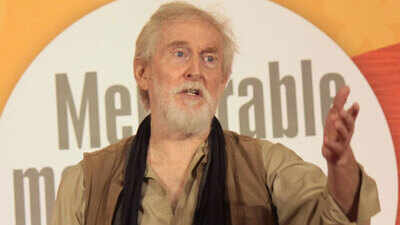
The actor, who was also a passionate lover of Urdu poetry and cricket, was 67.
Satyajit Ray gave him one of his more memorable roles in the period classic, Shatranj Ke Khiladi (1977).

On stage, Alter also became Sahir Ludhianvi, Mahatma Gandhi, Bahadur Shah Zafar, Mirza Ghalib and Rabindranath Tagore. Perhaps his biggest achievement was banishing the idea that a ‘gora’ cannot play serious and well-known Indian characters. No surprise, Raj Kapoor even trusted him with the part of a pahadi (hill-folk) named Karam Singh in Ram Teri Ganga Maili (1985).
Born in Mussoorie to a family of American missionaries, Alter went to the pedigreed Woodstock school, dropped out of Yale and worked briefly as a sports teacher in Jagadhri, a smalltown in Haryana. Sometime in 1970, Alter recounted in a Rajya Sabha TV interview, he was consumed by the idea of becoming an actor after watching Rajesh Khanna in Aradhana (1969). He joined FTII, Pune, in 1972.
The actor made his debut playing a Malta-based customs officer in Ramanand Sagar’s
Charas (1976). Over the next four decades, by his own account, he worked in at least 300 films. In the 1970s and 1980s, when smugglers, Vat 69 and guns were staple in mainstream action-yarns, Alter frequently reprised the role of the token white cop (Des Pardes) or bad guy (Kranti). Musa, the crafty hoodlum in all-black kurta pyjamas in Parinda, was a relatively better-etched part.
He remained devoted to cricket and Urdu poetry till the very end. Alter even cowrote a book (with Ayaz Memon) on India’s World Cup triumphs. And he was among the first to interview Sachin Tendulkar on film. In 2008, he received the Padma Shri.
In recent years, the actor could be heard reciting couplets of Mir Taqi Mir, Nida Fazli and others in Capital soirees. During the memorable exchange in Shatranj ke Khiladi, Alter recites a poem: “Sadma na pahunche koi mere jism-e-zaar par / Aahista phool dalna mere mazaar par. (Wound not my bleeding body / Throw flowers gently on my grave”.
One doesn’t know if the actor shared the sentiment of the 19th century Lucknow Nawab. What must be said is that Alter lived life to the brim, the way he wanted it to be.
End of Article
FOLLOW US ON SOCIAL MEDIA









entertainment videos
Featured In Movies

Popular Categories
Entertainment NewsBollywood NewsTollywood NewsKollywood NewsMollywood NewsMovie ReviewsLatest Hindi MoviesLatest Tamil MoviesMX PlayerParenting TipsHome RemediesWeight LossBeauty TipsParenting TipsHindi VideosHindi Video SongsBhojpuri Music VideosLatest Telugu MoviesBhojpuri Music VideoHindi TV News
Trending in Entertainment
Latest MoviesBollywood MoviesHollywood MoviesTamil Movies 2024Telugu Movies 2024Malayalam Movies 2024Kannada Movies 2024Marathi Movies 2024Bengali Movies 2024Top Rated Movies 2024Best Hindi MoviesBest English MoviesBest Telugu MoviesBest Tamil MoviesBest Malayalam MoviesBest Kannada MoviesBest Bengali MoviesUpcoming Hindi MoviesBest Movies Of All TimeBest Hindi Movies of All Time
Trending in Etimes
Horoscope TodayNumerology Predictions TodayAustria ElectionJoe BidenKamala HarrisPopulated Indian CitiesAlcohol Cancer RiskIsrael Beirut WarSunita WilliamsIsrael Hezbollah WarNepal FloodBarbra StreisandLarry HoganPeanut Butter Vs Almond ButterMagnesium DeficiencyRelationship TipsSean Diddy CombsAlzheimers DiseaseFunniest Wildlife Photos 2024
Trending in TV
Trending in Lifestyle
Trending in Regional
Movie Reviews
Binny And Family ReviewLove, Sitara ReviewWill & Harper ReviewWolfs ReviewYudhra ReviewJo Tera Hai Woh Mera Hai ReviewKahan Shuru Kahan Khatam ReviewHis Three Daughters ReviewNever Let Go ReviewDancing Village: The Curse Begins ReviewTransformers One ReviewFirst Love ReviewBerlin ReviewThe Buckingham Murders Review
Upcoming Hindi Movies
Upcoming Regional Movies
Latest News
The Power of Color: Zodiac Signs and Their Energetic Hues'For the next 10 years, we've got players who will make our country proud' says VVS Laxman on bench strengthBarbra Streisand pays tribute to late 'A Star Is Born' co-star Kris Kristofferson: 'He was something special'Sasikumar and Simran join hands for a feel-good, city-based entertainerCovid lockdown on earth led to dip in Moon's temperature: StudyQueen Camilla does not want King Charles to meet Prince Harry because...From A.R. Rahman to Satyajit Ray: Indian Oscar winners who made historyWatch: Jasprit Bumrah’s lethal inswinger shatters Mushfiqur Rahim’s off stumpManipur CM Biren accuses Kuki militants of abducting 2 Manipuri youthsPaul Heyman opens up on declining TNA offer after leaving WWEColleagues remember braveheart Delhi Police constable Sandeep: 'Would rush to crime scene alone'Header: Kolkata metro conducts public awareness campaign at Dum Dum metro stationBCCI's Centre of Excellence opens up new possibilitiesBigg Boss 18 Promo: Salman Khan reveals the theme of the season by predicting the contestants' future in the houseBTS star V crowned 'Most Handsome Man in the World 2024'Decoding a bowl of Idli Sambhar: From calories to nutrients4 members of notorious robbery gang held in crackdown by Ghaziabad policeIndia’s choking beyond Delhi: Byrnihat shows we have a big unnoticed pollution problem
Other Group Sites -
ETimes is an Entertainment, TV & Lifestyle industrys promotional website and carries advertorials and native advertising.