- News
- entertainment
- hindi
- bollywood
- Theatre Review: Khamosh, Adalat Jari Hai
Trending
This story is from May 11, 2012
Theatre Review: Khamosh, Adalat Jari Hai
If you’re to watch a powerful story about a woman, who’s at the mercy of ‘social forces that threaten to engulf her’ for more than two hours on stage, the least you’ll expect is a gripping scene-to-scene enactment, that doesn’t drag endlessly.
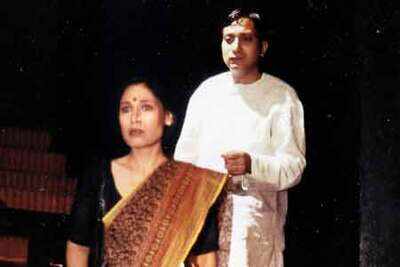
Directed by : Dinesh Thakur
Duration : 125 minutes
Cast : Preeta Mathur, Shanker Iyer, Akshay Sharma, Aman Gupta & others
Rating : 1.5
If you’re to watch a powerful story about a woman, who’s at the mercy of ‘social forces that threaten to engulf her’ for more than two hours on stage, the least you’ll expect is a gripping scene-to-scene enactment, that doesn’t drag endlessly.

This drama is the Hindi translation of Vijay Tendulkar’s best known Marathi play Shantata! Court Chalu Aahe (1967), a tale which is a metaphorical trial between the humanists and the anti-humanists. The story begins with a group of people, who are planning to stage a play in a village. Since one of the cast members doesn’t show up, a local is asked to replace him. To make him understand the courtroom procedures, a rehearsal is arranged with a mock trial. But the story takes a twist when the pretend-play suddenly turns into a grim charge — Miss Benare is charged with foeticide, as well as accused of having an illicit relationship with a married Professor Damle, the
missing member of the cast.
Unfulfilled desires, gender discrimination, certain redundant social customs and the sources and manifestations of power are some of the ideas this heavy drama tries to touch upon, which were relevant 40 years ago. You would think that the fact that some of these themes are not very pertinent today would be the biggest drawback of the play (since the script hasn’t been altered). Of course, the audiences have changed and Khamosh could do with a contemporary set up. But that’s not even the biggest problem.
Why? Because even today, extra-marital affairs and live-ins are frowned upon and foeticide and child abuse are considered unacceptable crimes. It’s the length of the play which is an eyesore. For the first 20 minutes, the story simply crawls at a slow pace, trying to build an ambience, but it only gets the spectator frustrated.The play oscillates between reality and illusion, which can confuse you, if you aren’t paying close attention (which is bound to happen). Yet there is a silver lining. You’re occasionally provided laughs by the Kashikars and Samant, which are a breather. But that’s about it.
Finally, in a hard-hitting drama like this, you expect to be moved to tears by the plight of the main protagonist. In this case, Leena, enacted by Preeta Mathur attempts that with her 10 minute soliloquy. But by then you’re so restless, you’re just waiting for this dragfest to end.

About the Author
Purvaja SawantEnd of Article
FOLLOW US ON SOCIAL MEDIA








entertainment videos
Featured In Movies
Popular Categories
Entertainment NewsBollywood NewsTollywood NewsKollywood NewsMollywood NewsMovie ReviewsLatest Hindi MoviesLatest Tamil MoviesMX PlayerParenting TipsHome RemediesWeight LossBeauty TipsParenting TipsHindi VideosHindi Video SongsBhojpuri Music VideosLatest Telugu MoviesBhojpuri Music VideoHindi TV News
Trending in Entertainment
Latest MoviesBollywood MoviesHollywood MoviesTamil Movies 2024Telugu Movies 2024Malayalam Movies 2024Kannada Movies 2024Marathi Movies 2024Bengali Movies 2024Top Rated Movies 2024Best Hindi MoviesBest English MoviesBest Telugu MoviesBest Tamil MoviesBest Malayalam MoviesBest Kannada MoviesBest Bengali MoviesUpcoming Hindi MoviesBest Movies Of All TimeBest Hindi Movies of All Time
Trending in Etimes
Horoscope TodayNumerology Predictions TodayKamala HarrisBrisk WalkingPrince HarryElon MuskDonald Trump DonationsSayuri DeathHaitian President SpeechElon Musk MotherJD Vance Vs Tim WalzEric AdamsKamala HarrisPeanut Butter Vs Almond ButterMagnesium DeficiencyRelationship TipsSean Diddy CombsAlzheimers DiseaseFunniest Wildlife Photos 2024
Trending in TV
Trending in Lifestyle
Trending in Regional
Movie Reviews
Binny And Family ReviewLove, Sitara ReviewWill & Harper ReviewWolfs ReviewYudhra ReviewJo Tera Hai Woh Mera Hai ReviewKahan Shuru Kahan Khatam ReviewHis Three Daughters ReviewNever Let Go ReviewDancing Village: The Curse Begins ReviewTransformers One ReviewFirst Love ReviewBerlin ReviewThe Buckingham Murders Review
Upcoming Hindi Movies
Upcoming Regional Movies
Latest News
TN: Sri Lankan Navy apprehends 17 fishermen off Rameswaram coast, seizes 2 boatsIndia shooter reports late for final, misses potential medal at Junior World ChampionshipsTumbbad re-release box office: The Sohum Shah starrer mints Rs 95 lakhs on third SaturdayAir Arabia launches early bird promotion on 500,000 seats from INR 5,727!"Is Taylor Swift Gonna Be in the Stands for the Chiefs vs. Chargers Showdown?"Host Kiccha Sudeep to Bigg Boss Kannada 11 contestant Aishwarya Shindogi: Come back as a stronger personKhatron Ke Khiladi 14 winner: Karan Veer Mehra lifts the trophy and Krishna Shroff becomes the first runner-upWhat to expect after a facelift procedureColleagues remember braveheart Delhi Police constable Sandeep: 'Would rush to crime scene alone'Baloch Human Rights slam Pakistan and China, call it 'a failed state'With $3.16 Million Lost in Game Checks, Can Haason Reddick Afford to Keep Holding Out?Haryana polls: Explain the 'compelling' circumstances, CEO asks authorities on Dera Sacha Sauda chief Ram Rahim's plea for temporary releaseUnion minister Nitin Gadkari invites Sachin Tendulkar for coffee at newly inaugurated bird park in Maharashtra's JamthaDrake Hogestyn, beloved 'Days of Our Lives' star, passes away at 70'IPL is getting stronger': Irfan Pathan supports ban on players opting out after auctionVirginia jury awards $300 million to women alleging sexual abuse at children's hospitalShah Rukh Khan and Suhana Khan's film 'King' to be announced on SRK's birthday: ReportTop 5 Zodiac Signs Who Are Terrible at Breakups
Other Group Sites -
ETimes is an Entertainment, TV & Lifestyle industrys promotional website and carries advertorials and native advertising.