- News
- entertainment
- hindi
- bollywood
- Real, relatable, flawed: Badhaai Do explores the middle-class family dynamics through the lens of humour
Trending
This story is from February 10, 2022
Real, relatable, flawed: Badhaai Do explores the middle-class family dynamics through the lens of humour
From the taiji who has the last say in all decisions, to the oversharing buaji and that chacha/mama whose life experiences are so vast that you need not even ask for advice, they’ll just give it to you… Rajkummar Rao and Bhumi Pednekar-starrer Badhaai Do captures the idiosyncrasies, intrusiveness and everyday lives of the middle-class family, through the lens of humour.
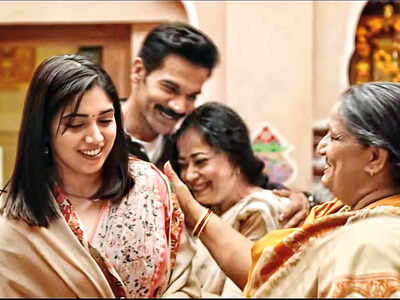

‘In Badhaai Do, we wanted to recreate that world of Hrishikesh Mukherjee’s Chupke Chupke and Golmaal’
The light-hearted, middle-class family dynamics – penned down by the story writers Suman Adhikary, Akshat Ghildial and screenplay writer Harshavardhan Kulkarni (who is also the director) – lie at the core of the film. Harshavardhan says that they were not trying to create a humorous situation, but only keeping it real, which is where the humour comes from. He says, “Akshat has created this humour, which is so delicate and organic. These family dialogues and situations are all from real life experiences. Watching these characters, you feel that you know them from your own life (laughs).”
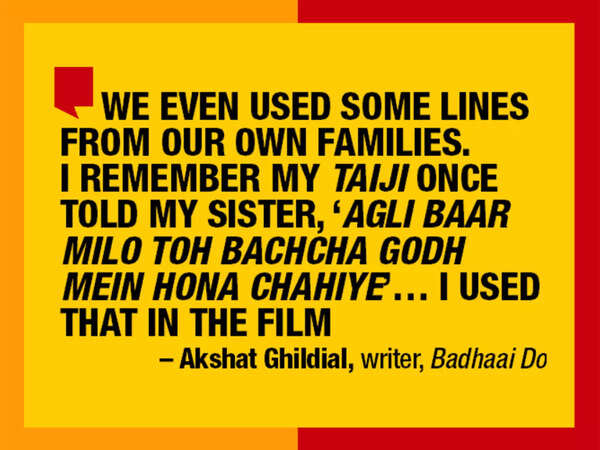
Akshat says, “We wanted to create that world of Hrishikesh Mukherjee’s Chupke Chupke and Golmaal. The idea was to keep reactions realistic, while tickling viewers with relatable nuggets. We are not depicting these family members as aspirational people, but as real people with all their prejudices.”
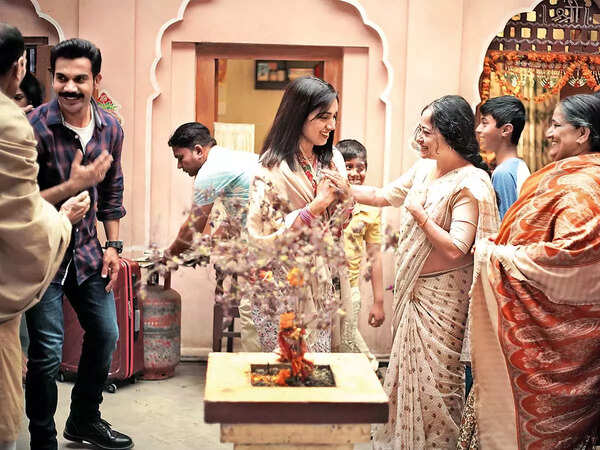
A still from Badhaai Do
‘In our society’s middle-class setup, your extended family lays out your whole life plan for you’
Akshat and Harshavardhan find the whole advice-offering system quite funny. Akshat shares, “It is also very endearing.
Woh apne aap se hi bolte hain. They think – ‘That worked for me, so it will work for you too’. I find a lot of humour in this intrusiveness because there is a lot of colour. Also, I have stayed in UP, where, everyone talks in punchlines.”
Akshat adds, “We have even used some lines from our own families. I remember my taiji once told my sister, ‘Agli baar milo toh bachcha godh mein hona chahiye...’ I used that same line in the film. That family pressure you observe – pehle bolte hain settle ho jao, jab shaadi ho jaati hai phir bolenge family kar lo. They are like – ‘Haan toh? Ab aur kya karoge? Aap kitne saal ke hoge, toh aap ka hone wala bachcha kitne saal ka hoga?’ – they just lay out the plan in front of you. They think giving advice is the right, duty and job of a family member. All this seems so intrusive (to the poor chap who’s at the receiving end!), but it comes from a place of concern.”
Why don’t middle-class families have boundaries? ‘Jagah kahan hain!’
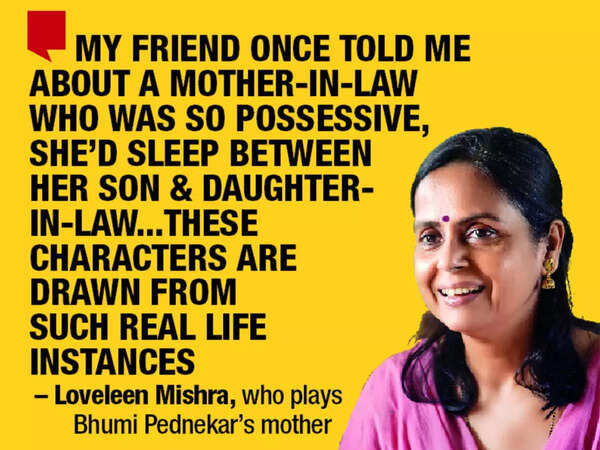
Referring to a scene from the trailer – where the family is seen discussing the size of the married couple’s bed – Loveleen Mishra, who plays the character of Bhumi’s mother, says, “These character references have been drawn from real-life situations. You will feel you know them. In fact, my friend once told me about a mother-in-law who was so possessive about her son that she used to sleep between her son and daughter-in-law.”
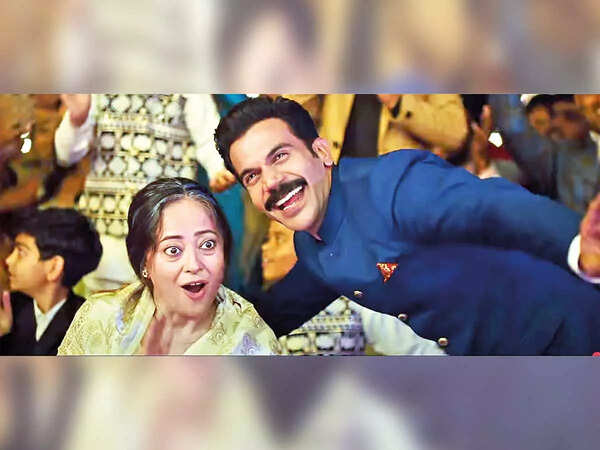
Rajkummar with on-screen mom Sheeba
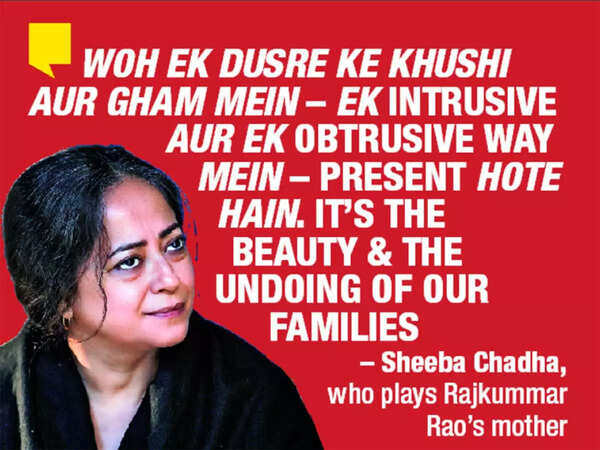
Sheeba Chadha, who plays Rajkummar’s mother, adds, “Woh (family) ek dusre ke khushi aur gham mein – ek intrusive aur ek obtrusive way mein – sab tarah se present hote hain. That’s the beauty and sometimes the undoing of our family system.” Seema Pahwa adds that not just family members, even neighbours are intrusive. “Dilli mein aap ke padosi ko bhi aap ke ghar ke baare mein sab pata hota hai – kaun aaya, kaun gaya. Pados ke liye toh zindagi jee jaati hai (laughs). Taiji (her character in the film) ka toh phir bhi haq banta hai.”
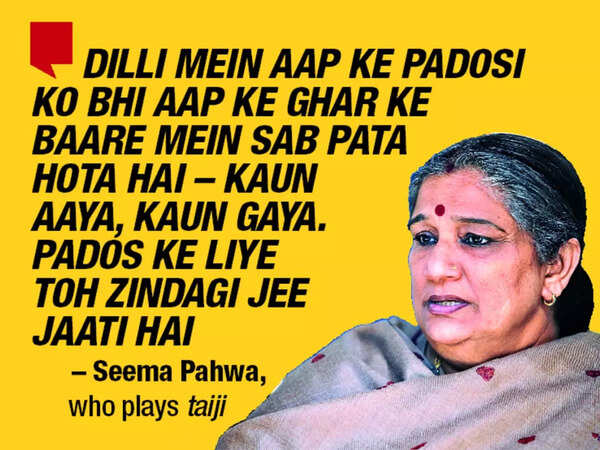
Akshat says that one reason middle-class families are so intrusive and in each other’s business is also because the houses are so small. He explains, “We have a scene where they are deciding where to sleep, and they say – ‘Arre ismein kya hai? Ghar mein jahan saare gents sote hain, wahan soo jayenge. I don’t need a separate room’. This is very regular in families. The idea of privacy and space doesn’t exist and the moment you are in each other’s physical space, you are bound to be in each other’s personal space.”
‘Be it the Badhaai Ho’s grandmom or Badhaai Do’s taiji – soft power in the family lies with women’
Akshat says, “Even though it’s a patriarchal setup, a lot of soft power is with the women. In Badhaai Ho (also written by Akshat), the mother had more authority than the father, and the grandmother also had a lot of authority in the family. Women are the core of the family structure.” He adds, “What you see in Shardul’s case (Rajkummar Rao’s character) is that he is the only male child among all these sisters in a joint family, and all these women decide for him.”
‘You will get to meet your own khandaan in Badhaai Do’s parivaar’
Spoiler alert: The film will remind you of your bua, chacha, tauji, taiji – and all of those other family members who are much more concerned about your life than you are... and it will make you laugh. As the cast puts it – “It will be fun for viewers to see those pressure-cooker situations and hear lots and lots of gyaan – but minus all the complications, because it’s not they, but the protagonists who are the family’s target this time.”
Akshat adds that for those who have moved away from their families to different cities, such films evoke a feeling of nostalgia – “and that’s why it clicks with the audience. They grew up with these characters and every time they see them on the big screen, they identify with that chacha, tai or bua. They enjoy it because it is like going back to their roots.”
Junglee Pictures’ Badhaai Do is directed by Harshavardhan Kulkarni, and is a sequel to the multiple National Award-winning film Badhaai Ho. The film releases on February 11 in theatres.
See more: Badhaai Do Review
End of Article
FOLLOW US ON SOCIAL MEDIA






Photostories
entertainment videos
Featured In Movies

Popular Categories
Entertainment NewsBollywood NewsTollywood NewsKollywood NewsMollywood NewsMovie ReviewsLatest Hindi MoviesLatest Tamil MoviesMX PlayerParenting TipsHome RemediesWeight LossBeauty TipsParenting TipsHindi VideosHindi Video SongsBhojpuri Music VideosLatest Telugu MoviesBhojpuri Music VideoHindi TV News
Trending in Entertainment
Latest MoviesBollywood MoviesHollywood MoviesTamil Movies 2024Telugu Movies 2024Malayalam Movies 2024Kannada Movies 2024Marathi Movies 2024Bengali Movies 2024Top Rated Movies 2024Best Hindi MoviesBest English MoviesBest Telugu MoviesBest Tamil MoviesBest Malayalam MoviesBest Kannada MoviesBest Bengali MoviesUpcoming Hindi MoviesBest Movies Of All TimeBest Hindi Movies of All Time
Trending in Etimes
Horoscope TodayNumerology Predictions TodayWalking BenefitsBreast Cancer DiagnosisYung Filly Rape CaseTaylor Rousseau GriggBelly FatSean Diddy CombsOzempic PersonalityDepression RiskBelly Fat LossDurga Visarjan 2024Toxic FriendshipDonald TrumpElon MuskDussehra 2024Durga Ashtami 2024Multitasking TipsSaraswati Visarjan 2024
Trending in TV
Trending in Lifestyle
Trending in Regional
Movie Reviews
Binny And Family ReviewLove, Sitara ReviewWill & Harper ReviewWolfs ReviewYudhra ReviewJo Tera Hai Woh Mera Hai ReviewKahan Shuru Kahan Khatam ReviewHis Three Daughters ReviewNever Let Go ReviewDancing Village: The Curse Begins ReviewTransformers One ReviewFirst Love ReviewBerlin ReviewThe Buckingham Murders Review
Upcoming Hindi Movies
Upcoming Regional Movies
Latest News
Harris overtakes Trump among suburban voters: Reuters/Ipsos pollSamantha Ruth Prabhu shares playtime with Chinmayi Sripaada's daughter, says 'It took her 4.5 seconds to disown her parents'Dilip Kumar-Saira Banu wedding anniversary: How the legendary actor surprised all by marrying his belovedSpiritual fervour all around as Sun God steers Lord's chariot at TirumalaHappy Dussehra 2024: Images, Quotes, Wishes, Messages, Pictures and GreetingsInfosys to no longer send job offer letters and attachments, the company will ...Jaggery vs honey: Which one is better for weight loss?My mother would love to have a swayamwar for me: Raj AnadkatRanji Trophy: Focus on Shreyas Iyer as Mumbai begin title defenceHappy Dussehra 2024: Top 50+ Wishes, Messages, and Quotes to Share with Your Loved OnesBigg Boss 18: Karan Veer Mehra's comment on Arfeen Khan converting his wife's religion sparks anger; Arfeen says, "Agar ye ghar mein nahi hota main iski band baja deta"Happy Dussehra 202: Top 50 Wishes, Messages and Quotes to share with your loved onesAmitabh Bachchan turns 82: Priyanka Chopra, Prabhas, Kajol, and other celebs extend heartfelt birthday wishes to the legendary starPutin won't discuss Ukraine peace with Germany's Scholz, Berlin saysIndia's Steel City (Jamshedpur) mourns loss of iconic steel tycoon Ratan Tata“A fresh approach”: New York Jets' Interim Head Coach Jeff Ulbrich Replaced Nathaniel Hackett as Offensive Play Caller With Todd DowningKarnataka Congress faces backlash over case withdrawals linked to Hubballi riotsWomen's T20 World Cup: Don't need to be told about NRR, says Shafali Verma
Other Group Sites -
ETimes is an Entertainment, TV & Lifestyle industrys promotional website and carries advertorials and native advertising.