- News
- entertainment
- hindi
- bollywood
- Punjabi Lajpat Nagar, a favourite among Bollywood makers
Trending
This story is from December 21, 2013
Punjabi Lajpat Nagar, a favourite among Bollywood makers
From the youngster who revels in the middle-class tag yet flaunts his branded clothes, to the short kurti-clad auntyji who will cut the neighbour’s water supply if they mess with her, when Bollywood filmmakers set their films in the “very Punjabi” Lajpat Nagar
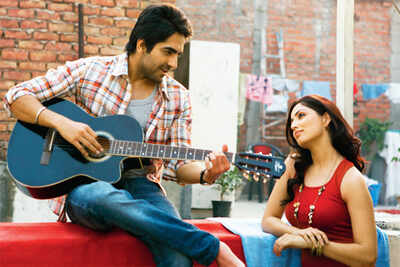
From the youngster who revels in the middle-class tag yet flaunts his branded clothes, to the short kurti-clad auntyji who will cut the neighbour’s water supply if they mess with her, when Bollywood filmmakers set their films in the “very Punjabi” Lajpat Nagar, they get the quirks and nuances of the locality just right.
'That ‘aaiyo’, ‘jaiyo’, ‘kariyo’ usage is so typical of this place'
Shoojit Sircar, director, Vicky Donor: What Juhi (Chaturvedi, the writer) and I incorporated into the film was years of my living in and breathing the Delhi air. Of observing the quirks and nuances and the uniqueness of Delhi. In Vicky Donor, the focus was on Lajpat Nagar and a family living there. And everything was set up to lead to that. Everyone in that specific area of Lajpat Nagar, if you notice, lives in those 75 gaj plots. Mostly three-storey buildings, built in a certain style – the small colonies, the interconnected terraces. The people are very Punjabi. Almost every house has a biji or a Dollyji. The boys and girls – basically rooted to family, parents. In terms of clothing, these youngsters are absolutely modern, obsessed with brands. Always well-dressed. Good college in DU is a must. Aspiration drives them. And now, they no longer find excuses to be ‘Hindi’. They love Bollywood songs, love Hindi films over western ones. And the aunties – Dollyji, if you notice, is always wearing those loud kurtis and Biji wants that iPhone and a Facebook account. The language is blunt, saying it like it is, that undercurrent of sarcasm with everything, that ‘aaiyo’, ‘jaiyo’, ‘kariyo’ usage is so typical of this place – I strongly feel the rest of Delhi got it from here only. Everything is underplayed with words, but that sarcasm is never left behind.
The residents of Lajpat are mainly middle-class refugees, with someone or the other in the family down a generation or two having come from across the border. There is that beauty parlour downstairs - typical of Lajpat Nagar houses. Colony mein chori ho jaati hai, kisi ko pata nahi chalta. Phir woh chhatt se taap ke doosre ke ghar chale jaana – the shortcut that keeps romances thriving. This is the Lajpat of Vicky Donor.
'The instant you hear this phrase, your mind translates it to, ‘conservative, middle-class mindset’
Imtiaz Ali, who wrote Cocktail, says, "It is a joke anyone in Delhi would understand. Especially people like me, from the middle-class or even smaller towns – even I keep telling my mom, ‘modern
'Wanted to explore beyond the ‘puttar’ and the ‘pairi pauna’ metaphors'
Habib Faisal, director, Do Dooni Chaar, says, "My family was based in Jangpura Extension, so I have grown up there. And in terms of middle-class upbringing, Do Dooni Char, about a family’s journey from a scooter to a car, was almost nostalgic for me. The house in DDC is based in Vinoba Puri, Lajpat Nagar. When my brother saw the film, the first thing he said was, ‘Oh teri, apna ghar hi recreate kar diya tumne toh!’ I drove my production designer, Mukund Gupta, nuts with wanting that specific print of the curtains in the house, and a specific upholstery for the sofas. The layout of the house was the same as any middle-class Delhi house. And of course, that omnipresent desert cooler – you’d find it in every house."
"I wanted to set this film in Lajpat Nagar for its easy acceptance, and even, I’d say, revelling in the middle-class tag, because I loved the pluralism and tolerance of the place while growing up. Frankly, I wasn’t even consciously aware of being a Muslim living in a Punju majority area – we’d go to the gurudwara in I-block, and have the daal at the langar. That, in my mind, was true freedom. So, I wanted to show the ‘Punjabiat’ of the place without the caricature that Indian films have made it for a long while. I wanted to explore beyond the ‘puttar’ and the ‘pairi pauna’ metaphors."
"There is this dialogue that Rishi Kapoor (who played Duggal) says in DDC, “Flyover pe flyover bane jaa rahe hain, Metro ki speed se Dilli daud rahi hai, lekin hum wahin ke wahin.” This dialogue sets the film in a time when everything in Delhi was dug up, the other side of Lutyens’ and Mughal Delhi, of a mindset that compares life with larger issues, because it had to do with my own background."
Compiled by - Jyothi Prabhakar
'That ‘aaiyo’, ‘jaiyo’, ‘kariyo’ usage is so typical of this place'
Shoojit Sircar, director, Vicky Donor: What Juhi (Chaturvedi, the writer) and I incorporated into the film was years of my living in and breathing the Delhi air.
The residents of Lajpat are mainly middle-class refugees, with someone or the other in the family down a generation or two having come from across the border. There is that beauty parlour downstairs - typical of Lajpat Nagar houses. Colony mein chori ho jaati hai, kisi ko pata nahi chalta. Phir woh chhatt se taap ke doosre ke ghar chale jaana – the shortcut that keeps romances thriving. This is the Lajpat of Vicky Donor.
The terrace is a hub of activity. The clothes lines, the paani ki tanki, which is a main issue of contention in this place. Like Biji says, ‘Paani ki line kaat doongi’. So, the house with the pipes network beneath it is sort of always accorded that slight ‘upper’ status.
'The instant you hear this phrase, your mind translates it to, ‘conservative, middle-class mindset’
Imtiaz Ali, who wrote Cocktail, says, "It is a joke anyone in Delhi would understand. Especially people like me, from the middle-class or even smaller towns – even I keep telling my mom, ‘modern
ho jao, get out of this middle class mentality’. It is something very ‘Punju’, as we call it colloquially, but would never put this word in films, because it could sound bad. So, instead of that, it became the “Lajpat Nagar wali soch” in Cocktail. The instant you hear this phrase, your mind translates it to, ‘conservative, middle-class mindset’, if you know Lajpat Nagar. And if you don’t, for example the rest of the country, the place’s name itself denotes a certain class, a certain mindset, the name is like that, and hence, “the Lajpat Nagar mentality” is something everyone can identify with."
'Wanted to explore beyond the ‘puttar’ and the ‘pairi pauna’ metaphors'
Habib Faisal, director, Do Dooni Chaar, says, "My family was based in Jangpura Extension, so I have grown up there. And in terms of middle-class upbringing, Do Dooni Char, about a family’s journey from a scooter to a car, was almost nostalgic for me. The house in DDC is based in Vinoba Puri, Lajpat Nagar. When my brother saw the film, the first thing he said was, ‘Oh teri, apna ghar hi recreate kar diya tumne toh!’ I drove my production designer, Mukund Gupta, nuts with wanting that specific print of the curtains in the house, and a specific upholstery for the sofas. The layout of the house was the same as any middle-class Delhi house. And of course, that omnipresent desert cooler – you’d find it in every house."
"I wanted to set this film in Lajpat Nagar for its easy acceptance, and even, I’d say, revelling in the middle-class tag, because I loved the pluralism and tolerance of the place while growing up. Frankly, I wasn’t even consciously aware of being a Muslim living in a Punju majority area – we’d go to the gurudwara in I-block, and have the daal at the langar. That, in my mind, was true freedom. So, I wanted to show the ‘Punjabiat’ of the place without the caricature that Indian films have made it for a long while. I wanted to explore beyond the ‘puttar’ and the ‘pairi pauna’ metaphors."
"There is this dialogue that Rishi Kapoor (who played Duggal) says in DDC, “Flyover pe flyover bane jaa rahe hain, Metro ki speed se Dilli daud rahi hai, lekin hum wahin ke wahin.” This dialogue sets the film in a time when everything in Delhi was dug up, the other side of Lutyens’ and Mughal Delhi, of a mindset that compares life with larger issues, because it had to do with my own background."
Compiled by - Jyothi Prabhakar
End of Article
FOLLOW US ON SOCIAL MEDIA








Photostories
entertainment videos

Featured In Movies
Popular Categories
Entertainment NewsBollywood NewsTollywood NewsKollywood NewsMollywood NewsMovie ReviewsLatest Hindi MoviesLatest Tamil MoviesMX PlayerParenting TipsHome RemediesWeight LossBeauty TipsParenting TipsHindi VideosHindi Video SongsBhojpuri Music VideosLatest Telugu MoviesBhojpuri Music VideoHindi TV News
Trending in Entertainment
Latest MoviesBollywood MoviesHollywood MoviesTamil Movies 2024Telugu Movies 2024Malayalam Movies 2024Kannada Movies 2024Marathi Movies 2024Bengali Movies 2024Top Rated Movies 2024Best Hindi MoviesBest English MoviesBest Telugu MoviesBest Tamil MoviesBest Malayalam MoviesBest Kannada MoviesBest Bengali MoviesUpcoming Hindi MoviesBest Movies Of All TimeBest Hindi Movies of All Time
Trending in Etimes
Trending in TV
Trending in Lifestyle
Trending in Regional
Movie Reviews
Berlin ReviewThe Buckingham Murders ReviewSpeak No Evil ReviewVisfot ReviewThalapathy Is The G.O.A.T ReviewRebel Ridge ReviewDetective Conan vs. Kid the Phantom Thief ReviewBeetlejuice Beetlejuice ReviewPad Gaye Pange ReviewA Wedding Story ReviewThe Diary Of West Bengal ReviewTikdam ReviewKinds Of Kindness ReviewAfraid Review
Upcoming Hindi Movies
Upcoming Regional Movies
Latest News
4 types of tea to improve gut health and ease digestive issuesWho was Illia 'Golem' Yefimchyk, the Belarusian bodybuilder who consumed 2.5 kg of meat and 108 sushi pieces daily before his death at 36?Vempalle Shareef's story is now a lesson for degree students in Andhra PradeshWhen Shah Rukh Khan performed 'Kanyadaan' at Farah Khan's wedding- See PICSBike rally held to raise voter awareness in Jammu and Kashmir's Doda ahead of assembly electionsFather-son duo Eugene and Dan Levy's dazzling entrance at the EmmysLodi-era mosque collapses in AgraJr NTR on shooting under water scene for 35 days in 'Devara Part 1': It is an important sequence!Last Lunar Eclipse of 2024: What it means for your zodiac signTop NFL Superstars Who Are Vegan: Derrick Morgan, David Carter, Theo Riddick and moreAbhishek Kumar shares selfies with Alia Bhatt; recalls the time when he worked as a crowd artist in ‘Humpty Sharma Ki Dulhaniya’Kejriwal says he will quit as CM in 2 days, wants aam aadmi's 'honesty certificate'Jessica Gunning wins her 1st Primetime Emmy for 'Baby Reindeer'Shocking! Man celebrates birthday by lying among massive Pythons‘Stree 2’ star Shraddha Kapoor to reveal her character name! But there’s a catchSathiyan set to partner Sreeja in mixed doubles'Seven varsities in Odisha have potential to be in top 100'Capricorn, Daily Horoscope Today, September 16, 2024: Harmonious relationships with partners are likely
Other Group Sites -
ETimes is an Entertainment, TV & Lifestyle industrys promotional website and carries advertorials and native advertising.