- News
- entertainment
- hindi
- bollywood
- I still don't have a TV: Dibakar Banerjee
Trending
This story is from January 6, 2012
I still don't have a TV: Dibakar Banerjee
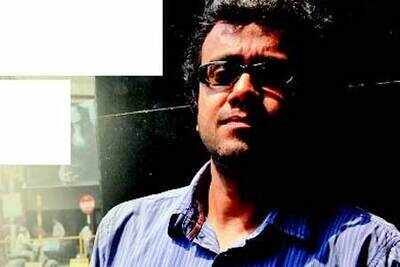
As he gears up for the release of ‘Shanghai’, Dibakar Banerjee talks about Emraan Hashmi, Abhay Deol and planning to gift his daughter a Barnaporichoy
What’s it about Emraan that prompted you to cast him in “Shanghai”?
Emraan has an effortless quality in him. Whatever roles he has done — be it films where he had to kiss his partner or fight in the rains — the audience can identify with his emotions.

You are the only director with whom Abhay Deol has done two movies. How did you see him evolve as an actor?
Abhay is the black sheep in most of his films. In “Shanghai”, he is the core of conservative, middle class India who clings on to his patriotic belief that India has to take over China one day. I’ve known Abhay as a spontaneous actor who doesn’t rehearse much. But here, Abhay is different. He is playing a Tamil Brahmin who is an IAS officer. Abhay asked for a language coach and insisted that everyday, before we shot the scenes, he spent at least 40 minutes with him. He researched on IAS officers apart from interacting with two different Tamilians from different social classes. He also got a book to learn Tamil alphabets.
Your movie is based on Greek author Vassilis Vassilikos’s novel, Z. There is a Costa-Gavras movie that has already been adapted from the same book. How difficult does the scope of adaptation become in such cases?
The organic difference between a book and a film is that while in the former, we need to read what the character is going through and figure it out in our heads, the audience has to see those experiences in a movie. Ergonomically, a book often meanders in terms of the narrative. A film, in contrast, has to be more linear in structure. Writing the screenplay of an adaptation is a tough job. Urmi Juvekar and I bickered for a year to get the screenplay in place. In the book, there are two characters who come from the lowliest of society. They are involved in negative acts but Vassilis has dealt with them quite positively. He understood the compulsions of these two characters. The earlier film ignored these two characters. I didn’t.
Is this because in the Indian context, finding a sentimental reason for a character’s flaw is always a great way to win over the audience?
No, that’s not it. The book was set in the 1960s and was written in the context of the Left and the Right wing politics. Today’s India has no political ideologies as such. It is more about the rich and the poor. From being a transmutation of a “Left and Right film”, “Shanghai” became a “Rich and Poor movie”.
“Shanghai” is a political thriller at a time when real-life political scenario has become one big tamasha with a lot of thriller element. Does that interest you?
No. Most of the political thrillers in India are about this tamasha. But my film is about the politics in real life.
While you spent a year deciding on the screenplay of the movie, most of the hits in India today don’t even have the script...
A script of an Indian film is as important as you make it. A film with lots of stars and expensive locations might generate 100 crore at the box office. But who knows whether the film wouldn’t have generated 200 crore at the BO if more attention was paid to the script or not. For me, the important factor is the need to make better and well-made cinema that’s organically complete. A well-made film should not be judged by its BO success. The maker and his respect for what he does in cinema should not be judged by what he earns by doing so.
Are you happy with what you’ve earned?
Yes, I am. I have my house, my cars and can afford a decent standard of living.
Do you still not have a television at home?
I don’t. My mobile still doesn’t have Internet connectivity. But do I look illinformed? I have my iPad and I am very prompt about replying to e-mails.
Does your daughter insist that you let her watch cartoons on television?
We don’t have a television at home. She doesn’t watch it.
Can she speak Bangla?
No, she can’t. The fault is completely mine because I have never spoken to her in Bengali. My wife, Richa, is from Kolkata and can speak the language. But Richa and I speak in Bengali only when we have some secret to share in front of others. Otherwise, we speak in Hindi and English. I certainly want our daughter to be introduced to Bengali literature. My parents did that to me and, hence, my world opened up. I too would want that to happen to her and will soon gift her a Barnaporichoy.

About the Author
Priyanka DasguptaEnd of Article
FOLLOW US ON SOCIAL MEDIA








Photostories
entertainment videos
Featured In Movies
Popular Categories
Entertainment NewsBollywood NewsTollywood NewsKollywood NewsMollywood NewsMovie ReviewsLatest Hindi MoviesLatest Tamil MoviesMX PlayerParenting TipsHome RemediesWeight LossBeauty TipsParenting TipsHindi VideosHindi Video SongsBhojpuri Music VideosLatest Telugu MoviesBhojpuri Music VideoHindi TV News
Trending in Entertainment
Latest MoviesBollywood MoviesHollywood MoviesTamil Movies 2024Telugu Movies 2024Malayalam Movies 2024Kannada Movies 2024Marathi Movies 2024Bengali Movies 2024Top Rated Movies 2024Best Hindi MoviesBest English MoviesBest Telugu MoviesBest Tamil MoviesBest Malayalam MoviesBest Kannada MoviesBest Bengali MoviesUpcoming Hindi MoviesBest Movies Of All TimeBest Hindi Movies of All Time
Trending in Etimes
Horoscope TodayNumerology Predictions TodayWalking BenefitsBreast Cancer DiagnosisYung Filly Rape CaseTaylor Rousseau GriggBelly FatSean Diddy CombsOzempic PersonalityDepression RiskBelly Fat LossDurga Visarjan 2024Toxic FriendshipDonald TrumpElon MuskDussehra 2024Durga Ashtami 2024Multitasking TipsSaraswati Visarjan 2024
Trending in TV
Trending in Lifestyle
Trending in Regional
Movie Reviews
Binny And Family ReviewLove, Sitara ReviewWill & Harper ReviewWolfs ReviewYudhra ReviewJo Tera Hai Woh Mera Hai ReviewKahan Shuru Kahan Khatam ReviewHis Three Daughters ReviewNever Let Go ReviewDancing Village: The Curse Begins ReviewTransformers One ReviewFirst Love ReviewBerlin ReviewThe Buckingham Murders Review
Upcoming Hindi Movies
Upcoming Regional Movies
Latest News
Accused did recce of Baba Siddiqui's house, monitored him for months: Mumbai PoliceParas Mhambrey joins Mumbai Indians as bowling coachSalman Khan’s security beefed up after Baba Siddiqui’s murder; ‘Sultan’ star looked uncomfortable after visiting the late politician’s family at 3 amBaba Siddique may have died prior to hospitalisation, says doctorsReading the Stars and Your Hands: How Astrology and Palmistry Complement Each OtherTaurus, Weekly Horoscope, October 13 to October 19, 2024: Focus on gains and accomplishmentsRoblox dismisses claims made by Hindenburg report: "...don't support their agenda"'Procrastination greatest thief of time': HC junks 'belated case'RSS chief Mohan Bhagwat: Hindus must take lessons from Bangladesh violence2 flee Uttarakhand jail. Did they escape as Ramlila ‘vanars’ looking for Sita?Scorpio, Weekly Horoscope, October 13 to October 19, 2024: Health and self-care are essentialNumerology Predictions Today, October 13, 2024: Read your personalised forecast for numbers 1 to 9Ashton Kutcher and Mila Kunis consider leaving Hollywood amid Sean 'Diddy’ Combs' arrest fallout: ReportVijay celebrates 'GOAT' success as Venkat Prabhu's directorial earns 100 crore share in Tamil NaduLoneliness across generations: Why is it important to address this hidden danger?For 500 years, this village in Madhya Pradesh worships Ravan as ‘Kul Devta’'Little people dressed like dolls': Guest at Sean 'Diddy' Combs' 'freak off' party shares disturbing detailsAlia Bhatt was rejected by Sanjay Leela Bhansali for Amitabh Bachchan and Rani Mukerji starrer 'Black'
Other Group Sites -
ETimes is an Entertainment, TV & Lifestyle industrys promotional website and carries advertorials and native advertising.