- News
- entertainment
- hindi
- bollywood
- Happily ever after: that’s not for me: Sanjay Leela Bhansali
Trending
This story is from October 13, 2011
Happily ever after: that’s not for me: Sanjay Leela Bhansali
He thinks art is endangered, mediocrity prevails, and a film is now just a product to be marketed. And, come hit or flop, Bhansali is defiant about not joining in
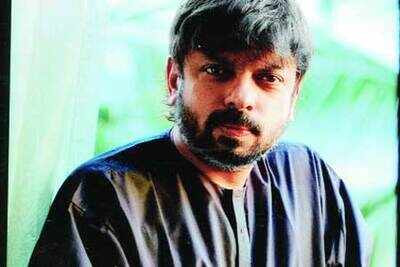
He thinks art is endangered, mediocrity prevails, and a film is now just a product to be marketed. And, come hit or flop, Bhansali is defiant about not joining in
You have said that you don’t have to be a jack of all emotions, and humour is not your forte… Is that the reason why you aren’t directing – but producing – a movie supposedly focused on a stand-up comic? If it was a dark, brooding topic, you could have hardly managed to stand by?
No, no… First of all, “My Friend Pinto” is not really a comedy. It is a very sensitive film. It brings a smile to your face but it’s not a ‘comedy’ comedy in the usual sense of the word. It is a very delicate story about a boy who realises that his friends no longer respect him, and how he finds out he should have acknowledged that friend… We all have friends we have moved on from, maybe, but they still love us, are still worried about us, still reach out to us…
It’s not as if I am a dark and brooding filmmaker – or that I don’t have a sense of humour. While we were making “Black”, I and Rani never did a single scene with a straight face, we were rolling with laughter. But humour on screen is a very challenging genre. The timing has to be just right, the chemistry between the actors has to be just right, the lines have to be wonderful… it’s a difficult genre and it doesn’t come naturally to me, at least.
You just spoke of ‘us no longer loving our friends who continue to love us’. Someone’s going to now write that Bhansali now takes his obsession with unrequited love from the romantic plane to the social one...
(Laughs) Well, at least I am one of those who longs for love and in so many ways…
If it was a normal friendship and two friends loved each other back, that’s no story for you, right?
A sense of completion is something I have never pursued in my life.
I find anything that completes, what should I say – I lose interest in it, it ceases to have meaning for me. ‘And they lived happily ever after’ doesn’t make sense for me. Incompleteness is something that I pursue a lot.
You were kept well away from fairy tales and happy stories in your childhood, I assume?
See, you are born with a certain temperament. Even if you read a lot of stories that were happy and bright – after all, in childhood, you don’t read a lot of intense stories. It’s like, if Aishwarya and Salman were to get together in “Hum Dil De Chuke Sanam”, it would not remain “Hum Dil De Chuke Sanam” for me any more at all. My biggest flaw in “Khamoshi” was that the girl remained alive. I had to do that out of pressure from Polygram. They said, happy ending, or we don’t give you the money, we’re backing out.
In my story, Manisha actually dies and she goes into the world of silence as she is buried, and that is what “Khamoshi” is all about. In that sense, “Khamoshi” is an incomplete work for me. It bothers me till today that I compromised. I should have stuck to my position. But even otherwise, most of my movies are not those where at the end, people meet and come together and all that...
Did you watch Guru Dutt as you grew up?
Yes, in the early stages of film school… he seduces me. There is something attractive about his work. He tells me a tale of poignant pain. See, there is suffering in every human being’s life. And then there is a filmmaker like Guru Dutt who paints it on a canvas, lights it in a certain way… he backlights it up, my God, like a magician, he’s such an artist.
If a radio listener were to ask for a song to be dedicated to Sanjay Leela Bhansali, he should ask for ‘Hamari Adhoori Kahani’?
Nahi. “Jaane Woh Kaise Log Thay Jinke Pyaar Ko Pyaar Mila”! (Laughs) There are some people who temperamentally connect to that. Dilip Kumar and Meena Kumari did do “Kohinoor” and a few light films, but what she does in “Sahib Biwi Aur Ghulam” or what she does in “Pakeezah” – oh, that’s incredible stuff.
Hasn’t the audience changed? You have quoted Bimal Roy’s cinema to say that that sort of cinema was also ‘hit’, and spoken of “Black” and “Iqbal”. But sometimes lay observers such as me get the impression that currently, the cerebral quotient of a script is in inverse proportion to the money the movie makes.
Yes.
So, have we, as an audience, outgrown the taste for such cinema? I’d hazard a guess that a lot of Raj Kapoor movies today wouldn’t have made much money.
I would say yes. There was a time when a filmmaker could tell a story. There would be a “Do Aankhen Barah Haath” and there would be a “Do Bigha Zameen” and there would be a “Bandini”. Those are classics that you keep watching for their brilliance and for the liberty with which the filmmaker made them and the faith he had in the audience. Today, yes, if we do a “Black” or a “Guzaarish”, it doesn’t cut. I am still very fortunate today that I have a lot of audience, I am not deprived completely of an audience. But there are many other filmmakers who are making far superior films, very, very delicate films – and they have no audience. That’s sad. It’s about how many crores in the first weekend. That’s all we talk about. It’s not about how many decades this work is going to linger. How much it’s going to reverberate for decades. That’s not what we talk about anymore. It’s all –Who cares now? Why do you want to make this film? What are you talking about? Who’s going to see it? People don’t want to see this!
Where is the audience? It’s a scary thought, for a filmmaker cannot make a film that is dictated by ‘what the audience wants’ because actually, you don’t know what the audience wants. The audience is very clear – if we like something, we’ll go for it. So who knows, you may make a very intense film today, and it might just take off because they are tired of what is happening right now.
At the same time, there is the multiplex audience, and newer filmmakers are getting a lot of opportunity to do experimental and new-age cinema. So it’s a process, churning, it’s a turbulent time.
Isn’t a lot of this successful new age cinema about cost of production vs returns in the first week – surely that wasn’t the Bimal Roy model of filmmaking?
If a film in our country has to do well, it has to reach out to a very large audience. It has to reach out to the B-cities, the upper class, everyone. People have to sing that song, to remember the acting, to remember the dialogues, the moments. Today it’s difficult to do that.
The only movies that have reached out to the B-cities as well recently have been those that would have Guru Dutt and Bimal Roy turning in their graves.
Well… It’s fashionable to say that we are revisiting the eighties and making the “Himmatwala”s of the 80s. It’s a fashion. But fashion doesn’t make for great art. In a country that has a great legacy, a great culture, it’s sad if art goes out of fashion. But there are people – I made “Saanwariya” and it didn’t work at all at the box office. And then I went ahead and made “Guzaarish”. I did not succumb to the pressure and say, ‘Let me do a dhintadak commercial film.’ I should have done that – for a lot of people. I said I will talk about death in a lot of ways since that is the emotion I felt after the failure of “Saanwariya”. And I made it. But not many people have the space or the privilege to do that.
But then I have delivered two films that didn’t work at the box office. I have to think whether I made mistakes, or was it pure filmmaking… it does bring confusion. But then confusion is part of art… It’s the prerogative of an artist to be in a confused state, and so I’m enjoying that state!
The underlying premise of “Guzaarish” may not have been very upbeat, but then, neither was “Million Dollar Baby”. But it was a popularly acclaimed movie in its market, not a niche art cinema venture.
But you see, a lot of the audience in our country is going through a lot of difficulties in life. It’s the elite that can get up and say, let’s look at this side of life also, why can’t a quadriplegic be the hero of mainstream Hindi cinema? Yes. But a lot of people face a very hard life and tough circumstances and maybe for them to walk into a cinema hall and see something like that is difficult.
The audience sitting in a European theatre is more homogenous; the audience sitting in our theatres is very diverse.
Didn’t India have greater poverty and a harder life in the 50s, the 60s? The time when the audience consumed some of the most artistic cinema India has made?
We had poverty and we had purity both, at that time. There were people who had something to say. I don’t know how many filmmakers today – with a few exceptions – have something to say. Bimal Roy left behind “Do Bigha Zameen”, “Devdas”, “Bandini”, “Sujata” – they are Bibles, they are school textbooks for a filmmaker to go through. Guru Dutt did that, again and again. Raj Kapoor did that, again and again. Vijay Anand did that, again and again. I’m hugely impressed by V Shantaram’s work – he is a bigger influence on me than anyone else. Today, if you make a “Navrang”, or a “Sanwariya”, where you tell a tale through your world, they’ll say – arrey, yeh kya banaya hai!
Today we say for any film that was made with a hand-held camera going through the galis of Bhindi Bazar or Chandni Chowk – ‘Oh, that’s great cinema! What a powerful work of art!’ But that’s not the only ‘art’. There are many genres of filmmaking that we should respect and we should let prosper.
Respecting and prospering may not be identical. No offence, but, for instance, “Bodyguard” may prosper, but would you respect it as art along the lines of the names you quoted?
(Quiet) Today we write off anything that is done in abstract. “Saanwariya” is for me my most delicate, my most beautiful work of a short story by Dostoyevsky – what was so weird and bad about it that it was written off and killed completely? Because the director is in his own unreal world, he has no sense of time and space? He is warped. God knows what he has made…
We respect only certain genres of filmmaking. You have to be more liberated in how you see different forms of cinema. Lot of reviewers are coming out and destroying a film even before it is seen by people. “Saanwariya” had a front page review on the day the movie released, at 8am, saying, ‘Don’t see the film’ – one star! Everybody’s competing – I said it first, I got noticed by writing off this film… within all that stress and pressure, a filmmaker has to go on. “Devdas” is a very artistic film which was acclaimed in the west, and we killed it over here. “Bastardization of literature,” yeh, woh, “Devdas raped in broad daylight” – these were the sort of headlines! But why, I’ve not understood. Cannes, BAFTA, all recognised it – they’re not fools.
What sort of fights do you have with your production teams when you make a film?
There are no production meetings that I have to discuss my stories. I take complete liberty from people who are interested in my film. I’m a part producer and I safeguard my space and I don’t discuss what I have to do and what I don’t have to do. That’s the first thing. Because if you start listening to people, then you lose your conviction. I listen to people, but I don’t compromise.
There was a time while shooting “Dola Re” in “Devdas” when things were not all fine, Bharat bhai was in jail, and the family said, ‘Don’t shoot this song’, and I said, ‘What do you mean, don’t shoot? It has to be shot.’ The pressure of a circumstance, a debate, a market trend – those are things a filmmaker has to fight.
I give all of myself to a film. It’s not about logic or marketing. After “Devdas”, I was told don’t make “Black”, right now you have the industry eating out of your palm. But I wanted to make it. I was told to make a nice commercial film. I ask, what is commercial? A film is a film. A film is art. For me, “Pather Panchali” is a great film. The world has seen it – that’s commercial, na? Hum nahi kehte ki “Sujata”, “Bandini” were not commercial – I see them even today! Incredible performances. And they reached people – that’s commercial, right?
Haan, lekin agar aap bologe ki hum ko 200 crore ka business banana hai – toh aap business karo na, aap picture mat banao! Picture banane ka idea chhor do. It’s also the sensibility of the audience we have to look into… we’re going and seeing anything.
But I must say, I liked “Dabangg” a lot, I thought it was a fabulous film.
Fabulous in terms of...?
I liked the way it was told, the way he performed, the conviction of the actor. I even enjoyed “Munni Badnaam”, it was done with such flamboyance. The conviction is what you want to get up and applaud. So it doesn’t mean that one is looking down at films that have done well. But a “Mirch Masala” should also have done well, it was a great film. It was brilliance personified. Smita Patil is outstanding, spectacular in that film. It’s one of my favourites, ever. But it’s not a money spinner. Why doesn’t a very, very great film get the acknowledgment from the audience – that’s something not just the filmmaker, but the audience has to answer... That’s a huge question.
Is it that we prefer to consume things that don’t tax our minds, prefer no-brainer scripts for our blockbusters vis a vis, say, a “Titanic” or an “Avatar”?
It’s not just about our cinema, it’s happening everywhere. It’s happening with television. Look at the serials we make. It’s very difficult for me to sit through any of them. Look at the kind of music. I was in “X Factor”. There were these sisters performing to a great Madan Mohan song. But then it’s like, ‘aaj ka kuch…’ – but that’s the greatest music we have! We’re doing very good music today, but it doesn’t impact the soul. Which singer is leaving a lasting impression on you today? Lataji would overtake your senses and overtake your soul. She sang “Satyam Shivam” in one take. One take. Today you ask anybody to do that!
Maybe technology is allowing people to limit their own potential. The singer has lost his inner instinct to excel because he knows the machine will take over and sort any glitches. As a filmmaker I have monitors and DI and VFX and I am changing backdrops and skydrops… where was all that in “Pather Panchali”? It was sheer human excellence. Technology has reduced the inputs of the human soul – more than the economics of the audience, it is, for me, the larger question.
But can you ignore the economics of the audience? You’ve been on reality TV. Last week SRK was on three reality TV shows on the same night to promote his fim. If he needs to do that, what about the rest?
It’s become a situation where you have to be seen. There are so many shows and so many channels and everyone’s flipping. There are advertisements all over, so much of radio, fifty newspapers – what do you remember? So I have to stand up and say, ‘It’s my film, it’s my film, it’s my film. Don’t forget to see it.’ The economics of filmmaking has gone up and everyone needs to be involved in marketing. It’s a vicious circle.
There are too many films. There are too many filmmakers. Anybody’s becoming a director. Everybody’s becoming a singer. Everybody’s holding a mike in their hand and everybody’s becoming a music director. It’s just so easy to say, ‘I have a script’. There are so many people with money who will say, arrey, chalo kuch toh mila, film banate hain.
Cliched art vs commerce argument?
What art are you talking about today? There is no artiste anymore. If you are a recluse, or if you are quiet, or you live in your world, you’re not acknowledged. They say he’s temperamental, he’s rude, he doesn’t reach out to us – let’s kill his film. Kill his film. The media does that, so many times.
In that sense, the artiste is not going to survive. It’s about what you are selling. I create a product. I become a product. The product needs to be marketed, needs to be sold, needs to be explained to people that these are its USPs, please consume it. It’s not a film anymore, it’s not art anymore. How do I cling on to my artistic side and still cut through all this?
I have been very fortunate that stars from a Nana Patekar to a Hrithik Roshan have agreed to work with me, so people come to see them, even if I have made another strange story.
You’ve said often that you purge yourself through cinema and you leave behind traumatised moments each time you make a film. How many more films before the quantum of internal trauma within you is exhausted ?
Lot more! Lot more. It’s so many births that I can sense troubling me, there is so much more to be told (laughs). “Guzaarish” came closest to me being ‘catharsized’, if there is a word like that. Aap samajh gaye na? Even if it is a wrong word, it conveys the meaning.
“Saanwariya” and “Black” have also many moments of my life which I want to talk about – which moments, don’t ask!
I find people still talk about “Guzaarish”, even though it’s not done well at the box office, because it was done with so much passion. They still talk about “Khamoshi”…
You still talk about “Khamoshi” all the time!
But people do! Even though “Khamoshi”, at that time, was called the “Razia Sultan” of the nineties. It bombed on the first day. ‘Deedar-e-yaar banaya Sanjay Bhansali ne!’ ‘Pehli film me hi pit gaye!’ Disastrous lines they would write. But there’s so much of my life that I said in “Khamoshi” that it moves me immensely. People still tell me it was my first film.
So “Khamoshi” is your “Mera Naam Joker”, is it?
See, Raj Kapoor had so much success, he was in a position to afford that. Who was Sanjay Bhansali? Nothing he had. I took two lakhs to write that film, produce that film, direct that film. Everything I did in that two lakhs. And what was the future? Nothing. You are completely shocked. The first phone call I got on the day of the film’s release was from Sibte Hassan Rizvi, the executive producer of the film, and the first thing he said was, ‘Picture baith gayi.’ I didn’t even understand, I asked, ‘What do you mean by baith gayi?’ He exclaimed, ‘Gayi, picture gayi, log seats jala rahe hain, theatre phaad rahe hain, Nana Patekar dialogue nahi bol raha hai. Hum toh barbad ho gaye.’
The first phone call of the first day of the first film of your life – disastrous! It cannot get worse than that. It cannot. But you survive it, you know.
That was a time I will never forget. Salman calling me and asking me again and again, ‘Are you OK?’ The rest had forgotten I existed.
This only reiterates your point about trauma being the most integral part of memories…
(Laughs and laughs)
You drink?
No, do you?
No.
Why did you ask?
Just thinking, if you were to drink as well…
Oh, then, oh my God, oh my God! (rolls over in laughter)
You have said that you don’t have to be a jack of all emotions, and humour is not your forte… Is that the reason why you aren’t directing – but producing – a movie supposedly focused on a stand-up comic? If it was a dark, brooding topic, you could have hardly managed to stand by?
No, no… First of all, “My Friend Pinto” is not really a comedy.
It’s not as if I am a dark and brooding filmmaker – or that I don’t have a sense of humour. While we were making “Black”, I and Rani never did a single scene with a straight face, we were rolling with laughter. But humour on screen is a very challenging genre. The timing has to be just right, the chemistry between the actors has to be just right, the lines have to be wonderful… it’s a difficult genre and it doesn’t come naturally to me, at least.
It’s not a genre I’d be comfortable making; though I may, at some point in the future. A lot of people who know me say that I should. Shah Rukh keeps telling me, ‘Sanjay, you have to make a comedy.’ I may be able to have a funny conversation, but that doesn’t mean I can translate it on screen.
You just spoke of ‘us no longer loving our friends who continue to love us’. Someone’s going to now write that Bhansali now takes his obsession with unrequited love from the romantic plane to the social one...
(Laughs) Well, at least I am one of those who longs for love and in so many ways…
If it was a normal friendship and two friends loved each other back, that’s no story for you, right?
A sense of completion is something I have never pursued in my life.
I find anything that completes, what should I say – I lose interest in it, it ceases to have meaning for me. ‘And they lived happily ever after’ doesn’t make sense for me. Incompleteness is something that I pursue a lot.
You were kept well away from fairy tales and happy stories in your childhood, I assume?
See, you are born with a certain temperament. Even if you read a lot of stories that were happy and bright – after all, in childhood, you don’t read a lot of intense stories. It’s like, if Aishwarya and Salman were to get together in “Hum Dil De Chuke Sanam”, it would not remain “Hum Dil De Chuke Sanam” for me any more at all. My biggest flaw in “Khamoshi” was that the girl remained alive. I had to do that out of pressure from Polygram. They said, happy ending, or we don’t give you the money, we’re backing out.
In my story, Manisha actually dies and she goes into the world of silence as she is buried, and that is what “Khamoshi” is all about. In that sense, “Khamoshi” is an incomplete work for me. It bothers me till today that I compromised. I should have stuck to my position. But even otherwise, most of my movies are not those where at the end, people meet and come together and all that...
Did you watch Guru Dutt as you grew up?
Yes, in the early stages of film school… he seduces me. There is something attractive about his work. He tells me a tale of poignant pain. See, there is suffering in every human being’s life. And then there is a filmmaker like Guru Dutt who paints it on a canvas, lights it in a certain way… he backlights it up, my God, like a magician, he’s such an artist.
If a radio listener were to ask for a song to be dedicated to Sanjay Leela Bhansali, he should ask for ‘Hamari Adhoori Kahani’?
Nahi. “Jaane Woh Kaise Log Thay Jinke Pyaar Ko Pyaar Mila”! (Laughs) There are some people who temperamentally connect to that. Dilip Kumar and Meena Kumari did do “Kohinoor” and a few light films, but what she does in “Sahib Biwi Aur Ghulam” or what she does in “Pakeezah” – oh, that’s incredible stuff.
Hasn’t the audience changed? You have quoted Bimal Roy’s cinema to say that that sort of cinema was also ‘hit’, and spoken of “Black” and “Iqbal”. But sometimes lay observers such as me get the impression that currently, the cerebral quotient of a script is in inverse proportion to the money the movie makes.
Yes.
So, have we, as an audience, outgrown the taste for such cinema? I’d hazard a guess that a lot of Raj Kapoor movies today wouldn’t have made much money.
I would say yes. There was a time when a filmmaker could tell a story. There would be a “Do Aankhen Barah Haath” and there would be a “Do Bigha Zameen” and there would be a “Bandini”. Those are classics that you keep watching for their brilliance and for the liberty with which the filmmaker made them and the faith he had in the audience. Today, yes, if we do a “Black” or a “Guzaarish”, it doesn’t cut. I am still very fortunate today that I have a lot of audience, I am not deprived completely of an audience. But there are many other filmmakers who are making far superior films, very, very delicate films – and they have no audience. That’s sad. It’s about how many crores in the first weekend. That’s all we talk about. It’s not about how many decades this work is going to linger. How much it’s going to reverberate for decades. That’s not what we talk about anymore. It’s all –Who cares now? Why do you want to make this film? What are you talking about? Who’s going to see it? People don’t want to see this!
Where is the audience? It’s a scary thought, for a filmmaker cannot make a film that is dictated by ‘what the audience wants’ because actually, you don’t know what the audience wants. The audience is very clear – if we like something, we’ll go for it. So who knows, you may make a very intense film today, and it might just take off because they are tired of what is happening right now.
At the same time, there is the multiplex audience, and newer filmmakers are getting a lot of opportunity to do experimental and new-age cinema. So it’s a process, churning, it’s a turbulent time.
Isn’t a lot of this successful new age cinema about cost of production vs returns in the first week – surely that wasn’t the Bimal Roy model of filmmaking?
If a film in our country has to do well, it has to reach out to a very large audience. It has to reach out to the B-cities, the upper class, everyone. People have to sing that song, to remember the acting, to remember the dialogues, the moments. Today it’s difficult to do that.
The only movies that have reached out to the B-cities as well recently have been those that would have Guru Dutt and Bimal Roy turning in their graves.
Well… It’s fashionable to say that we are revisiting the eighties and making the “Himmatwala”s of the 80s. It’s a fashion. But fashion doesn’t make for great art. In a country that has a great legacy, a great culture, it’s sad if art goes out of fashion. But there are people – I made “Saanwariya” and it didn’t work at all at the box office. And then I went ahead and made “Guzaarish”. I did not succumb to the pressure and say, ‘Let me do a dhintadak commercial film.’ I should have done that – for a lot of people. I said I will talk about death in a lot of ways since that is the emotion I felt after the failure of “Saanwariya”. And I made it. But not many people have the space or the privilege to do that.
But then I have delivered two films that didn’t work at the box office. I have to think whether I made mistakes, or was it pure filmmaking… it does bring confusion. But then confusion is part of art… It’s the prerogative of an artist to be in a confused state, and so I’m enjoying that state!
The underlying premise of “Guzaarish” may not have been very upbeat, but then, neither was “Million Dollar Baby”. But it was a popularly acclaimed movie in its market, not a niche art cinema venture.
But you see, a lot of the audience in our country is going through a lot of difficulties in life. It’s the elite that can get up and say, let’s look at this side of life also, why can’t a quadriplegic be the hero of mainstream Hindi cinema? Yes. But a lot of people face a very hard life and tough circumstances and maybe for them to walk into a cinema hall and see something like that is difficult.
The audience sitting in a European theatre is more homogenous; the audience sitting in our theatres is very diverse.
Didn’t India have greater poverty and a harder life in the 50s, the 60s? The time when the audience consumed some of the most artistic cinema India has made?
We had poverty and we had purity both, at that time. There were people who had something to say. I don’t know how many filmmakers today – with a few exceptions – have something to say. Bimal Roy left behind “Do Bigha Zameen”, “Devdas”, “Bandini”, “Sujata” – they are Bibles, they are school textbooks for a filmmaker to go through. Guru Dutt did that, again and again. Raj Kapoor did that, again and again. Vijay Anand did that, again and again. I’m hugely impressed by V Shantaram’s work – he is a bigger influence on me than anyone else. Today, if you make a “Navrang”, or a “Sanwariya”, where you tell a tale through your world, they’ll say – arrey, yeh kya banaya hai!
Today we say for any film that was made with a hand-held camera going through the galis of Bhindi Bazar or Chandni Chowk – ‘Oh, that’s great cinema! What a powerful work of art!’ But that’s not the only ‘art’. There are many genres of filmmaking that we should respect and we should let prosper.
Respecting and prospering may not be identical. No offence, but, for instance, “Bodyguard” may prosper, but would you respect it as art along the lines of the names you quoted?
(Quiet) Today we write off anything that is done in abstract. “Saanwariya” is for me my most delicate, my most beautiful work of a short story by Dostoyevsky – what was so weird and bad about it that it was written off and killed completely? Because the director is in his own unreal world, he has no sense of time and space? He is warped. God knows what he has made…
We respect only certain genres of filmmaking. You have to be more liberated in how you see different forms of cinema. Lot of reviewers are coming out and destroying a film even before it is seen by people. “Saanwariya” had a front page review on the day the movie released, at 8am, saying, ‘Don’t see the film’ – one star! Everybody’s competing – I said it first, I got noticed by writing off this film… within all that stress and pressure, a filmmaker has to go on. “Devdas” is a very artistic film which was acclaimed in the west, and we killed it over here. “Bastardization of literature,” yeh, woh, “Devdas raped in broad daylight” – these were the sort of headlines! But why, I’ve not understood. Cannes, BAFTA, all recognised it – they’re not fools.
What sort of fights do you have with your production teams when you make a film?
There are no production meetings that I have to discuss my stories. I take complete liberty from people who are interested in my film. I’m a part producer and I safeguard my space and I don’t discuss what I have to do and what I don’t have to do. That’s the first thing. Because if you start listening to people, then you lose your conviction. I listen to people, but I don’t compromise.
There was a time while shooting “Dola Re” in “Devdas” when things were not all fine, Bharat bhai was in jail, and the family said, ‘Don’t shoot this song’, and I said, ‘What do you mean, don’t shoot? It has to be shot.’ The pressure of a circumstance, a debate, a market trend – those are things a filmmaker has to fight.
I give all of myself to a film. It’s not about logic or marketing. After “Devdas”, I was told don’t make “Black”, right now you have the industry eating out of your palm. But I wanted to make it. I was told to make a nice commercial film. I ask, what is commercial? A film is a film. A film is art. For me, “Pather Panchali” is a great film. The world has seen it – that’s commercial, na? Hum nahi kehte ki “Sujata”, “Bandini” were not commercial – I see them even today! Incredible performances. And they reached people – that’s commercial, right?
Haan, lekin agar aap bologe ki hum ko 200 crore ka business banana hai – toh aap business karo na, aap picture mat banao! Picture banane ka idea chhor do. It’s also the sensibility of the audience we have to look into… we’re going and seeing anything.
But I must say, I liked “Dabangg” a lot, I thought it was a fabulous film.
Fabulous in terms of...?
I liked the way it was told, the way he performed, the conviction of the actor. I even enjoyed “Munni Badnaam”, it was done with such flamboyance. The conviction is what you want to get up and applaud. So it doesn’t mean that one is looking down at films that have done well. But a “Mirch Masala” should also have done well, it was a great film. It was brilliance personified. Smita Patil is outstanding, spectacular in that film. It’s one of my favourites, ever. But it’s not a money spinner. Why doesn’t a very, very great film get the acknowledgment from the audience – that’s something not just the filmmaker, but the audience has to answer... That’s a huge question.
Is it that we prefer to consume things that don’t tax our minds, prefer no-brainer scripts for our blockbusters vis a vis, say, a “Titanic” or an “Avatar”?
It’s not just about our cinema, it’s happening everywhere. It’s happening with television. Look at the serials we make. It’s very difficult for me to sit through any of them. Look at the kind of music. I was in “X Factor”. There were these sisters performing to a great Madan Mohan song. But then it’s like, ‘aaj ka kuch…’ – but that’s the greatest music we have! We’re doing very good music today, but it doesn’t impact the soul. Which singer is leaving a lasting impression on you today? Lataji would overtake your senses and overtake your soul. She sang “Satyam Shivam” in one take. One take. Today you ask anybody to do that!
Maybe technology is allowing people to limit their own potential. The singer has lost his inner instinct to excel because he knows the machine will take over and sort any glitches. As a filmmaker I have monitors and DI and VFX and I am changing backdrops and skydrops… where was all that in “Pather Panchali”? It was sheer human excellence. Technology has reduced the inputs of the human soul – more than the economics of the audience, it is, for me, the larger question.
But can you ignore the economics of the audience? You’ve been on reality TV. Last week SRK was on three reality TV shows on the same night to promote his fim. If he needs to do that, what about the rest?
It’s become a situation where you have to be seen. There are so many shows and so many channels and everyone’s flipping. There are advertisements all over, so much of radio, fifty newspapers – what do you remember? So I have to stand up and say, ‘It’s my film, it’s my film, it’s my film. Don’t forget to see it.’ The economics of filmmaking has gone up and everyone needs to be involved in marketing. It’s a vicious circle.
There are too many films. There are too many filmmakers. Anybody’s becoming a director. Everybody’s becoming a singer. Everybody’s holding a mike in their hand and everybody’s becoming a music director. It’s just so easy to say, ‘I have a script’. There are so many people with money who will say, arrey, chalo kuch toh mila, film banate hain.
Cliched art vs commerce argument?
What art are you talking about today? There is no artiste anymore. If you are a recluse, or if you are quiet, or you live in your world, you’re not acknowledged. They say he’s temperamental, he’s rude, he doesn’t reach out to us – let’s kill his film. Kill his film. The media does that, so many times.
In that sense, the artiste is not going to survive. It’s about what you are selling. I create a product. I become a product. The product needs to be marketed, needs to be sold, needs to be explained to people that these are its USPs, please consume it. It’s not a film anymore, it’s not art anymore. How do I cling on to my artistic side and still cut through all this?
I have been very fortunate that stars from a Nana Patekar to a Hrithik Roshan have agreed to work with me, so people come to see them, even if I have made another strange story.
You’ve said often that you purge yourself through cinema and you leave behind traumatised moments each time you make a film. How many more films before the quantum of internal trauma within you is exhausted ?
Lot more! Lot more. It’s so many births that I can sense troubling me, there is so much more to be told (laughs). “Guzaarish” came closest to me being ‘catharsized’, if there is a word like that. Aap samajh gaye na? Even if it is a wrong word, it conveys the meaning.
“Saanwariya” and “Black” have also many moments of my life which I want to talk about – which moments, don’t ask!
I find people still talk about “Guzaarish”, even though it’s not done well at the box office, because it was done with so much passion. They still talk about “Khamoshi”…
You still talk about “Khamoshi” all the time!
But people do! Even though “Khamoshi”, at that time, was called the “Razia Sultan” of the nineties. It bombed on the first day. ‘Deedar-e-yaar banaya Sanjay Bhansali ne!’ ‘Pehli film me hi pit gaye!’ Disastrous lines they would write. But there’s so much of my life that I said in “Khamoshi” that it moves me immensely. People still tell me it was my first film.
So “Khamoshi” is your “Mera Naam Joker”, is it?
See, Raj Kapoor had so much success, he was in a position to afford that. Who was Sanjay Bhansali? Nothing he had. I took two lakhs to write that film, produce that film, direct that film. Everything I did in that two lakhs. And what was the future? Nothing. You are completely shocked. The first phone call I got on the day of the film’s release was from Sibte Hassan Rizvi, the executive producer of the film, and the first thing he said was, ‘Picture baith gayi.’ I didn’t even understand, I asked, ‘What do you mean by baith gayi?’ He exclaimed, ‘Gayi, picture gayi, log seats jala rahe hain, theatre phaad rahe hain, Nana Patekar dialogue nahi bol raha hai. Hum toh barbad ho gaye.’
The first phone call of the first day of the first film of your life – disastrous! It cannot get worse than that. It cannot. But you survive it, you know.
That was a time I will never forget. Salman calling me and asking me again and again, ‘Are you OK?’ The rest had forgotten I existed.
This only reiterates your point about trauma being the most integral part of memories…
(Laughs and laughs)
You drink?
No, do you?
No.
Why did you ask?
Just thinking, if you were to drink as well…
Oh, then, oh my God, oh my God! (rolls over in laughter)
End of Article
FOLLOW US ON SOCIAL MEDIA







entertainment videos
Featured In Movies

Popular Categories
Entertainment NewsBollywood NewsTollywood NewsKollywood NewsMollywood NewsMovie ReviewsLatest Hindi MoviesLatest Tamil MoviesMX PlayerParenting TipsHome RemediesWeight LossBeauty TipsParenting TipsHindi VideosHindi Video SongsBhojpuri Music VideosLatest Telugu MoviesBhojpuri Music VideoHindi TV News
Trending in Entertainment
Latest MoviesBollywood MoviesHollywood MoviesTamil Movies 2024Telugu Movies 2024Malayalam Movies 2024Kannada Movies 2024Marathi Movies 2024Bengali Movies 2024Top Rated Movies 2024Best Hindi MoviesBest English MoviesBest Telugu MoviesBest Tamil MoviesBest Malayalam MoviesBest Kannada MoviesBest Bengali MoviesUpcoming Hindi MoviesBest Movies Of All TimeBest Hindi Movies of All Time
Trending in Etimes
Horoscope TodayNumerology Predictions TodayProject 2025Taylor SwiftUS Presidential Debate Key TakeawaysSpringfield Eating PetsMelania TrumpJoe WilsonVice Presidential DebateMeghan MarkleKamala HarrisDonald TrumpPatriot Day 2024Diabetes RiskHappy Mindfulness Day 2024Trump Vs HarrisJoe JonasNational Day of Encouragement 2024Dave Bautista
Trending in TV
Trending in Lifestyle
Trending in Regional
Movie Reviews
Visfot ReviewThalapathy Is The G.O.A.T ReviewRebel Ridge ReviewDetective Conan vs. Kid the Phantom Thief ReviewBeetlejuice Beetlejuice ReviewPad Gaye Pange ReviewA Wedding Story ReviewThe Diary Of West Bengal ReviewTikdam ReviewKinds Of Kindness ReviewAfraid ReviewThe Deliverance ReviewBlue Lock: Episode Nagi ReviewDaddio Review
Upcoming Hindi Movies
Upcoming Regional Movies
Latest News
Manju Warrier expresses gratitude for birthday wishes: "Forever humbled and grateful"Jiiva and wife escape with minor injuries after a road accidentThe Zodiac Signs Most Naturally Inclined to HealingWhy Banyan trees survive for centuries and spread indefinitely?Telangana government pushes for increased flood relief from CentreShilpa Shetty and Raj Kundra spotted at the Siddhivinayak Temple; video insideNBA 2K25 locker codes September 2024: Locker codes revealed and know how to reveal themDonald Trump and Kamala Harris shake hands as they meet for first time on debate stage: Watch the 'awkward' momentBRS pushes for disqualification of turncoat MLAs after High Court rulingKamala may have won debate. But election is still too close to callVarun Dhawan shares unfiltered reaction to Janhvi Kapoor's 'Daavudi' song from 'Devara: Part 1': 'So freaking good...''On basis of fairness and equality': Bangladesh seeks good relations with India, says YunusMpox kills two, six other confirmed cases in Cameroon: GovernmentJr NTR starrer 'Devara: Part 1' completes censorship formalities; receives UA certificateJalen Ramsey demands action against Miami Police following Tyreek Hill's pulled from car49ers RB Christian McCaffrey misses win over JetsWWE Superstar Blames the Company for Failing to Utilize Omos’ PotentialArbaaz Khan spotted outside Malaika Arora's house along with police after the tragic news of her father's demise by alleged suicide - WATCH VIDEO
Other Group Sites -
ETimes is an Entertainment, TV & Lifestyle industrys promotional website and carries advertorials and native advertising.